Wedding Reception Vibe Checker
Answer these three questions to find out what kind of reception ritual fits your relationship best.
Your day, your rules.
Find the perfect fit.
Result Title
Description goes here.
Recommended Approach:
Advice goes here.
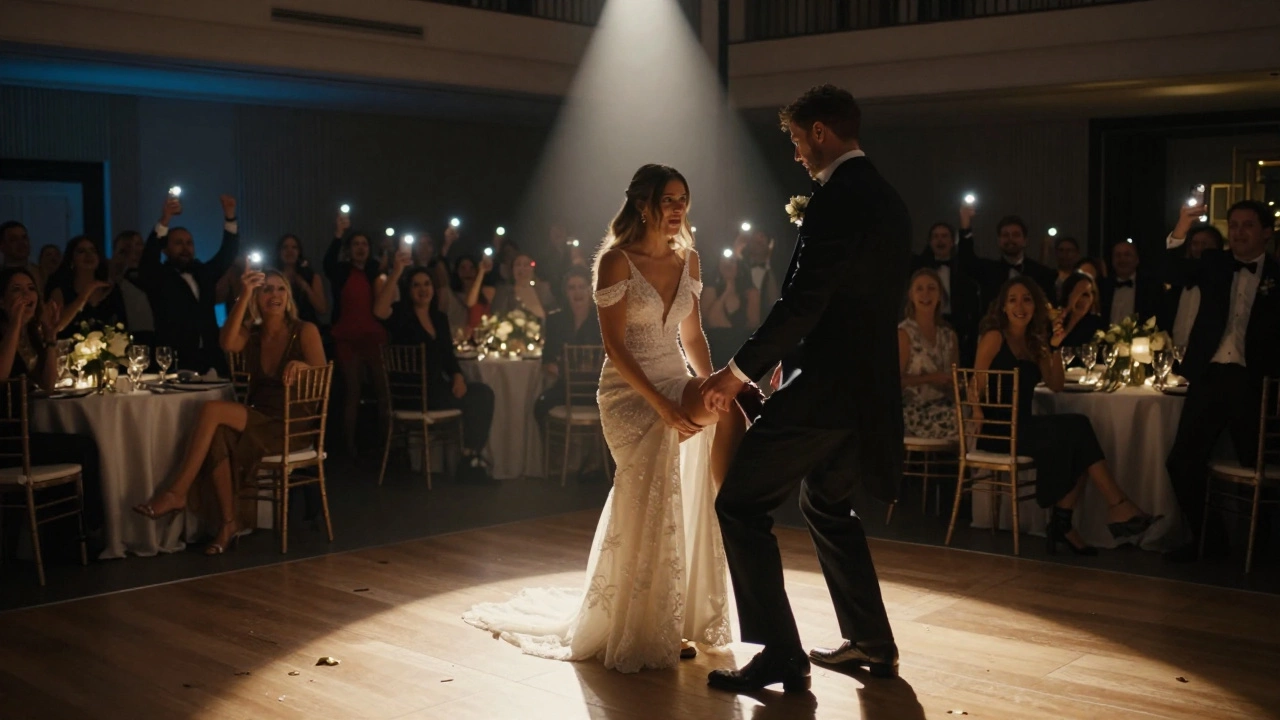
You’re sitting at the reception table. The lights dim. A spotlight hits the dance floor where the bride stands, looking equal parts amused and terrified. The groom steps up, eyes locked on her thigh, and reaches for that little scrap of lace. The crowd cheers. Someone yells, “Don’t pull it off!” And then, inevitably, he does.
If you’ve ever wondered why this specific, slightly awkward ritual persists in 2026, you are not alone. The garter removal is one of the most debated traditions in modern weddings. For some, it’s a fun, nostalgic nod to history. For others, it feels outdated, uncomfortable, or just plain weird. So, why do we still do it? Where did it come from, and more importantly, do you actually have to participate?
The Historical Roots: From Protection to Symbolism
To understand why a groom pulls a piece of fabric off his bride’s leg, we have to look back centuries. This isn’t about sexual innuendo originally; it was about superstition and status.
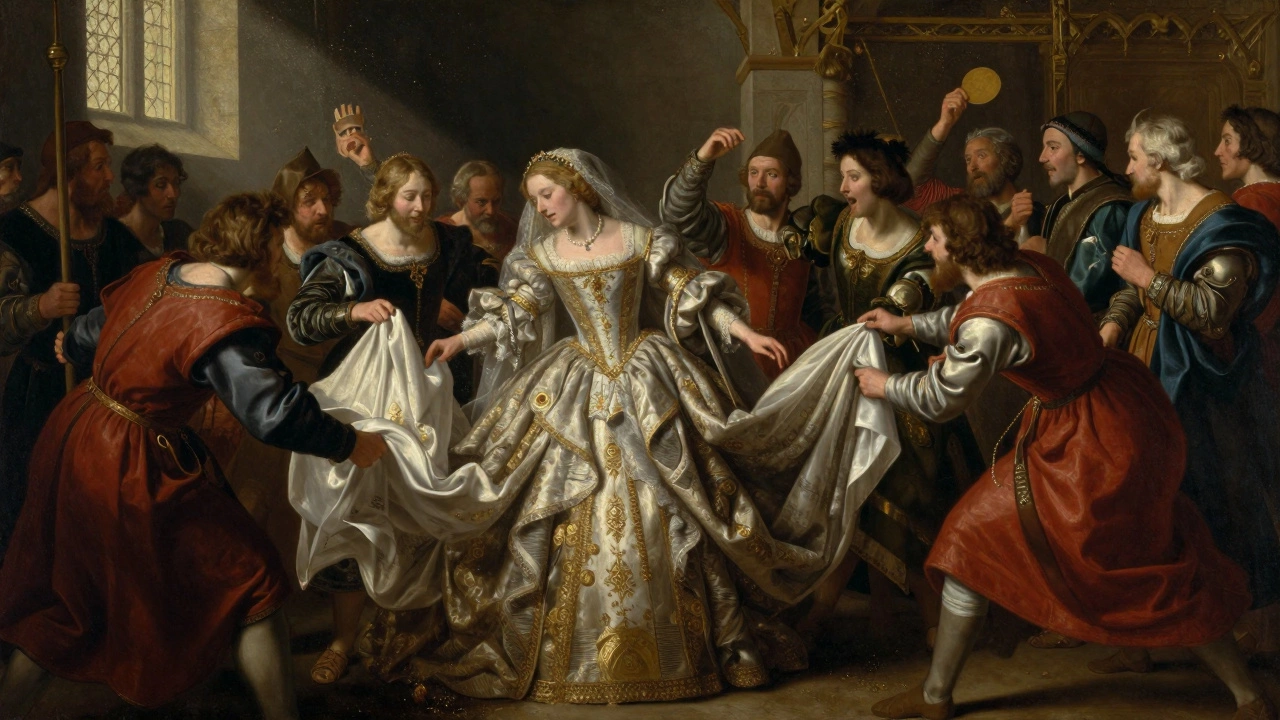
In medieval Europe, particularly in England and France, people believed that objects touched by the bride carried good luck. Guests would literally swarm the bride during the ceremony, trying to tear pieces of her dress to keep as souvenirs. It was chaotic, dangerous, and often ruined the wedding attire completely.
By the 19th century, brides started carrying small tokens-like pins or ribbons-to hand out to guests so they wouldn’t rip their dresses apart. Eventually, this evolved into the garter toss. The groom removing the garter became a symbolic act of claiming the bride, but also a way to distribute that "good luck" charm to the male guests who caught it.
Victorian Era Weddings introduced the concept of the "bedfast" ritual, where friends would lock the couple in their room with various items (a Bible, a bottle of wine, a horseshoe) to ensure fertility. The garter toss can be seen as a sanitized, public version of these private fertility rites.
The Symbolic Meaning Behind the Act
While the origins are rooted in chaos and superstition, the modern interpretation has shifted toward symbolism. Here is what the act represents in contemporary wedding culture:
- Transition to Marriage: Removing the garter symbolizes the end of the bride’s single life. It is a playful acknowledgment that she is now part of a new unit.
- Public Commitment: Just as exchanging rings is a public vow, the garter toss is a public display of intimacy. It signals to the community that the couple is comfortable with each other in front of everyone.
- Continuity: Like throwing the bouquet, it connects the current couple to past generations. It’s a ritual passed down, even if the reasons have changed.
However, the symbolism is thin. Unlike the exchange of vows or rings, which have legal and emotional weight, the garter toss is purely ceremonial. This is why its relevance is increasingly questioned.
Why Many Couples Are Ditching the Tradition
In Auckland, New Zealand, and across much of the Western world, wedding trends are moving toward personalization over prescription. The garter toss is falling out of favor for several practical and emotional reasons.
Discomfort and Consent: The biggest issue is physical comfort. Being lifted onto a chair while a crowd watches your partner reach under your skirt is not everyone’s idea of a good time. Many brides feel exposed or objectified. If either partner is uncomfortable, the ritual becomes a source of anxiety rather than joy.
Dating Backwards: Let’s be honest-the original intent had undertones of possession and fertility testing that don’t align with modern values of equality and partnership. Some couples feel that participating in a ritual born from patriarchal norms doesn’t reflect their relationship dynamic.
Awkwardness Factor: Not every groom is agile enough to remove a garter without struggling, and not every bride wants to pose like a pin-up model. When it goes wrong, it can feel cringe-worthy rather than romantic. In an era where weddings are curated experiences, awkward moments are often edited out-or avoided entirely.
Modern Alternatives to the Garter Toss
If you love the idea of a fun reception game but hate the garter toss, you are in luck. There are dozens of alternatives that keep the energy high without the discomfort. Here are some popular options for 2026:
| Activity | Vibe | Pros | Cons |
|---|---|---|---|
| Polaroid Guest Book | Interactive & Sentimental | Creates lasting memories; involves all guests | Requires setup and supplies |
| Group Dance-Off | High Energy | Gets everyone moving; no pressure on the couple | Needs a good DJ/MC to manage |
| Advice Cards | Emotional & Fun | Couples read funny/wise advice later | Can be embarrassing if read live |
| Sparkler Send-Off | Romantic & Visual | Great photos; elegant exit | Safety concerns; fire restrictions |
Another trend is the "silent" garter toss. The couple removes the garter privately before the reception or during cocktail hour, and simply announces that the tradition has been honored behind closed doors. This satisfies traditionalists who want the ritual acknowledged without putting the couple on display.

How to Handle Family Pressure
Often, the desire to skip the garter toss comes from the couple, but the pressure to keep it comes from older relatives. Grandparents and parents may view it as a non-negotiable part of a "proper" wedding.
The key is communication. Explain that you are choosing to focus on rituals that feel authentic to your relationship. You might say, "We’ve decided to skip the garter toss because we want our reception to feel relaxed and inclusive for all our guests." Most families will respect a clear, confident decision.
If compromise is necessary, consider a modified version. Instead of the groom pulling it off, the bride can remove it herself and hand it to him, or you can both toss them together (some brides wear a decorative garter too). These tweaks maintain the spirit of the tradition while removing the potentially uncomfortable elements.
The Verdict: Do You Have to Do It?
No. Absolutely not. Your wedding day is yours. Traditions are meant to enhance your celebration, not dictate it. If the garter toss brings you joy, laugh, and connection, then by all means, keep it. But if it makes you squirm, skip it without guilt.
The best weddings in 2026 are those that reflect the unique personalities of the couple. Whether you choose to honor history or break from it, the goal is the same: to celebrate your love in a way that feels right for you.
Is the garter toss mandatory for a wedding?
No, the garter toss is entirely optional. It is a tradition, not a legal or religious requirement. Many couples choose to skip it or replace it with other activities that better suit their comfort levels and style.
What is the origin of the garter toss tradition?
The tradition dates back to medieval Europe, where guests would try to tear pieces of the bride's dress for good luck. Over time, this evolved into the groom removing a garter to distribute to male guests, symbolizing good fortune and fertility.
Can I modify the garter toss if I'm uncomfortable?
Yes, you can modify it in many ways. Some couples remove the garter privately, have the bride remove it herself, or toss it alongside the bouquet. You can also replace it entirely with a different reception game or activity.
Why do some people find the garter toss inappropriate?
Some people find it inappropriate because it can feel sexually suggestive, objectifying, or reminiscent of outdated patriarchal norms. It may also cause physical discomfort or embarrassment for the bride, especially in front of large crowds.
What are some popular alternatives to the garter toss?
Popular alternatives include group dance-offs, polaroid guest books, advice cards, sparkler send-offs, or simply skipping the ritual altogether. These options often engage more guests and create less pressure on the couple.