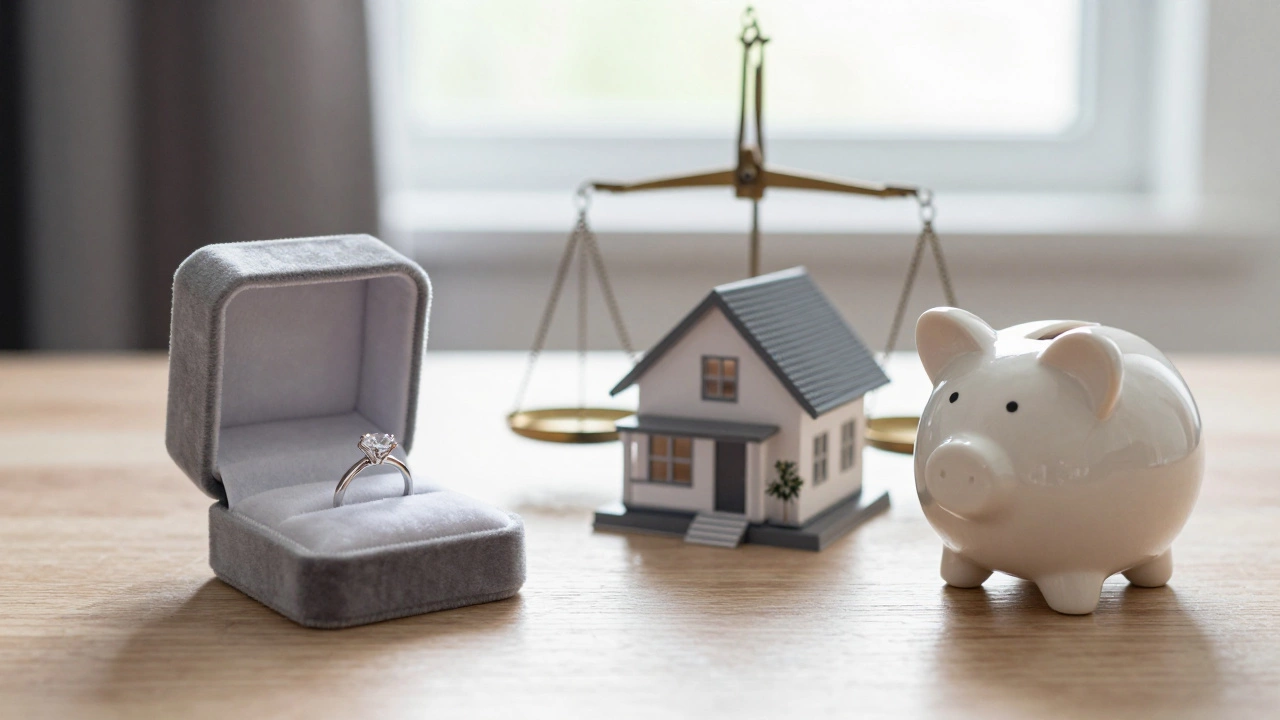
Wedding Ring Budget & Value Planner
Enter your budget and see how much "more" stone you can get by choosing different materials.
With a $3,000 budget, you are paying the standard market price for a natural stone. This is your baseline for comparison.
Budget Hacks for Extra Sparkle:
- Carat: Buy 0.9ct instead of 1.0ct.
- Color: Choose G-H grades (Near Colorless).
- Clarity: Stick to "Eye-Clean" stones.
- Cut: Prioritize a high-quality cut over size.
Key Takeaways for Your Budget
- Forget the "three-month rule"; it is a marketing myth, not a financial standard.
- Prioritize your long-term goals (like a house deposit) over a larger carat weight.
- Focus on the "Four Cs" to get the best value for your money.
- Consider alternative stones or lab-grown options to slash costs by 30-50%.
- Communication with your partner is more valuable than the price tag.
The Problem with Salary-Based Rules
When we tie a luxury purchase to a percentage of income, we ignore the reality of living costs. A person making $60,000 in a low-cost area might actually have more disposable income than someone making $120,000 in a city like Auckland or New York where rent eats half the paycheck. Following a rigid rule often leads to "lifestyle creep," where you spend money you don't have to impress people you don't even like.
Instead of looking at your gross salary, look at your monthly cash flow. Wedding Ring Budget is the specific amount of money allocated for the purchase of engagement and wedding bands, balanced against a couple's overall financial health. If you have $10,000 in savings and no debt, spending $2,000 on a ring is a breeze. If you are still paying off student loans or saving for a home, that same $2,000 becomes a significant burden.
Calculating Your Actual Buying Power
To figure out a number that doesn't make your bank account scream, try the "Zero-Sum" approach. List your non-negotiables first: the venue, the catering, and your emergency fund. Whatever is left over is your jewelry pool. If you want a more expensive ring, you might decide to spend less on the flowers or the guest list. This puts you in control, rather than letting a tradition dictate your finances.
A helpful rule of thumb is to spend what you can afford in cash. If you have to take out a high-interest loan or put it on a credit card with 20% APR, you are effectively paying a massive premium for that sparkle. Jewelry is an asset, but unless you are buying an investment-grade rare stone, it usually depreciates the moment you leave the store. Avoid financing your jewelry if possible.
Understanding Value: The Four Cs
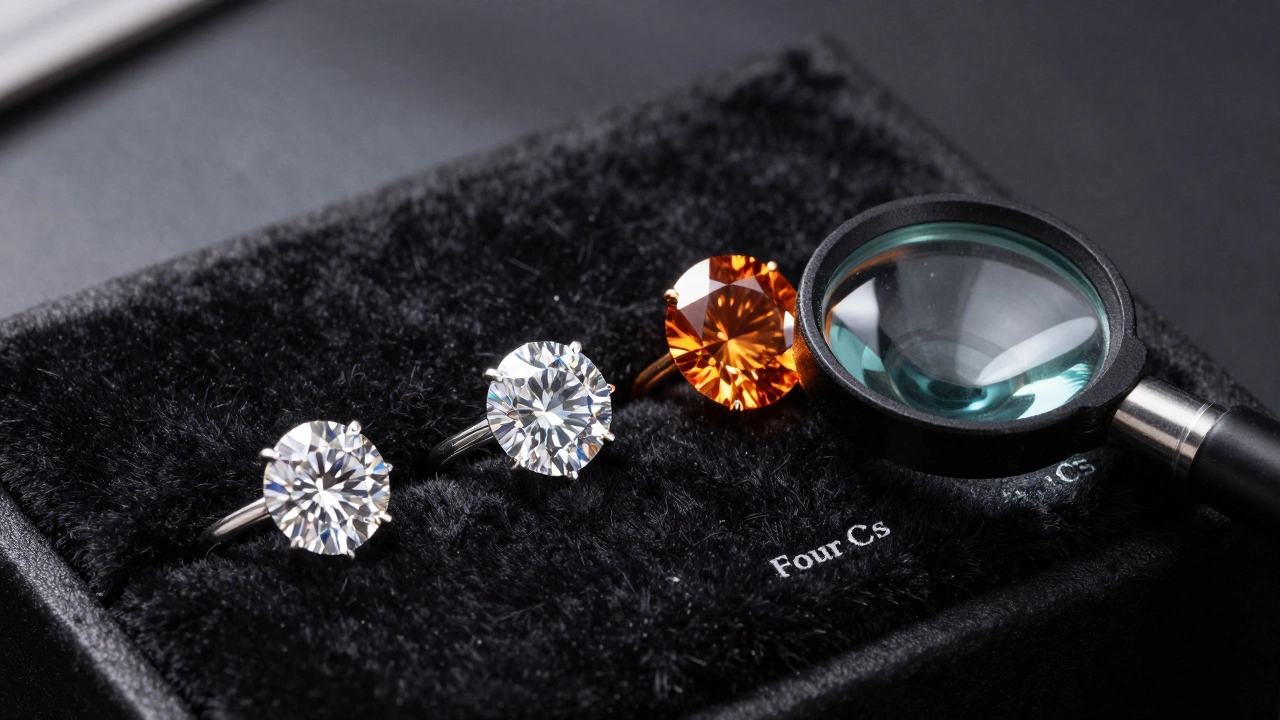
You can get a ring that looks massive and brilliant without spending a fortune if you understand how Diamond Grading works. The industry uses the "Four Cs" to determine price, but some of these are more visible to the naked eye than others.
| Attribute | What it is | Budget Hack |
|---|---|---|
| Carat | The weight/size of the stone | Buy a 0.9ct instead of a 1.0ct; the price drop is huge, but the look is nearly identical. |
| Cut | How the light reflects | Prioritize this. A well-cut smaller diamond looks bigger and brighter than a poorly cut large one. |
| Color | How colorless the stone is | Go for "Near Colorless" (G-H grades). They look white to the eye but cost significantly less than D-F grades. |
| Clarity | Internal flaws (inclusions) | Choose "Eye-Clean." If you can't see the flaw without a microscope, don't pay extra to remove it. |
Lab-Grown vs. Natural Diamonds
One of the biggest shifts in the last few years is the rise of Lab-Grown Diamonds is chemically, physically, and optically identical diamonds created in a controlled laboratory environment rather than mined from the earth. They aren't "fakes" or "simulants" like cubic zirconia; they are real diamonds. The difference is the price tag.
Choosing a lab-grown stone can save you between 30% and 60% compared to a mined diamond of the same quality. This allows you to either get a much larger stone for the same budget or spend that saved money on your honeymoon. In 2026, lab-grown diamonds have become the standard for budget-conscious couples who still want the prestige and durability of a diamond.
Alternative Materials and Ethical Choices
If a diamond doesn't fit your budget or your values, look into Moissanite is a gemstone composed of silicon carbide, known for having more fire and brilliance than a diamond at a fraction of the cost. It is nearly as hard as a diamond, making it perfect for daily wear, and it's significantly cheaper.
Then there are the metals. Platinum is incredibly durable and hypoallergenic but expensive. White Gold gives a similar look for less, though it requires occasional re-plating. If you want the most budget-friendly option that still feels premium, 14k yellow gold is a timeless choice that holds its value well.

Avoiding the 'Luxury Tax'
Where you buy the ring matters as much as what you buy. Big-name luxury brands charge a massive premium for the name on the box. You are often paying for the store's expensive real estate and marketing budgets rather than the quality of the stone.
To save money, consider these routes:
- Independent Jewelers: Local craftsmen often have lower overheads and can offer more flexibility on pricing.
- Online Retailers: Trusted online wholesalers cut out the storefront costs and pass those savings to you.
- Vintage or Antique: Buying a pre-owned ring is not only romantic but often more sustainable and affordable. You can find unique Art Deco pieces that have more character than a modern mall ring.
The Conversation: Aligning Expectations
The most expensive mistake you can make is buying a ring based on what you *think* your partner wants, only to find out they hate it or feel guilty about the cost. Sit down and talk about your financial boundaries. Does your partner value a high carat count, or would they prefer the money go toward a down payment on a house?
Ask these specific questions:
- Do you prefer a classic look or something more unique/vintage?
- How do you feel about lab-grown diamonds versus mined ones?
- Is there a specific metal color you prefer (gold, silver, rose gold)?
- What is the maximum amount we are comfortable spending as a couple?
When both people are on the same page, the pressure to hit an arbitrary salary percentage disappears. The ring becomes a symbol of your partnership and shared values, not a financial trophy.
Is it still socially acceptable to spend less than three months' salary?
Absolutely. In fact, most modern couples prioritize financial stability over traditional spending rules. With the rise of lab-grown diamonds and alternative gemstones, the focus has shifted from the price tag to the personal meaning and ethical sourcing of the ring.
Should I buy the engagement ring and wedding band together?
It depends on your budget. Many people buy the engagement ring first and wait until closer to the wedding date to buy the band. This spreads the cost over a longer period. However, buying them as a set from the same jeweler often ensures they fit together perfectly and may allow you to negotiate a bundle discount.
Does a lab-grown diamond hold its value as well as a natural one?
Generally, no. Natural diamonds have a more stable resale market due to their scarcity. Lab-grown diamonds are produced in abundance, so their resale value is lower. However, most people buy rings for sentiment, not as a financial investment. If you want the look of a large diamond without the huge upfront cost, lab-grown is the way to go.
What is the best way to save for a ring without affecting daily life?
Set up a dedicated "Jewelry Savings" account. Automate a monthly transfer-even a small amount like $50 or $100-into this account. By separating the money from your main checking account, you won't be tempted to spend it, and you'll have a clear picture of your actual buying power as the date approaches.
Can I get a high-quality ring for under $1,000?
Yes. By choosing a moissanite stone or a smaller lab-grown diamond set in 14k gold, you can easily find stunning rings under $1,000. The key is to avoid the big luxury brands and look for independent jewelers or reputable online shops that specialize in ethical, affordable luxury.
Next Steps for Your Purchase
If you are ready to shop, start by creating a "mood board" of styles you like. This helps the jeweler narrow down options and prevents you from being upsold on styles that don't fit your taste. Once you have a style, set your hard ceiling price and stick to it. If a jeweler tries to push you toward a more expensive stone by citing "prestige," remember that the only prestige that matters is the happiness of the person wearing the ring.