Engagement Ring Return Decision Tool
Use this tool to understand the general legal and social expectations regarding who keeps an engagement ring when a relationship ends.
Imagine this: you’re standing at an altar, or maybe just sitting on your couch after a tearful conversation. The relationship is over. The wedding plans are canceled. But there’s one shiny, expensive object left on the table. Who gets to keep it?
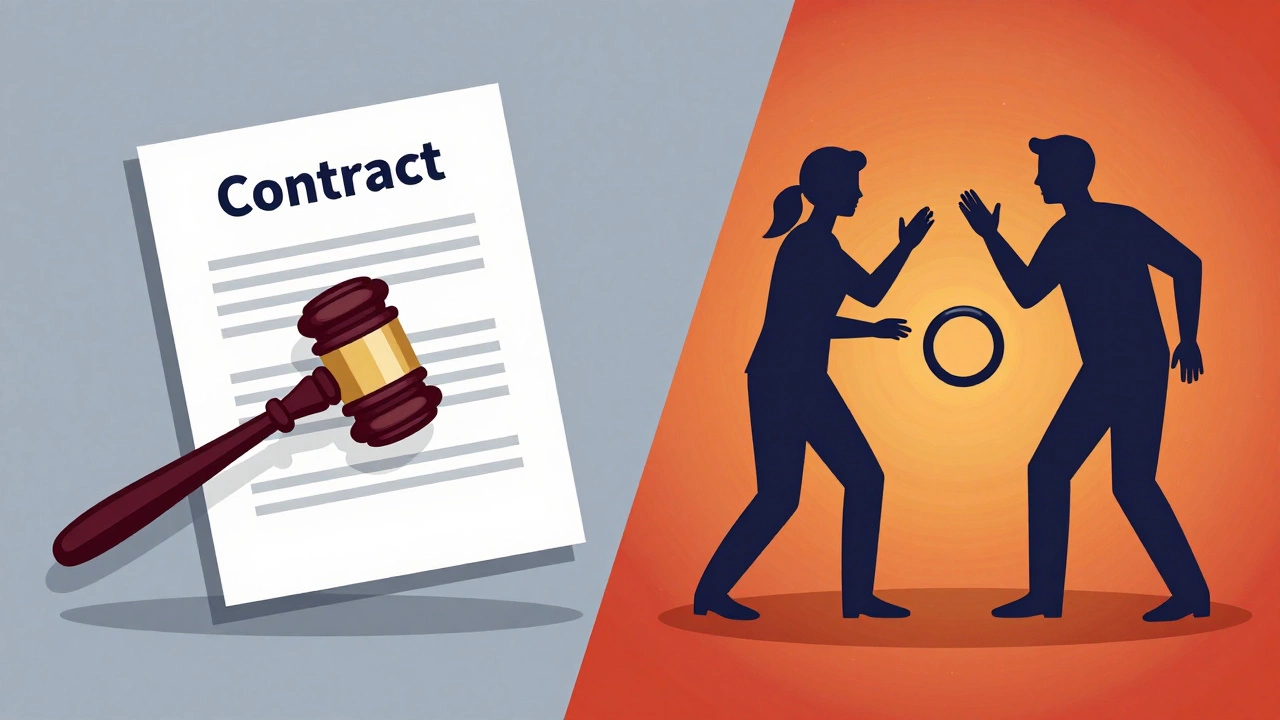
This isn’t just a matter of hurt feelings; it’s a legal and emotional minefield. In the United States and many other common law jurisdictions, the answer depends entirely on *why* the engagement ended and *where* you live. It’s not as simple as “the buyer keeps it” or “the giver gets it back.”
Quick Summary: Do I Have to Return the Ring?
- Fault-Based States: If the recipient breaks off the engagement, they usually must return the ring. If the giver cancels, the recipient keeps it.
- No-Fault States: The ring almost always goes back to the giver, regardless of who called it quits.
- The "Conditional Gift" Rule: Legally, an engagement ring is a gift given with the condition that marriage happens. If marriage doesn’t happen, the condition fails.
- Family Heirlooms: These have stronger legal protections for return than store-bought rings.
- Joint Purchases: If both partners paid for the ring together, it may be considered joint property, complicating the return process.
The Legal Concept: Conditional Gifts
To understand who keeps the ring, you first need to understand what the ring actually represents in the eyes of the law. An Engagement Ring is a piece of jewelry given by one person to another in promise of marriage. Unlike a birthday present or a Christmas gift, which are unconditional, an engagement ring is classified as a Conditional Gift is a transfer of property that requires a specific event (marriage) to occur for the gift to become final.
Think of it like a down payment on a house. If the deal falls through, you generally get your money back. Similarly, if the marriage doesn’t happen, the “payment” (the ring) should theoretically be returned to the payer. This principle dates back centuries in English common law and has been adopted in most U.S. states.
However, the application of this rule varies wildly depending on state statutes and court precedents. Some courts view the ring as a symbol of love that shouldn’t be litigated, while others see it strictly as a contract dispute.
Fault-Based vs. No-Fault Jurisdictions
The biggest factor in determining ownership is whether you live in a “fault-based” or “no-fault” jurisdiction. This distinction determines how much weight the court gives to *who* broke up with *whom*.
| Jurisdiction Type | Who Broke Up? | Who Keeps the Ring? | Logic Behind the Rule |
|---|---|---|---|
| Fault-Based (e.g., California, New York) |
Recipient (Fiancée) | Giver (Fiancé) | The recipient breached the "contract" by breaking the promise to marry without cause. |
| Fault-Based | Giver (Fiancé) | Recipient (Fiancée) | The giver broke the promise, so they forfeit the right to reclaim the gift. |
| No-Fault (e.g., Arizona, Florida) |
Either Party | Giver (Usually) | The condition (marriage) failed. Since no marriage occurred, the gift reverts to the giver regardless of blame. |
In fault-based states, the court acts almost like a referee. If you dumped your partner, you likely have to give the ring back. If they dumped you, you might get to keep it. This can lead to messy courtroom battles where couples argue over text messages and witness testimonies to prove who was the “at-fault” party.
In no-fault states, the reasoning is simpler but often feels colder. The law says, “The condition for the gift was marriage. Marriage didn’t happen. Therefore, the gift returns to the giver.” This approach avoids lengthy trials about whose fault the breakup was, focusing instead on the contractual nature of the exchange.
Special Circumstances That Change the Outcome
While the general rules above cover most cases, several specific scenarios can flip the script. Knowing these exceptions is crucial if you’re navigating a split.
Family Heirlooms
If the ring was passed down through generations-say, your grandmother’s diamond-it carries significant sentimental value beyond its monetary worth. Courts are far more likely to order the return of a family heirloom, even in some no-fault situations, because the loss to the giver is considered irreplaceable. The argument here isn’t just about money; it’s about preserving family history.
Joint Purchase
What if you both went to the jeweler together? What if you used a joint savings account to buy the ring? In this case, the ring might not be viewed as a gift from one to the other, but as Joint Property is an asset owned equally by two parties, requiring division upon separation.
If the ring is deemed joint property, the solution isn’t necessarily returning it to the original giver. Instead, the ring might need to be sold, and the proceeds split 50/50. Or, one partner could buy out the other’s share. This scenario is becoming more common as couples increasingly involve themselves in the selection and purchase of engagement rings.
Conversion to Cash
If the recipient sells the ring before the breakup, they can’t return the physical object. In this case, they are legally obligated to reimburse the giver for the fair market value of the ring at the time of sale. Hiding the sale or spending the money without offering restitution can lead to additional legal penalties for conversion (theft).
Etiquette vs. Law: The Social Expectation
Laws dictate what you *must* do, but etiquette dictates what you *should* do to maintain dignity and minimize conflict. Even if you live in a fault-based state and believe you have the right to keep the ring because your partner cheated, consider the social fallout.
Keeping a ring under contentious circumstances can burn bridges with extended families and friends. Most wedding planners and etiquette experts suggest returning the ring voluntarily, regardless of legal standing, unless the situation involves abuse or extreme financial hardship. Returning the ring signals closure and respect for the shared history, even if the future is gone.
Conversely, if you are the giver, demanding the ring back aggressively can look petty. A calm, written request via email or text is often better than a dramatic confrontation. If the ring is lost or damaged during the relationship, open communication about replacement costs is key.
Steps to Take When an Engagement Ends
If you find yourself in this situation, follow these steps to handle the ring issue smoothly:
- Cool Down First: Don’t make demands in the heat of the moment. Wait 24-48 hours to ensure your actions are rational, not reactive.
- Check Your Local Laws: Search for “[Your State] engagement ring return laws.” Knowing your rights prevents you from being taken advantage of.
- Assess the Ring’s Origin: Was it a gift? A joint purchase? An heirloom? This determines the legal category.
- Communicate Clearly: Send a polite message proposing the return of the ring. Example: *“Since we are ending our engagement, I’d like to arrange for the return of the ring. Please let me know when you can drop it off.”*
- Document Everything: If you agree to sell the ring and split the proceeds, get receipts and bank transfers in writing. Avoid cash exchanges.
- Consider Mediation: If emotions run high, use a neutral third party (like a mutual friend or mediator) to facilitate the exchange.
What About Wedding Bands?
The rules for engagement rings don’t always apply to wedding bands. Wedding bands are typically exchanged *during* the marriage ceremony. If the couple is married and then divorces, the band is usually considered marital property, subject to division like other assets. However, if the breakup happens *before* the wedding, the bands are rarely exchanged, so this issue seldom arises. If bands were purchased early and kept by one party, they may be treated similarly to engagement rings, but this is less common.
Final Thoughts on Closure
Ending an engagement is painful. The ring becomes a symbol of that pain, but also of a promise that wasn’t kept. While the law provides a framework for resolving ownership, the best outcome is often one that prioritizes peace over possession. Whether you keep the ring or return it, aim for a resolution that allows both parties to move forward without lingering resentment.
Do I have to return the ring if my fiancé cheated?
In fault-based states, cheating by the giver (fiancé) often means the recipient (fiancée) can keep the ring. In no-fault states, the ring usually still goes back to the giver, regardless of infidelity. Check your local laws for specifics.
What if I bought the ring myself with my own money?
If you bought the ring and gave it to your partner, it is considered a conditional gift. You generally have the right to demand its return if the marriage doesn’t happen, especially in no-fault states.
Can I keep the ring if we moved in together?
Moving in together does not automatically change the legal status of the ring. Unless you have a cohabitation agreement stating otherwise, the ring remains a conditional gift tied to marriage, not cohabitation.
What if the ring was resized or customized?
Modifications like resizing or engraving do not change the ring’s status as a conditional gift. However, if the modifications significantly increased the value, the court might consider compensation for those added costs.
How long do I have to return the ring?
There is no strict statutory deadline, but delays can be seen as bad faith. It is best to initiate the return process within weeks of the breakup. Prolonged retention can complicate legal recovery for the giver.