Red Eye Prevention Estimator
Your Setup
Red Eye Risk Assessment
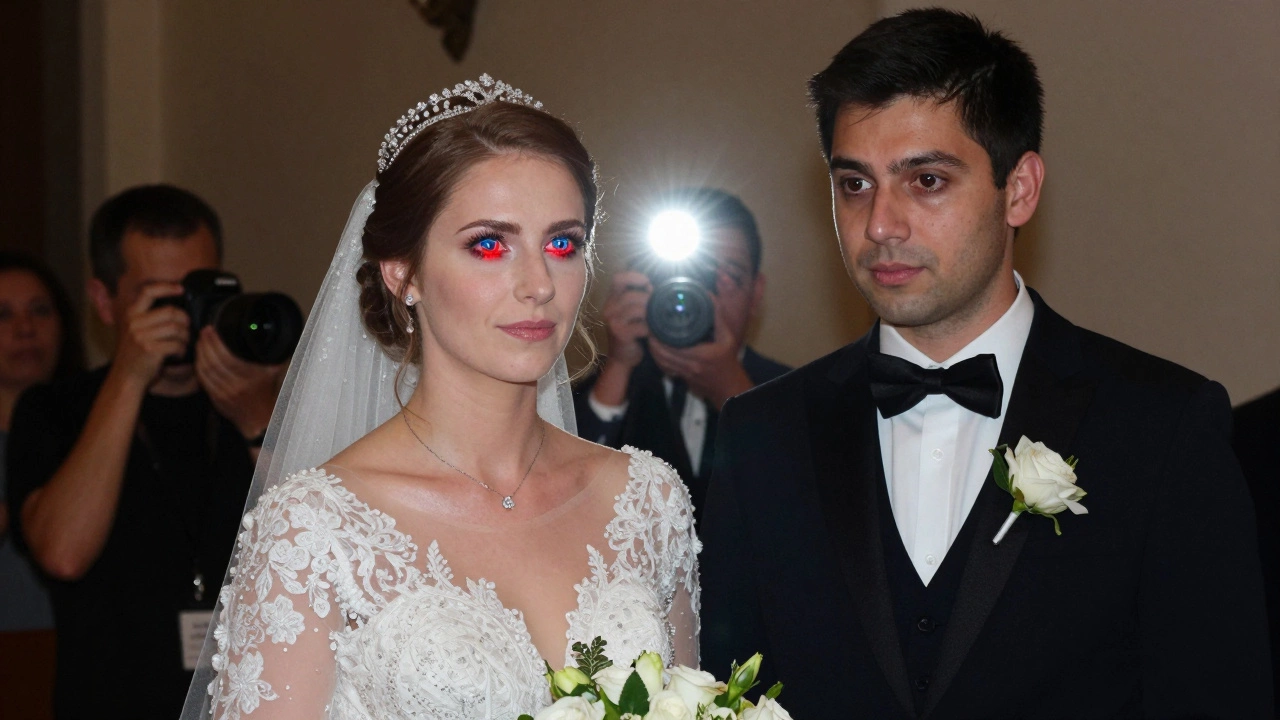
Ever taken a wedding photo and noticed someone’s eyes glowing bright red? It’s not a glitch. It’s not magic. And it’s not just happening to white people - but it’s more noticeable in them. If you’re a wedding photographer, this isn’t just a curiosity. It’s a problem that ruins shots, frustrates clients, and makes you look unprepared.
Here’s the truth: everyone’s eyes can turn red in photos. But for people with lighter skin tones - especially those with blue, green, or gray eyes - the effect is way more obvious. Why? It comes down to pigment, light, and how your camera’s flash works.
What’s Actually Happening When Eyes Turn Red?
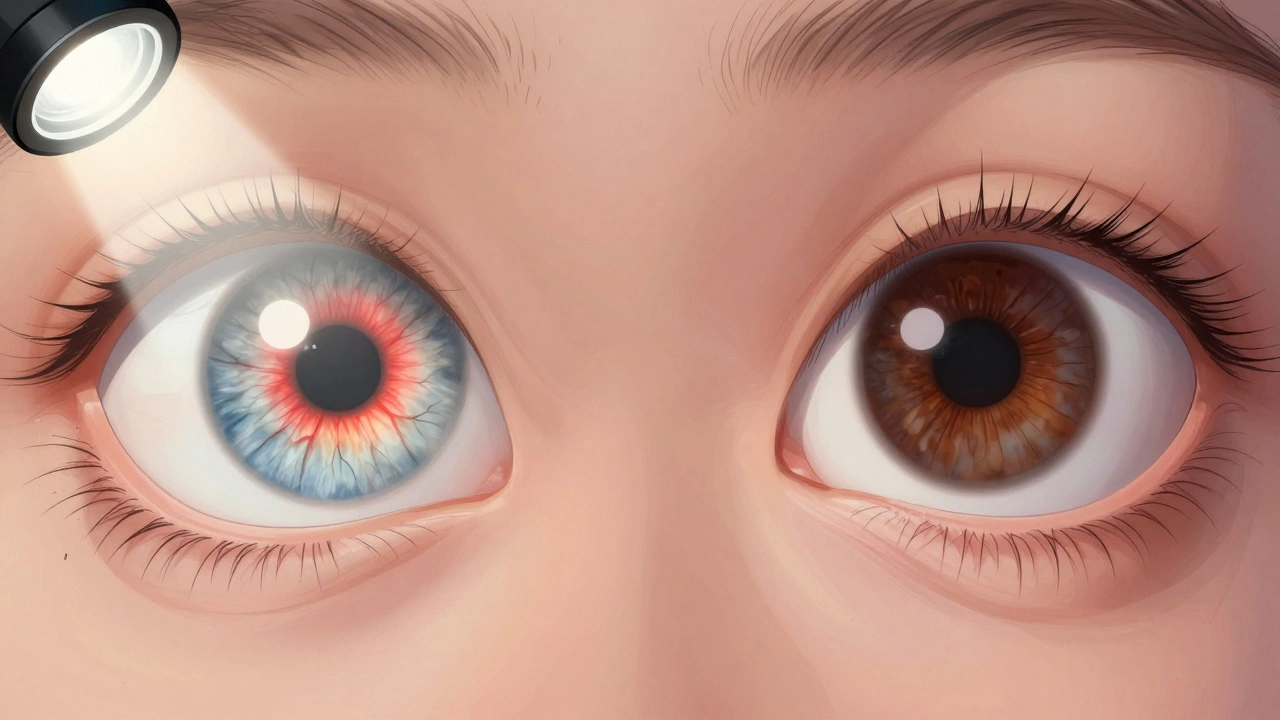
That red glow? It’s not blood. It’s light bouncing off the back of the eye. Your retina is full of blood vessels. When a flash goes off, the pupils don’t have time to shrink. The light zooms in, hits the retina, reflects off those blood vessels, and bounces straight back out through the pupil. Your camera catches it. Boom - red eyes.
It’s the same reason cats’ eyes glow green or yellow in photos. Their tapetum lucidum - a reflective layer behind the retina - bounces light back. Humans don’t have that layer. We just have a lot of red blood.
Why Is It More Common in White People?
It’s not about race. It’s about iris color and skin tone.
People with lighter irises - blue, green, hazel - have less melanin in their eyes. Melanin absorbs light. Less melanin means more light gets through, hits the retina, and reflects back. Darker irises - brown, black - have more melanin. That melanin acts like a sponge, soaking up the flash before it can bounce back.
And here’s the kicker: lighter skin tones often go hand-in-hand with lighter eyes. So when you’re photographing a white couple with pale skin and blue eyes, you’re basically photographing a perfect storm for red eyes. Their eyes are more transparent to light. Their skin doesn’t scatter the flash as much. The reflection comes back clean, bright, and unmistakable.
Try this: take a photo of someone with dark brown eyes and dark skin. Now take one of someone with blue eyes and fair skin. The difference? Stark. The person with blue eyes? Red glow. The person with brown eyes? No red at all. That’s not racism. That’s physics.
Why Wedding Photos Are Especially Prone to This
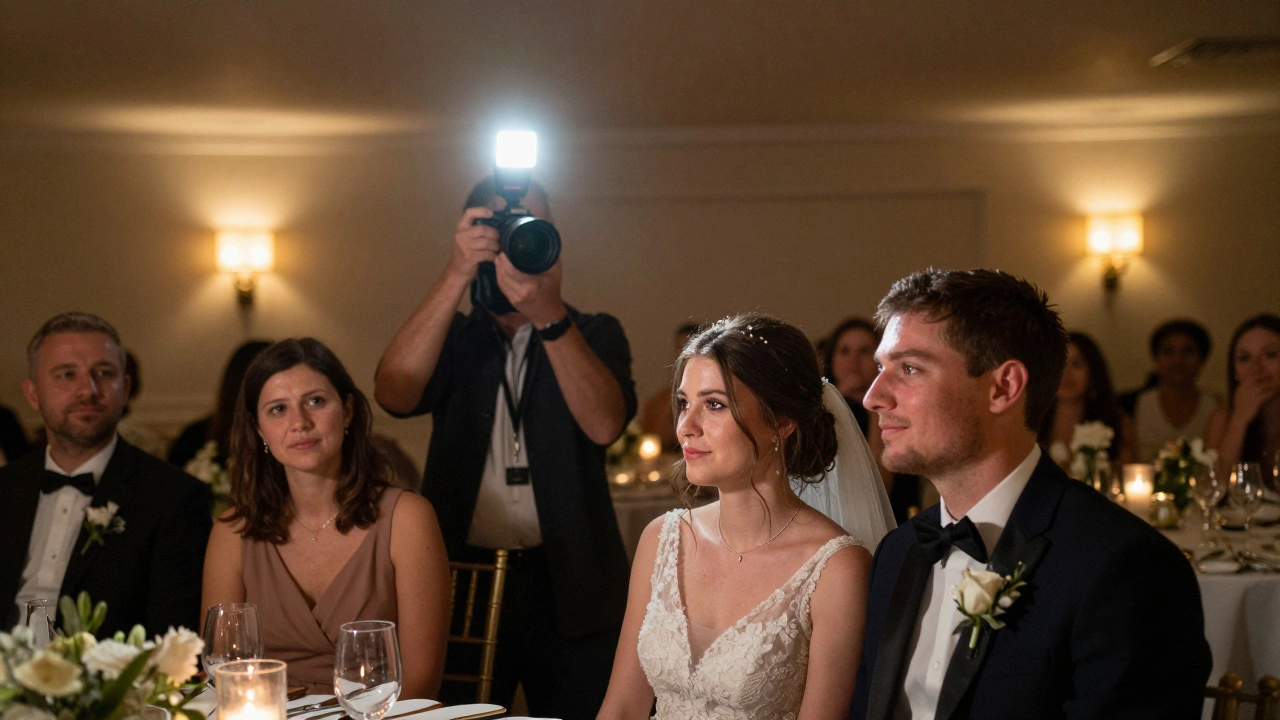
Weddings are flash-heavy. Indoor ceremonies. Low light. Crowded reception halls. You’re shooting in dim conditions, so your camera auto-activates the flash. Guests are moving. People blink. Pupils stay wide open. And with all that light bouncing around, red eyes become almost inevitable - especially if half the guests have light-colored eyes.
And let’s be real: wedding photographers get paid to capture perfect moments. A red-eyed bride? A groom with glowing pupils? Clients don’t care about the science. They just see a ruined photo. You’re not just fixing a technical issue - you’re saving a memory.
How to Prevent Red Eyes in Wedding Photos
There are five real, proven ways to stop this before it happens.
- Use red-eye reduction mode - Most cameras have it. It flashes a quick pre-light to shrink pupils before the real shot. Works 60-70% of the time. Not perfect, but better than nothing.
- Bounce the flash - Don’t point the flash straight at faces. Angle it at the ceiling or a white wall. The light diffuses. It’s softer. And it doesn’t blast directly into pupils. This is what pros do. It’s simple. It’s cheap. It’s effective.
- Use ambient light - Open curtains. Use string lights. Bring in a softbox. The less you rely on direct flash, the less chance red eyes have. It takes more time, but the results? Way more natural.
- Ask people to look away - Not at the camera. At a point just beside it. That tiny shift changes the angle of reflection. You’ll lose a few candid expressions, but you’ll keep 90% of your shots clean.
- Shoot in RAW and fix it later - If red eyes slip through, Photoshop or Lightroom can fix them in seconds. But don’t make this your default plan. Prevention is faster, cheaper, and less stressful.
What About Dark-Skinned People?
They’re not immune. But they’re far less likely to show red eyes. Why? More melanin. Darker irises absorb more light. Darker skin reflects less flash overall. So even if the flash hits their eyes directly, the reflection is weaker - often invisible to the camera.
That doesn’t mean they never get red eyes. If someone with dark skin has light-colored contacts, or rare genetic conditions that reduce eye pigment, it can still happen. But statistically? It’s rare. And that’s why you rarely hear about it.
The Bigger Picture: It’s Not About Skin Color
Don’t fall into the trap of thinking this is about race. It’s about biology. It’s about light. It’s about how cameras work.
When you explain this to a client who says, "Why do only white people have red eyes?" - don’t get defensive. Say this: "It’s not about skin color. It’s about how much pigment is in the eye. Lighter eyes let more light through. That’s why it shows up more often in people with blue, green, or gray eyes - no matter their skin tone."
And if you’re shooting a multicultural wedding? You’ll see both. A bride with hazel eyes might have red eyes. A groom with deep brown skin and dark brown eyes? Zero red. Both are normal. Both are physics.
Pro Tip: Test Your Setup Before the Ceremony
Arrive early. Set up your gear. Take a few test shots of the venue’s lighting. Point your flash at a volunteer - maybe the best man or the flower girl. See how their eyes react. Adjust your angle. Change your settings. Fix the problem before the real thing starts.
Wedding photographers who do this? They’re the ones who get repeat clients. The ones who don’t? They’re the ones who get 1-star reviews: "My eyes looked like I was in a horror movie."
What If Red Eyes Already Happened?
Don’t panic. Every editing software has a red-eye tool. In Lightroom? Click the tool. Click the eye. Done. In Photoshop? Same thing. Even your phone’s gallery app can fix it now.
But here’s the catch: if you’re editing 500 photos from a wedding, and 30 of them have red eyes? That’s 45 minutes of tedious clicking. And if the person has glasses? The reflection bounces off the lenses too. Now you’re dealing with double red spots. It’s a nightmare.
Prevention is always better than correction. Especially when you’re under time pressure. The bride’s mom is asking for the photos. The groom’s dad is mad because his eyes look like they’re glowing. You don’t want to be the photographer who says, "I’ll fix it later."
Final Thought: This Is a Solvable Problem
Red eyes in photos aren’t a mystery. They’re not a flaw in your skill. They’re a predictable outcome of a common setup. And once you understand the why, you can fix it before it happens.
Stop blaming skin color. Start understanding light. Learn to control your flash. Master your settings. And your wedding photos? They’ll look better. Your clients? They’ll be thrilled. And you? You’ll stop getting those awkward questions.
Do only white people get red eyes in photos?
No. Anyone can get red eyes in photos. But it’s more noticeable in people with lighter-colored eyes - like blue, green, or gray - because those irises have less melanin, which means more light reflects back. Since lighter eye color is more common among people with lighter skin tones, the effect is often seen more in white people. But someone with dark skin and light eyes can still get red eyes. It’s about eye pigment, not skin color.
Can red eyes be fixed after the photo is taken?
Yes. Most photo editing tools - including Photoshop, Lightroom, and even smartphone apps - have a red-eye removal tool. It’s usually one click. But if you’re editing hundreds of wedding photos, it can take a long time. Plus, if the person is wearing glasses, you might have to fix reflections on the lenses too. That’s why prevention is better than correction.
Is red eye caused by the flash being too bright?
Not exactly. It’s not about brightness - it’s about directness. A powerful flash pointed straight at the eyes causes red eyes because the pupils don’t have time to close. A weaker flash bounced off a wall or ceiling rarely causes it. The issue is the angle and timing, not just the power.
Why don’t people with brown eyes get red eyes as often?
Brown eyes have more melanin - a pigment that absorbs light. That means less light reaches the retina, and even less reflects back to the camera. So while it’s still possible, it’s much rarer. People with blue or green eyes have less melanin, so more light bounces back - making red eyes more obvious.
Should I avoid using flash at weddings?
Not necessarily. Flash is often needed in dim venues. But you should avoid pointing it directly at people. Use bounce flash, diffusers, or ambient lighting instead. Many professional wedding photographers never use direct flash. They rely on off-camera lighting or high ISO settings. That’s how you avoid red eyes and get natural-looking photos.