Groom's Wedding Suit Score Calculator
Your Detailed Breakdown
Personalized Recommendations
You’ve spent months planning the venue, tasting cakes, and arguing over seating charts. But when it comes to your own look, do you just wing it? Too many grooms treat their wedding suit like an afterthought, leading to photos that feel dated or uncomfortable moments on the dance floor. The truth is, your attire sets the tone for the entire event. Getting it wrong doesn’t just affect how you look; it affects how you feel.
We’re not talking about high-fashion runway rules here. We’re talking about practical, real-world mistakes that cost confidence and comfort. From ignoring the weather to buying off-the-rack without a second thought, these are the pitfalls you need to avoid to ensure your big day looks as good as it feels.
Ignoring the Fit for the Sake of Convenience
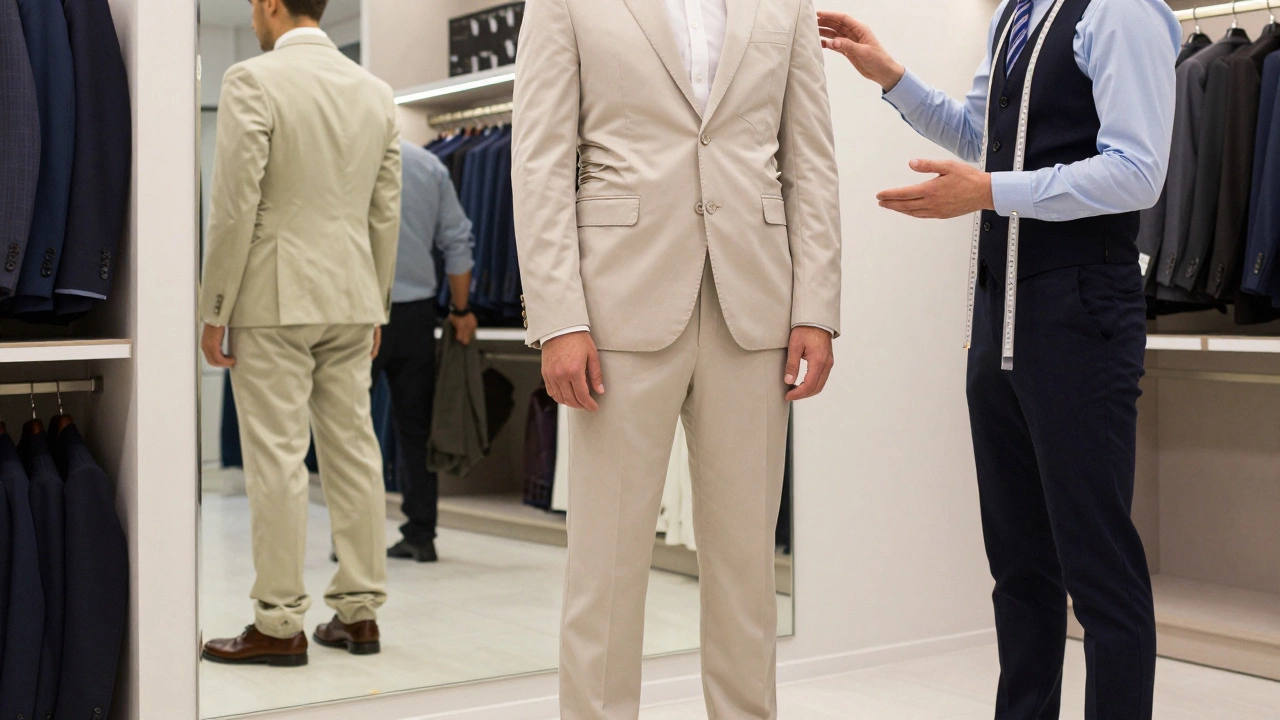
The biggest mistake a groom makes is buying a suit off the rack and calling it a day. You might think, "It fits fine," but "fine" is the enemy of great. A suit that is slightly too long in the trousers pools at the shoe, looking sloppy in every photo. A jacket that pulls across the shoulders restricts your movement, making you stiff during the ceremony.
Fabric has memory. If you buy a suit three sizes too big hoping to lose weight before the wedding, you’ll end up with a garment that drapes poorly no matter what. Tailoring isn’t optional; it’s essential. Even if you buy an affordable option, spend the extra money to have the sleeves shortened, the waist taken in, and the trousers hemmed. This small investment transforms a generic garment into something that looks custom-made for your body shape.
| Issue | Visual Impact | The Fix |
|---|---|---|
| Shoulders pulling | Looks tight and uncomfortable | Buy a size up; tailor the rest |
| Trousers pooling | Sloppy, shortens legs visually | Hem to break once at the shoe |
| Jacket too long | Makes you look shorter | Shorten jacket (if fabric allows) |
| Sleeves covering hands | Hides shirt cuff details | Shorten sleeves to show 1/4 inch of cuff |
Choosing Fabric Without Considering the Climate
New Zealand summers can be deceptive. One minute it’s sunny and warm, the next it’s breezy and cool. However, wearing heavy wool in mid-December heat is a recipe for disaster. You will sweat through your shirt, stain your lapels, and feel miserable by the time you reach the reception.
If your wedding is outdoors or in summer, skip the traditional worsted wool. Opt for lightweight linen, cotton blends, or tropical wool. These fabrics breathe better and resist wrinkles more effectively. Conversely, don’t wear thin linen in winter; it offers zero insulation and looks flimsy against heavier bridal fabrics. Match your fabric weight to the season and the venue’s temperature control. Check the forecast two weeks prior, but dress for the average expectation, not the outlier.
Mismatching the Formality Level
Your suit should match the formality of the wedding, not just your personal style preference. Wearing a tuxedo to a casual beach bash creates a jarring contrast. It signals that you aren’t paying attention to the vibe your partner has worked hard to create. On the flip side, wearing chinos and a blazer to a black-tie gala makes you look underdressed and disrespectful to other guests who dressed up.
Look at the invitation wording. "Black Tie" means a tuxedo. "Formal" usually means a dark suit. "Semi-formal" allows for lighter colors and separates. When in doubt, ask your bride or the wedding planner. It’s better to be slightly overdressed than underdressed. An overdressed groom can loosen his tie and roll his sleeves; an underdressed groom can’t conjure a jacket out of thin air.
Neglecting the Shoes and Socks
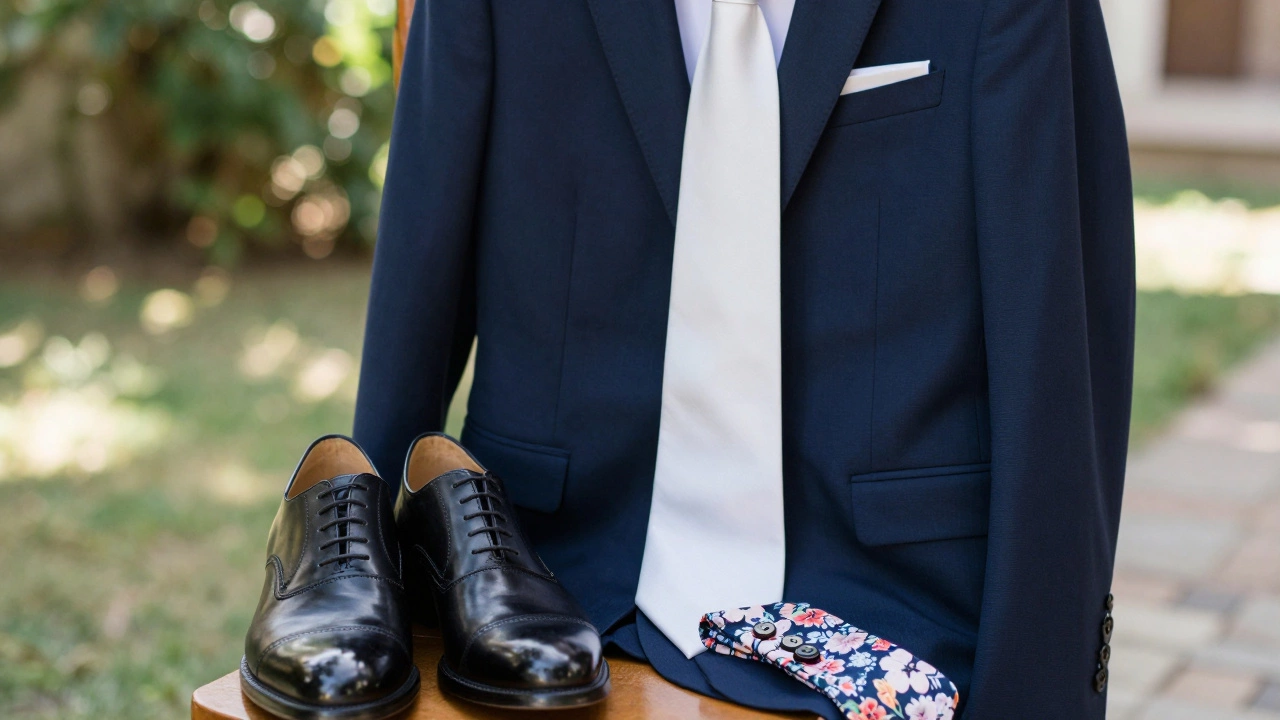
People notice your shoes. More importantly, they notice when your shoes clash with your belt or your suit color. Wearing brown leather shoes with a navy suit is classic, but wearing them with a charcoal grey suit can look muddy. Stick to black oxfords or derbies for formal events and dark brown or burgundy for less formal affairs.
Don’t forget the socks. White athletic socks are a cardinal sin in wedding photography. When you sit down, bare legs shouldn’t be visible. Choose socks that match your trousers or complement your suit color. Wool-blend socks provide warmth and comfort, while silk options keep things sleek for summer weddings. Ensure your shoes are polished. Scuffed toes ruin the silhouette of a sharp suit.
Overcomplicating the Accessories
Accessories are meant to enhance, not overwhelm. A common mistake is adding too many focal points: a loud pocket square, a patterned tie, a bold watch, and shiny buttons all competing for attention. This creates visual noise that distracts from your face.
Pick one statement piece. If you’re wearing a bold floral tie, keep your pocket square simple and folded neatly. If you love a vibrant pocket square, choose a solid, subtle tie. Your watch should be elegant but not flashy enough to catch light reflections in photos. Avoid novelty ties unless it’s a specific theme requested by the couple. Simplicity exudes confidence; clutter suggests insecurity.
Skipping the Rehearsal Outfit Test
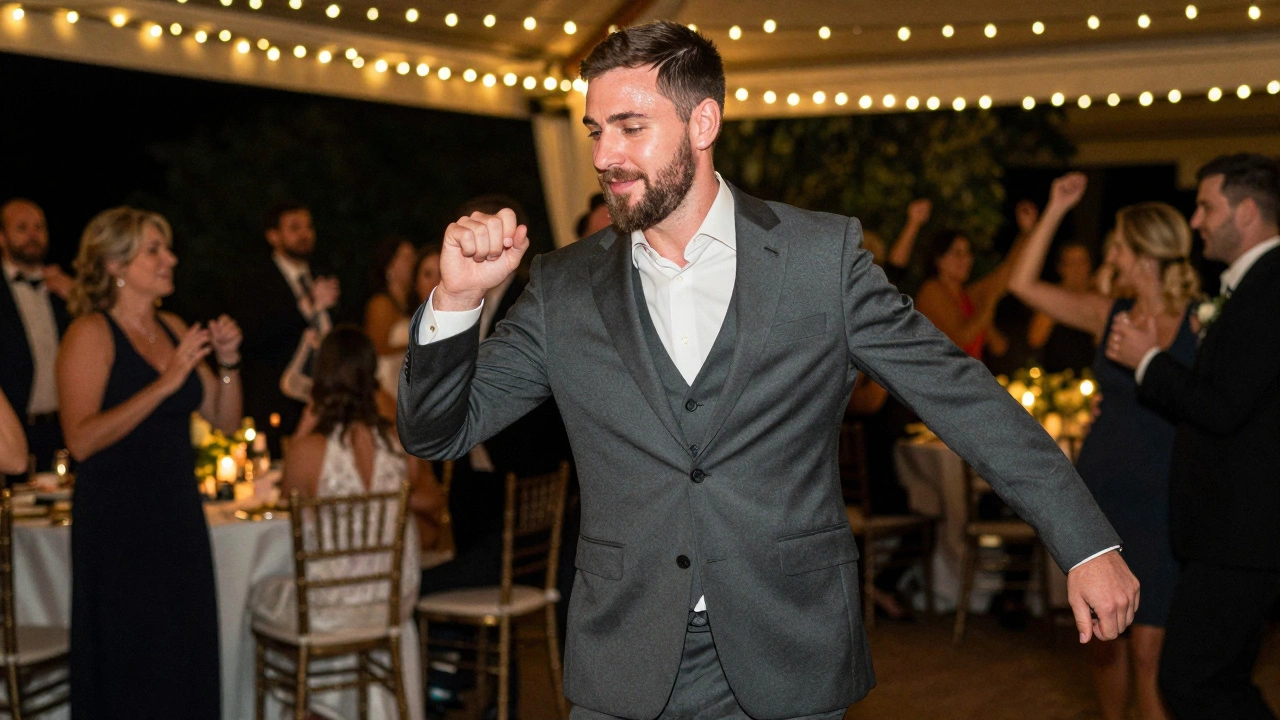
Never wear your full wedding ensemble for the first time on the actual day. Wear it to the rehearsal dinner or at least try it on fully assembled-shirt, tie, jacket, trousers, shoes, and accessories-at home a week prior. Sit down, stand up, hug someone, and walk around. Does the jacket ride up? Are the trousers too tight when sitting?
This test reveals issues that static fitting misses. You might discover that your favorite boutonniere pin scratches your neck or that your cummerbund shifts when you move. Fixing these problems days in advance prevents panic on the morning of the wedding. It also helps you get used to the weight and feel of the outfit, reducing anxiety.
Forgetting About Comfort During Long Hours
A wedding day lasts twelve hours or more. You’ll be standing for ceremonies, dancing for hours, and eating multiple meals. Discomfort will drain your energy and make you irritable. Prioritize breathable shirts, well-fitted underwear, and broken-in shoes.
Break in your new shoes weeks in advance. Walk around the house in them. Apply moleskin pads to potential blister spots. Bring a small kit with extra buttons, a stain remover pen, and mints. Hydrate well. A groom who is comfortable is a groom who is present, smiling, and enjoying the moment with his partner.
Can I wear jeans to my wedding?
Only if it’s a very casual, themed wedding explicitly approved by your partner. For most weddings, even casual ones, dark chinos or tailored trousers are safer and more respectful choices. Jeans often look too informal and can clash with the bride’s gown.
How early should I start shopping for my suit?
Start at least 3-4 months before the wedding. This gives you time to order, receive alterations, and handle any unexpected delays. Off-the-rack suits may arrive quickly, but tailoring takes 2-4 weeks minimum.
Is it okay to rent my wedding suit?
Yes, renting is a great option for one-time use, especially for tuxedos. Just ensure you try it on well in advance and check the return policy carefully. Renting saves money but offers less flexibility for perfect fit compared to buying and altering.
What color suit should I avoid?
Avoid bright neon colors or overly busy patterns that distract from the bride. Also, steer clear of white or ivory suits, which are traditionally reserved for the bride in many cultures. Stick to navy, charcoal, grey, or black for versatility.
Do I need to match my best men exactly?
Not necessarily. While matching suits create a uniform look, coordinating colors (e.g., same shade of blue but different textures) adds depth. Discuss this with your groomsmen early to ensure everyone is comfortable with the level of coordination required.