Purple Wedding Palette Visualizer
Palette Preview
Symbolic Message:
Select options to see the combined meaning of your floral choice.
You’ve picked your venue. You’ve tried on the dress. Now you’re staring at a palette of blooms, wondering if that splash of violet sends the right message. Color in weddings isn’t just about aesthetics; it’s a silent language. When you choose purple wedding flowers are blooms in shades ranging from pale lilac to deep eggplant used to convey specific symbolic messages in nuptial arrangements, you aren’t just decorating tables-you are setting an emotional tone for the entire event.
Purple is complex. It sits right between the passion of red and the calm of blue. Because of this unique position on the color wheel, its meaning shifts dramatically depending on the shade. A soft lavender bouquet tells a completely different story than a cluster of dark, moody irises. If you want your floral design to resonate with your personal narrative, you need to understand what these colors actually say to your guests.
The Core Symbolism of Purple in Weddings
At its heart, purple has always been associated with royalty. Historically, Tyrian purple dye was so expensive that only emperors and kings could afford it. This legacy sticks around today. When you incorporate purple into your wedding, you are tapping into themes of luxury, dignity, and high status. It suggests that your union is something precious and elevated.
Beyond royalty, purple carries heavy spiritual weight. In many cultures, it represents wisdom, ambition, and magic. For a couple who values depth over superficiality, purple signals that this marriage is built on intellectual connection and shared dreams. It’s not a "light and fluffy" color choice; it’s bold. It says you are confident in your love and unafraid to stand out from the sea of white-and-green traditional weddings.
However, context matters. In some Eastern traditions, certain shades of purple can be linked to mourning or transition. While less common in Western weddings, it’s worth considering your guest list’s cultural background. Generally speaking, in the West, purple is seen as romantic but mysterious. It adds a layer of intrigue that keeps the atmosphere engaging rather than predictable.
Decoding the Shades: Light vs. Dark Purple
Not all purples mean the same thing. The difference between a pastel lilac and a deep plum is the difference between a whisper and a shout. To get the symbolism right, you have to look at the specific hue.
| Shade | Symbolic Meaning | Best For |
|---|---|---|
| Lavender | Calmness, serenity, new beginnings | Spring weddings, outdoor ceremonies, relaxed vibes |
| Lilac | First love, youthfulness, innocence | Romantic gardens, vintage themes, intimate gatherings |
| Violet | Faithfulness, loyalty, eternal devotion | Traditional churches, formal affairs, long-term engagements |
| Plum/Eggplant | Luxury, power, mystery, sensuality | Evening receptions, winter weddings, dramatic interiors |
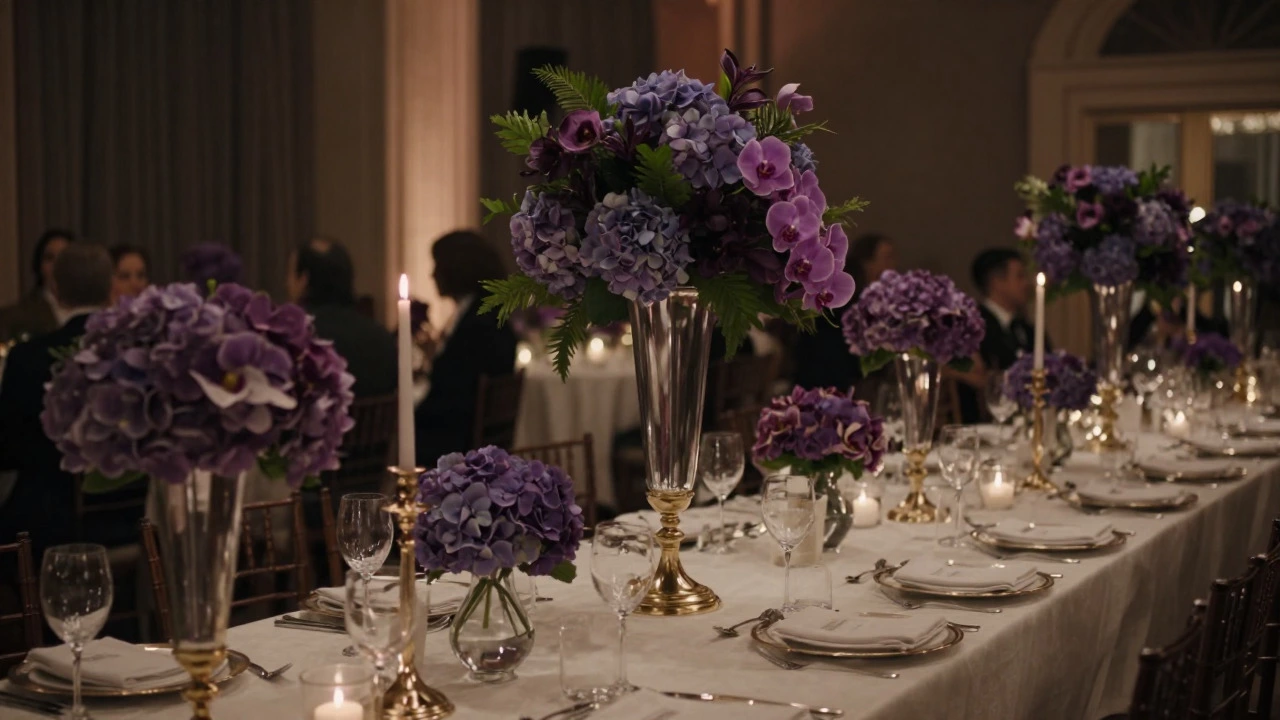
If you want a vibe that feels airy and hopeful, stick to lavender and lilac. These lighter tones soften the space and make large venues feel more welcoming. They pair beautifully with natural light and greenery. On the flip side, if you are planning a black-tie gala in December, go for plum or deep violet. These darker shades absorb light, creating intimacy and drama. They work exceptionally well with candlelight and metallic accents like gold or copper.
Top Purple Flowers and Their Specific Messages
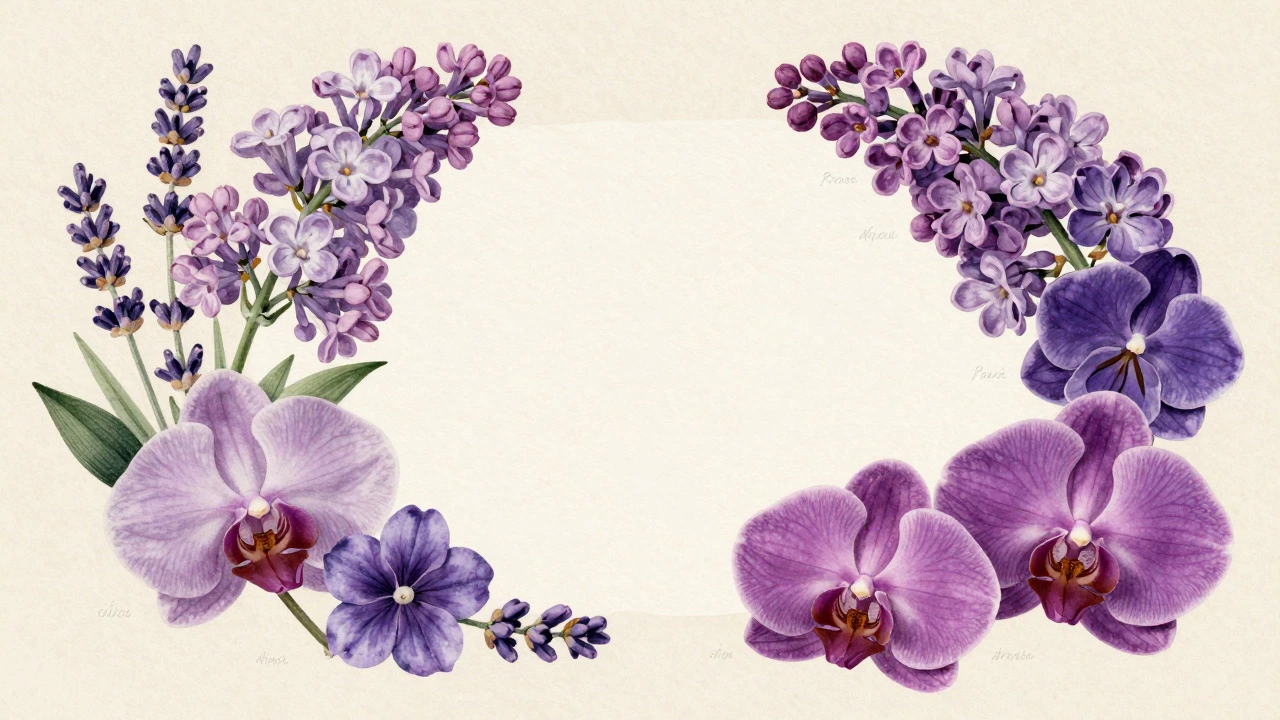
Once you’ve chosen your shade, you need to pick the actual blooms. Each flower type adds another layer of meaning to your arrangement. Here are the most popular purple flowers and what they contribute to your wedding story.
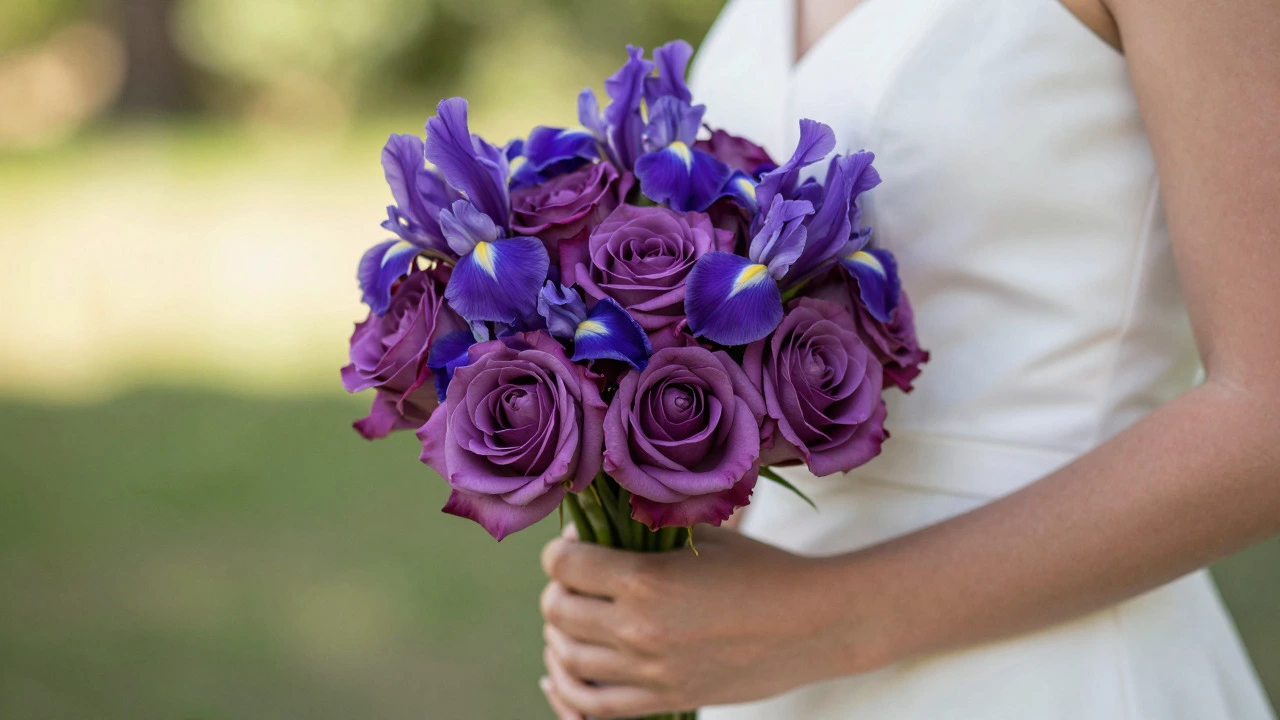
Roses: Purple roses are rare in nature, which makes them special. They symbolize enchantment and love at first sight. If you include purple roses in your bridal bouquet, you are telling guests that your relationship felt magical from the very beginning. They also represent uniqueness-perfect for couples who don’t follow the script.
Iris is a flowering plant known for its sword-like leaves and vibrant petals, often used in weddings to symbolize wisdom and valor. The name Iris comes from the Greek word for rainbow, and it is deeply tied to faith and hope. In Victorian flower language, the iris specifically means "your smile is my sunshine." It’s a cheerful, uplifting addition that balances the sometimes serious tone of deeper purples. Irises also add height and structure to centerpieces, making them a practical choice as well as a symbolic one.
Lavender: While technically a herb, dried or fresh lavender is a staple in rustic and bohemian weddings. Its scent is calming and nostalgic. Symbolically, it stands for devotion and silence. It’s perfect for couples who value quiet moments together over loud celebrations. Lavender also dries beautifully, meaning your guests can take home favors that last for years.
Orchids: Purple orchids scream luxury. They are exotic, elegant, and require careful handling. If you want to project sophistication and refinement, orchids are your best bet. They symbolize rare beauty and strength. Because they are often used in high-end events, they set a premium tone immediately. Just be mindful of the cost; orchids can drive up your floral budget quickly.
Hydrangeas: These big, fluffy blooms are great for filling out arrangements without breaking the bank. Purple hydrangeas symbolize heartfelt emotion and gratitude. They are particularly meaningful if you are thanking your families for their support. Their size makes them ideal for large tablescapes where you need volume and impact.
Pairing Purple with Other Colors
Purple doesn’t have to stand alone. How you pair it changes the overall message. Green is the natural companion to purple, offering a fresh, garden-party feel. Gold elevates purple, reinforcing the royal association. Silver or white keeps it modern and crisp. Avoid pairing purple with bright orange or neon yellow unless you want a chaotic, clashing effect. Stick to harmonious combinations to maintain the intended mood.
- Purple and White: Classic, clean, and timeless. Suggests purity mixed with wisdom.
- Purple and Gold: Opulent and regal. Best for formal evening events.
- Purple and Green: Natural and earthy. Ideal for outdoor or vineyard weddings.
- Purple and Blush Pink: Soft and romantic. Balances the intensity of purple with warmth.
Practical Tips for Using Purple Flowers
Before you commit to a sea of violet, consider the season. Purple flowers are abundant in spring and early summer, especially lilacs and lavender. In late autumn and winter, options shrink, and prices rise. If you’re having a winter wedding, expect to pay more for fresh purple blooms, or consider using preserved flowers and greenery to keep costs down.
Lighting is another critical factor. Purple looks different under sunlight versus indoor bulbs. Test your bouquets in the actual lighting conditions of your venue. Dim lights can make purple look almost black, while harsh fluorescent lights can wash it out. Work with your florist to do a mock-up in similar lighting to ensure the color reads correctly.
Finally, think about accessibility. Some guests may have visual impairments or color blindness. Ensure that your purple elements are distinct enough from other colors in the decor so they don’t blend into the background. High contrast helps everyone appreciate the design.
Are purple wedding flowers expensive?
It depends on the flower type and season. Lavender and lilacs are generally affordable in spring. Orchids and imported purple roses can be pricey year-round. Budget-friendly alternatives include purple statice, lisianthus, and dyed baby’s breath.
What does a purple rose mean in a wedding?
A purple rose symbolizes enchantment, love at first sight, and uniqueness. It suggests that the couple’s relationship is rare and magical, standing out from conventional romances.
Can I use purple flowers for a church wedding?
Yes, absolutely. Violet and deep purple shades are traditionally associated with faithfulness and spirituality, making them appropriate for religious ceremonies. Just check with your officiant for any specific restrictions.
Which purple flower is best for a rustic wedding?
Dried lavender, purple asters, and wildflowers like cornflowers work best for rustic themes. They offer a natural, unpolished look that fits barns, fields, and outdoor settings perfectly.
Do purple flowers clash with other colors?
Purple pairs well with white, gold, green, and blush pink. It clashes with bright orange, neon yellow, and sometimes red if not balanced carefully. Stick to analogous or complementary colors for harmony.