Wedding Decor DIY vs. Professional Calculator
Your Inputs
Enter your details to calculate the true cost difference.
| Decor Item | DIY Cost | Pro Cost | Risk Level |
|---|---|---|---|
| Total Estimated Cost | $0 | $0 |
Net Savings: $0
Direct out-of-pocket difference
True Time Investment: 0 hrs
Estimated hours spent crafting & setting up
The Verdict: Enter values to see analysis.
There is a persistent myth in the wedding industry that doing your own wedding decorations will automatically slash your budget by thousands. You’ve seen the Pinterest boards: hand-painted signs, mason jar centerpieces, and floral arrangements made from grocery store blooms. They look effortless and cheap. But before you glue down your first ribbon or cut your first piece of burlap, you need to look at the real math. The question isn’t just about the price of supplies; it’s about the value of your time, your stress levels, and the risk of things going wrong.
In Auckland, where venue hire alone can range from $3,000 to over $15,000 for premium spots, every dollar counts. I’ve talked to dozens of couples who tried the DIY route. Some saved big money and felt proud. Others ended up paying a professional to fix their mistakes, costing them more than if they had hired help from the start. Let’s break down exactly when DIY saves you cash and when it’s a financial trap.
The Hidden Costs of DIY Wedding Decor
When you calculate the cost of decorating your own wedding, most people only add up the materials. If you buy flowers, vases, candles, and tablecloths, the receipt might show $800. A professional florist might quote you $2,500 for the same look. On paper, you’ve saved $1,700. That feels like a win. But this calculation ignores three critical factors: labor, logistics, and waste.
Labor is the biggest hidden expense. In the professional world, decorators charge for setup and teardown. For a standard wedding with 10 tables, arches, and ceremony seating, this can take two people eight hours. At a rate of $50 an hour per person, that’s $800 in labor alone. If you do it yourself, that $800 stays in your pocket. However, you are trading money for time. How many weekends did you spend crafting? Did you miss work? Did you pay friends to help, and then feel guilty asking them to stay late?
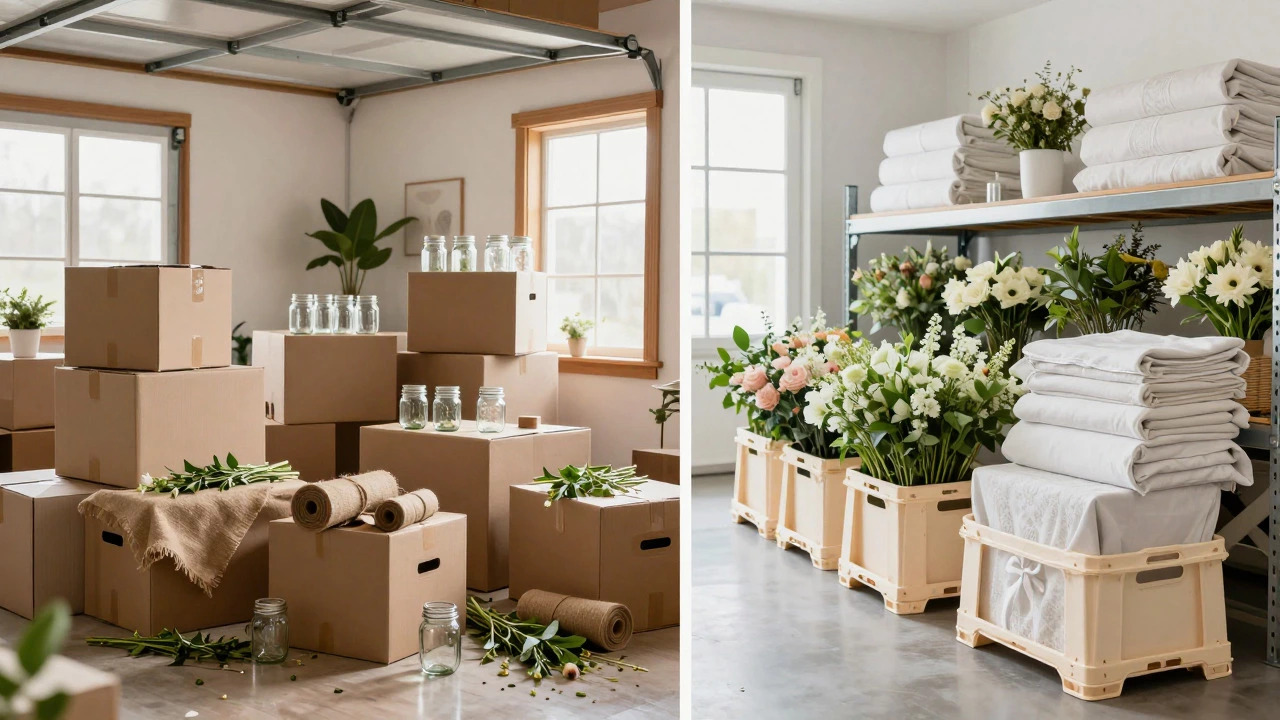
Logistics is another silent killer. Where do you store 50 boxes of decorations for three months? Do you have a car large enough to transport fragile glassware and fresh flowers without breaking them? If you don’t have storage space, you’re paying for a self-storage unit. In Auckland, a small unit runs about $150-$200 a month. Over six months, that’s $900-$1,200 gone. Professionals have vans and warehouses. You have a sedan and a garage that’s already full.
Waste is the third factor. When you buy wholesale flowers, they come in bulk bunches. If you need 20 roses for a centerpiece but buy a bunch of 50 because that’s the minimum order, what happens to the other 30? You throw them away. Professionals reuse stems across multiple arrangements or sell leftovers. You likely won’t. This inefficiency can inflate your material costs by 20-30%.
When DIY Actually Saves Money
So, is it ever worth it? Absolutely. There are specific scenarios where DIY is the smartest financial move. These situations usually involve low-skill requirements, high-markup items, or personal sentimental value.
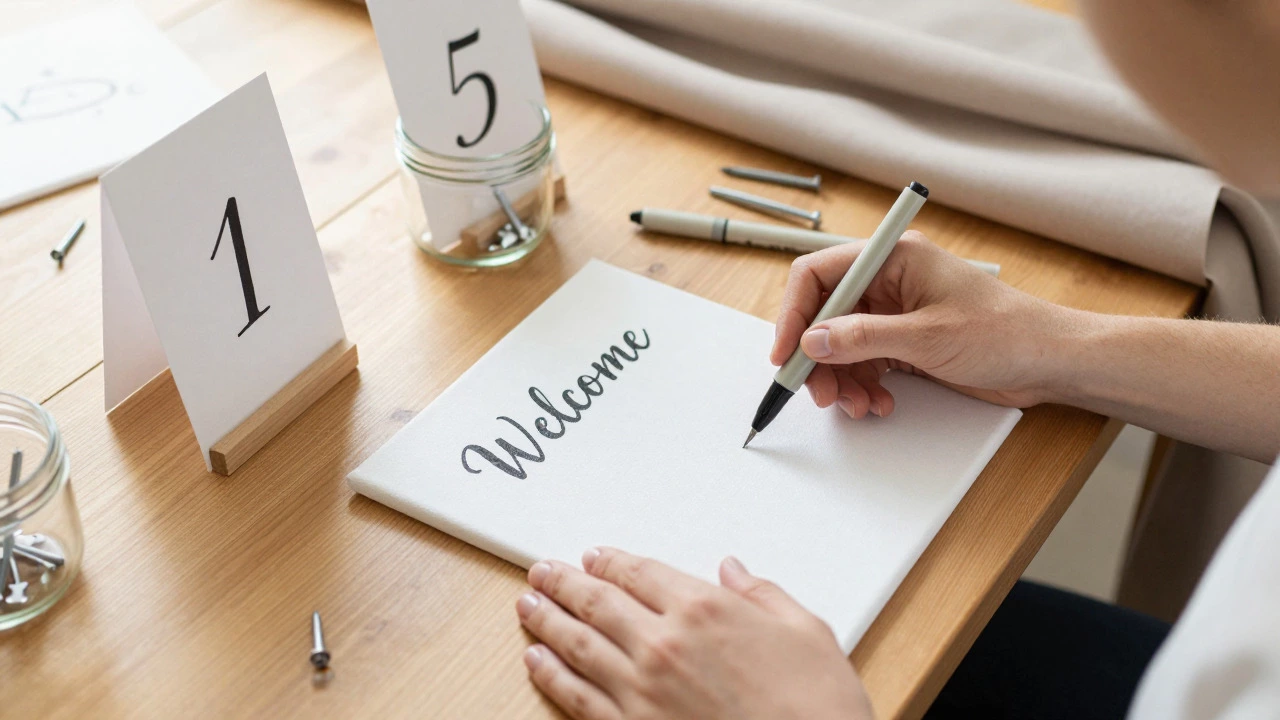
- Simple Signage: Calligraphy or printed signs have a massive markup. A professional calligrapher might charge $200 for a welcome sign. You can buy a canvas and paint pen for $30. If you have steady hands, this is a no-brainer.
- Fabric Draping: Renting linen for head tables or altar backdrops is expensive. Buying solid-color fabric bolts online is cheap. With a hot glue gun and some help, you can drape fabric yourself. Just ensure you measure twice.
- Table Numbers: Instead of hiring a designer for custom acrylic numbers, print them on cardstock and place them in simple frames or jars. The aesthetic impact is similar, but the cost is pennies.
- Photo Booth Props: Professional photo booth rentals include props, but you can make cardboard cutouts and funny signs for under $50. This adds fun without the rental fee.
The key here is simplicity. If the item requires precision, structural integrity, or perishable materials, proceed with caution. If it’s flat, static, and forgiving, go for it.
When to Hire a Professional
Some aspects of wedding decor are risky to DIY. These are areas where a mistake looks obvious, creates safety hazards, or requires specialized equipment.
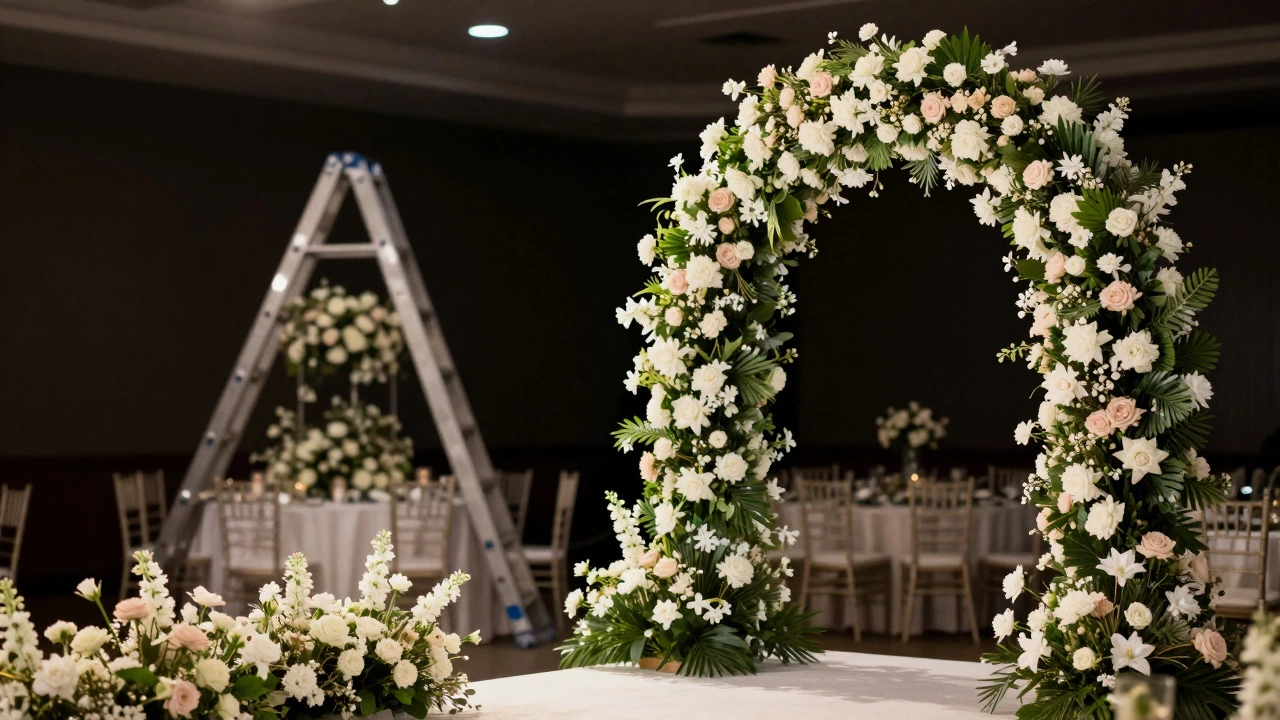
- Floral Arches and Installations: Building a flower wall or arch requires foam, mechanics, and heavy lifting. Flowers wilt quickly. If your arch collapses during photos, there’s no redo. Florists know how to secure structures and keep flowers hydrated.
- Ceiling Hangings: Hanging lanterns, fairy lights, or fabric from ceilings involves ladders and drilling into venue walls. Venues often require insurance certificates for anyone doing overhead work. Professionals carry this insurance; you probably don’t.
- Complex Centerpieces: Multi-tiered arrangements with mixed textures and heights require design skills. Amateurs often create top-heavy arrangements that tip over. A pro ensures balance and visual harmony.
- Lighting Design: While string lights are easy, uplighting and dance floor lighting require electrical knowledge. Incorrect wiring can trip breakers or cause fires. Leave this to licensed technicians.
Hiring a professional for these elements buys you peace of mind. You’re not just paying for the decor; you’re paying for expertise and liability coverage.
| Item | DIY Estimated Cost | Professional Estimated Cost | Risk Level |
|---|---|---|---|
| Welcome Sign | $30 - $60 | $150 - $300 | Low |
| Centerpieces (10 tables) | $400 - $600 | $1,200 - $2,000 | Medium |
| Floral Arch | $300 - $500 | $800 - $1,500 | High |
| Linen Rental (Head Table) | $100 (buy fabric) | $300 - $500 | Low |
| Ceiling Lighting | $200 (materials) | $600 - $1,000 | High |
The Time Tax: Calculating Your Hourly Rate
To make an informed decision, assign a monetary value to your time. If you earn $40 an hour at your job, every hour spent crafting is effectively costing you $40 in lost wages. Add overtime if you’re working weekends.
Let’s say you plan to DIY your centerpieces. Research shows that arranging one complex floral centerpiece takes about 45 minutes for a beginner. For 10 tables, that’s 7.5 hours. At $40/hour, your labor cost is $300. Now add the cost of materials ($500). Your total DIY cost is $800. A professional charges $1,500. You still save $700. But what if you also DIY the signage ($2 hours = $80) and table numbers ($1 hour = $40)? Now you’ve invested 10.5 hours of your life. Is saving $700 worth losing a weekend with your partner or missing out on pre-wedding relaxation?
This "time tax" is why many couples choose a hybrid approach. They handle the low-stress, low-skill items and hire pros for the high-impact, high-risk elements.
Hybrid Approach: The Best of Both Worlds
You don’t have to choose between all-DIY and all-professional. The most cost-effective strategy is often a mix. Identify which decor elements matter most to you visually. If flowers are your priority, hire a florist for the bouquets and centerpieces. Then, DIY the simpler items like place cards, menu inserts, and thank-you notes.
Another tactic is to rent instead of buy. Many companies in Auckland offer rental packages for chairs, linens, and even decorative furniture. Renting avoids the hassle of storage and disposal. You get high-quality items for a fraction of the purchase price, and the company handles delivery and pickup.
Consider also the "family helper" factor. If you ask family members to help, be realistic. Not everyone has a green thumb or an eye for design. Clear instructions and templates are essential. Provide them with step-by-step guides and photos. Treat them like employees: provide snacks, water, and clear timelines. This prevents frustration and ensures consistency.
Pitfalls to Avoid When Decorating Yourself
If you decide to go the DIY route, avoid these common mistakes that turn savings into regrets:
- Underestimating Setup Time: Things always take longer than expected. Plan for double the time you think you need. Start setting up the day before if possible.
- Ignoring Venue Rules: Check with your venue about open flames, tacks, and adhesives. Some venues ban candles or require fire extinguishers nearby. Others forbid anything being attached to walls. Violating these rules can result in fines.
- Buying Too Much Early: Fresh flowers should be bought 1-2 days before the event. Dried flowers and artificial decor can be bought earlier. Don’t clutter your home with boxes months in advance.
- Skip the Rehearsal: Practice one centerpiece or sign before the big day. You’ll discover tools you’re missing or techniques that don’t work.
Final Verdict: Is It Cheaper?
Yes, decorating your own wedding is cheaper in terms of direct out-of-pocket expenses. You can save anywhere from 30% to 60% on decor costs by handling materials and labor yourself. However, this savings comes at the cost of time, energy, and potential stress. For couples with flexible schedules, creative confidence, and strong support networks, DIY is a rewarding and financially sound choice. For those with demanding jobs, tight timelines, or high anxiety, hiring professionals may be worth the extra cost for the peace of mind it brings.
The best approach is selective DIY. Focus your efforts on items where personal touch matters most and where the skill barrier is low. Outsource the complex, perishable, or hazardous elements. This balanced strategy maximizes savings while minimizing risk, ensuring your wedding looks beautiful without breaking the bank or burning you out.
How much can I realistically save by DIYing my wedding decorations?
Most couples save between 30% and 60% on their decor budget by DIYing. For example, if a professional decorator quotes $5,000, a DIY approach might cost $2,000-$3,500 in materials. However, this doesn't account for the value of your time or potential wasted materials.
What are the easiest wedding decorations to DIY?
The easiest items to DIY are flat or non-perishable: welcome signs, table numbers, menu cards, photo booth props, and simple fabric draping. These require minimal skill and have low risk of failure.
Should I DIY my wedding flowers?
Only if you have experience with floral design. Flowers are perishable, tricky to arrange, and labor-intensive. For beginners, simple bud vases with single stems are manageable, but complex centerpieces or arches are better left to professionals.
Do venues allow DIY decorations?
Most venues allow DIY decor, but with restrictions. Common rules include bans on open flames, limitations on adhesives used on walls, and requirements for insurance if you're hanging items from ceilings. Always check your contract.
How far in advance should I start DIY wedding prep?
Start planning 6-12 months ahead. Order materials 3-6 months prior. Begin crafting 2-3 weeks before the wedding. Set up non-perishable items the day before, and fresh flowers the morning of the event.