Wedding Ring Payment Etiquette Calculator
Confused about who should pay for your wedding bands? Use this tool to compare traditional norms with modern approaches and generate a fair payment plan.
Select an approach and enter a budget to see the recommended split and etiquette tips.
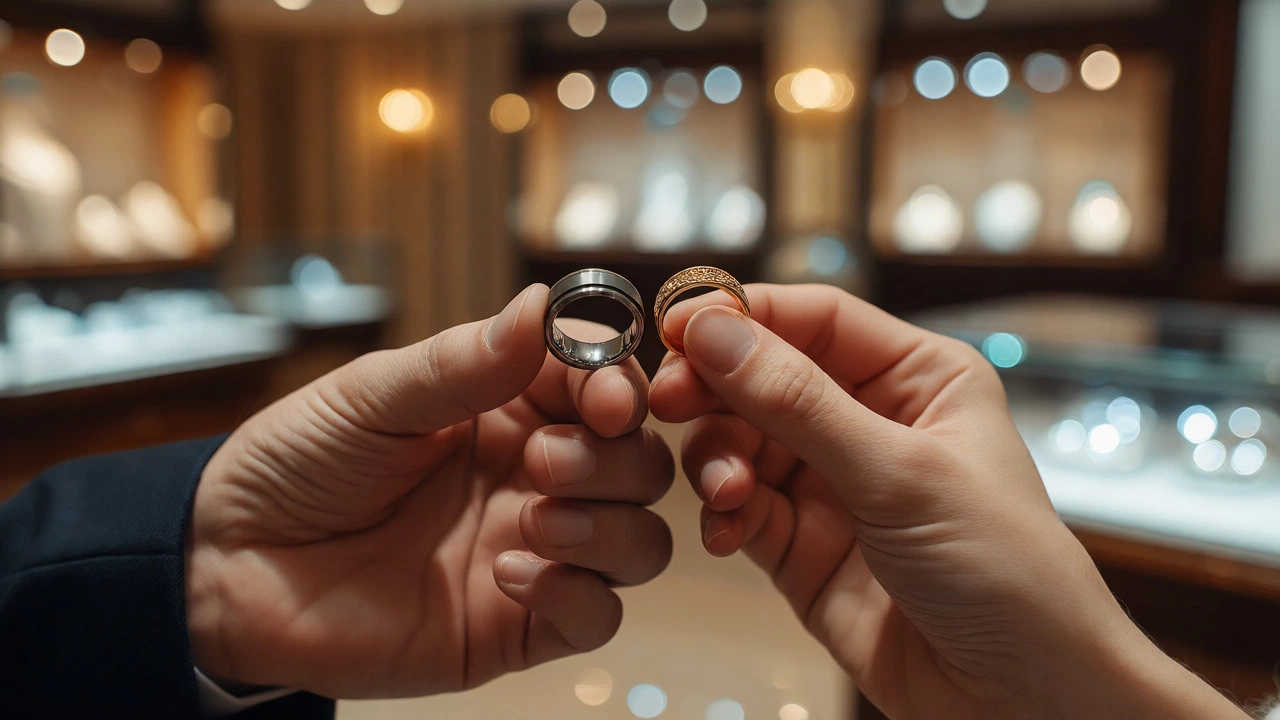
You’re standing in a jewelry store, staring at two bands that look suspiciously similar. One is for you, one is for your partner. The sales associate smiles politely and asks, "Would you like to pay separately or together?" Suddenly, the romantic haze clears, and a very practical question hits: who actually pays for these things?
If you’ve ever scrolled through wedding forums or asked your parents, you’ve probably heard conflicting answers. Some say the groom buys both. Others say each person buys their own. Still others suggest splitting the cost down the middle. It’s confusing because there isn’t one universal law of physics for wedding finances. But there are strong traditions, modern shifts, and plenty of ways to make this work without awkwardness.
| Scenario | Traditional Rule | Modern Approach |
|---|---|---|
| Groom’s Band | Bride (or her family) | Groom or Split Cost |
| Bride’s Band | Groom | Split Cost or Each Pays Own |
| Engagement Ring | Groom | Shared Budget or Groom |
| Matching Sets | N/A | Joint Purchase |
The Traditional Script: Why the Groom Usually Pays
Let’s start with where we came from, because understanding the history helps explain why some families still get twitchy about money talk. Historically, marriage was often a transaction between families. The groom provided an engagement ring as a pledge of his intent to marry and support his bride. This wasn’t just romance; it was collateral. If he broke off the engagement, she kept the ring. That’s why the diamond industry spent decades convincing us that two months’ salary was the magic number-it gave the gesture a tangible value.
When it comes to the actual wedding bands-the simple metal circles exchanged during vows-tradition dictates that the groom purchases the bride’s wedding band. Often, he also covers his own band. In this model, the bride’s family might cover other costs, but the groom handles the rings. This stems from the idea that the groom is "buying" into the union, or at least providing the symbols of that commitment.
However, this script has been fading since the mid-20th century. As women entered the workforce in droves and dual-income households became the norm, the financial dynamics shifted. The idea that one person must shoulder the entire cost of the symbols feels outdated to many couples today. Yet, if you have traditional grandparents or plan a formal ceremony, sticking to this route can prevent hurt feelings. Just know that even within this tradition, flexibility is common. Many grooms happily let their partners chip in for their own bands.
Modern Etiquette: Splitting the Bill
Here’s the reality for most couples planning weddings in 2026: you are likely building a life together before you sign the marriage license. You share rent, groceries, and streaming subscriptions. So why would you suddenly switch to a 1950s banking model for jewelry?
Modern etiquette strongly supports sharing the cost. This doesn’t mean you need to pull out a calculator and divide every cent by two. It means approaching the purchase as a joint project. If you’re buying matching sets, you pay from a shared account. If you’re picking individual styles, you might agree to spend the same amount on each ring, regardless of who picks which one. This keeps things fair without keeping score.
A popular approach I see among friends here in Auckland is the "equal value" rule. If the groom picks a thick tungsten carbide band for himself and the bride picks a delicate gold filigree ring, they agree that both rings should cost roughly the same. If one is cheaper, they use the leftover budget for something else-maybe better engraving, a nice box, or upgrading the stones. This removes the power dynamic of "I paid more, so I chose." Instead, it becomes "We chose these together, and we balanced the budget."

The Case for Buying Your Own Ring
Some couples prefer total independence. Each person walks into the jeweler, picks what they love, and swipes their own card. This is particularly common when partners have vastly different tastes or budgets. Maybe one partner wants a vintage heirloom restoration, while the other wants a sleek, modern titanium band. Combining those into one budget can lead to compromise fatigue.
Buying your own ring also sidesteps potential resentment. If you know exactly how much you’re spending, you don’t feel guilty asking for a slightly wider band or a different metal. It empowers you to prioritize what matters to you personally. For example, if durability is your top concern because you work with your hands, you might choose a harder metal like platinum or cobalt chrome. Your partner might prioritize aesthetics and choose yellow gold. Neither choice is wrong, and neither person has to justify their preference to the other’s wallet.
This method works best for couples who keep separate finances or who view the rings as personal accessories rather than shared assets. It’s clean, simple, and avoids any discussion about whose "share" of the wedding budget went where.
Family Contributions: When Parents Pay
Not everyone starts from scratch. If your parents or in-laws offered to help with wedding costs, the rings might fall under that umbrella. Traditionally, the bride’s family covered the majority of the wedding expenses, including the floral arrangements and catering. In this scenario, the groom’s family might offer to buy the rings as their contribution. Or vice versa.
But be careful here. Money attached to strings can tangle quickly. If your mother-in-law is paying for the rings, she might expect input on the style. Does she want classic solitaires? Does she hate black diamonds? Before accepting financial help, have a frank conversation about creative control. You can accept the funding while gently asserting your final say on design. A phrase like, "We really appreciate your generosity! We’ve already picked out designs that match our daily wear, but we’d love for you to join us for the fitting," sets a clear boundary.
Also, clarify who owns the rings once purchased. Are they gifts to the couple? Or are they loans against future inheritance? Most people assume they’re gifts, but writing it down-even just a text message confirming "Thanks for covering the rings!"-can save headaches later.
Practical Tips for the Jewelry Store Visit
Once you’ve decided who is paying, the logistics matter. Here’s how to navigate the process smoothly:
- Set a Total Budget First: Don’t walk into the store deciding who pays. Decide how much you’re willing to spend for both rings combined. This anchors the conversation and prevents impulse upgrades.
- Ask About Bundles: Many jewelers offer discounts if you buy both rings at the same time. Even if you’re splitting the cost, ask if the price changes based on volume. Sometimes buying a set saves 10-15%.
- Consider Metal Costs: Platinum is significantly more expensive than white gold. If one partner insists on platinum, factor that into the split. It’s not fair to ask the partner choosing cheaper gold to subsidize the premium metal unless agreed upon.
- Engraving is Cheap: Adding dates or initials usually costs little extra. If you’re splitting costs, consider adding engraving to both rings as a way to personalize them without breaking the bank.
Remember, the rings are worn daily. Comfort and lifestyle fit trump tradition. If you’re a mechanic, a high-profile diamond setting might snag on tools. If you swim regularly, certain metals might react to chlorine. Let practicality guide the purchase, and let fairness guide the payment.
What If You Can’t Agree?
Disagreements over ring costs are rarely about the money itself. They’re about values. One partner might see the ring as a sentimental token worth saving up for. The other might see it as a frivolous expense compared to a house deposit. Talk about what the ring represents to each of you.
If one person feels pressured to overspend, step back. There is no shame in buying simpler bands now and upgrading later. Many couples buy modest rings for the ceremony and add eternity bands or upgrade settings after a milestone anniversary. This relieves the immediate financial pressure and allows the rings to evolve with your relationship.
Ultimately, the "right" answer is the one that makes both partners feel respected and secure. Whether that means the groom pays, you split it, or you each buy your own, ensure the decision reflects your partnership, not just a rulebook from 1954.
Does the groom traditionally pay for both wedding bands?
Traditionally, yes. The groom was expected to purchase the bride’s wedding band and often his own as well. However, this custom varies by culture and era, and modern couples frequently split the cost or purchase their own rings individually.
Who pays for the man’s wedding ring?
Historically, the bride or her family paid for the groom’s band. Today, it is common for the groom to pay for his own ring, or for the couple to split the cost of both bands equally. There is no strict rule, so communication is key.
Is it weird to split the cost of wedding rings?
Not at all. In fact, splitting the cost is increasingly common among modern couples who manage finances jointly or independently. It promotes equality and reduces financial strain on one partner. Most jewelers are accustomed to processing split payments or handling joint accounts.
Can parents pay for the wedding rings?
Yes, parents often contribute to wedding costs, including rings. If they offer to pay, clarify whether they have preferences for style or metal. Accepting help is fine, but ensure the couple retains final decision-making power over the design to avoid conflict.
Do you have to buy matching wedding rings?
No, matching rings are not required. While many couples choose complementary styles, it is perfectly acceptable to pick rings that suit individual tastes and lifestyles. The only requirement is that both partners feel comfortable wearing their chosen band daily.