Groom Suit Color Selector & Etiquette Guide
Walk into any bridal boutique or scroll through a wedding magazine, and the visual language is clear: brides wear white. It’s the default, the expectation, the standard. But flip that script for the groom, and things get awkward. If you’ve ever wondered why groom suits are almost exclusively dark while brides shine in ivory, you aren’t alone. The answer isn’t just about fashion trends; it’s rooted in centuries of class signaling, practical laundry issues, and rigid social etiquette that still lingers today.
While the bride’s white dress has become a symbol of purity (or perhaps just a marketing triumph by Queen Victoria), the groom’s wardrobe has been stuck in a darker palette. This article breaks down exactly why this disparity exists, where the few exceptions come from, and how modern couples are rewriting these unwritten rules without looking like they’re attending the wrong event.
The Royal Origin of the White Dress
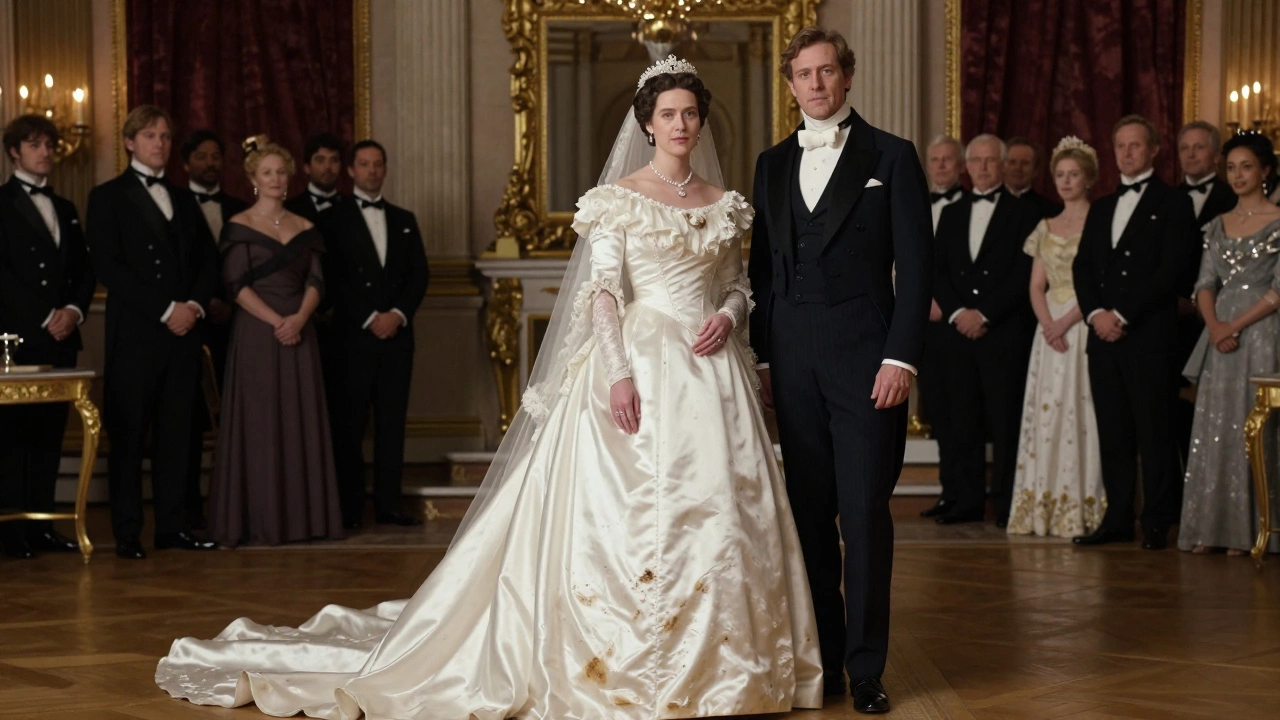
To understand why grooms don’t wear white, we first have to look at why brides do. Before 1840, brides wore whatever their best dress was, regardless of color. Wealthy women might wear blue, gray, or even red. Then came Queen Victoria. When she married Prince Albert, she chose a white satin gown. This wasn’t a statement on purity; it was a flex. White silk stained easily and was impossible to clean. By wearing it, Victoria signaled that she was so wealthy she didn’t need to reuse her wedding dress. It was a status symbol for the elite.
As photography became popular in the late 19th century, white dresses photographed better than other colors. The trend trickled down from royalty to the middle class, eventually becoming the global standard. However, this revolution never really happened for men’s formal wear. Men’s fashion had already stabilized into a more conservative, uniform direction decades earlier.
The Rise of the Dark Suit and Tuxedo
While women’s fashion was undergoing a chromatic revolution, men’s formal wear was solidifying around the concept of the "livery" and the evening tailcoat. In the 19th century, the distinction between day and night wear was strict. For daytime events, men wore morning coats-typically black or dark gray with contrasting tails. For evening events, the black tailcoat or the dinner jacket (what we now call a tuxedo) became standard.
The tuxedo, specifically, originated in the United States in the 1880s. It was designed as a less formal alternative to the full tailcoat, allowing gentlemen to eat comfortably without a long train getting in the way. Black or midnight blue became the dominant colors because they were slimming, authoritative, and hid stains. A white suit jacket in the evening was considered inappropriate, reserved only for specific summer resort wear or tropical climates.
This created a visual hierarchy. The bride, in white, stood out as the focal point. The groom, in black or navy, provided a neutral backdrop that framed her. This contrast ensured that all attention remained on the bride, adhering to the traditional patriarchal structure of weddings where the woman was the "star" of the ceremony.
Practicality and Social Signaling
Beyond tradition, there’s a pragmatic reason grooms avoid white. Think about what happens on a wedding day. There are hugs, spills, sweat, and potentially messy venues. A white suit is a nightmare to maintain. Even high-quality fabrics like linen or cotton show dirt instantly. A black wool suit, on the other hand, is forgiving. It looks sharp whether you’re walking down a church aisle or dancing on a dusty farm floor.
Furthermore, in many cultures, white clothing is associated with mourning or death. In parts of Asia, for example, white is the traditional color of bereavement. While Western culture adopted white for weddings, the global association of white with solemnity meant that dark colors remained safer bets for celebratory male attire. Wearing a bright white suit could inadvertently send the wrong message to guests from diverse cultural backgrounds.
When Do Grooms Wear White?
So, is it strictly forbidden? Not entirely. There are specific contexts where a groom in white is not only acceptable but expected. These exceptions usually revolve around climate, season, and formality level.
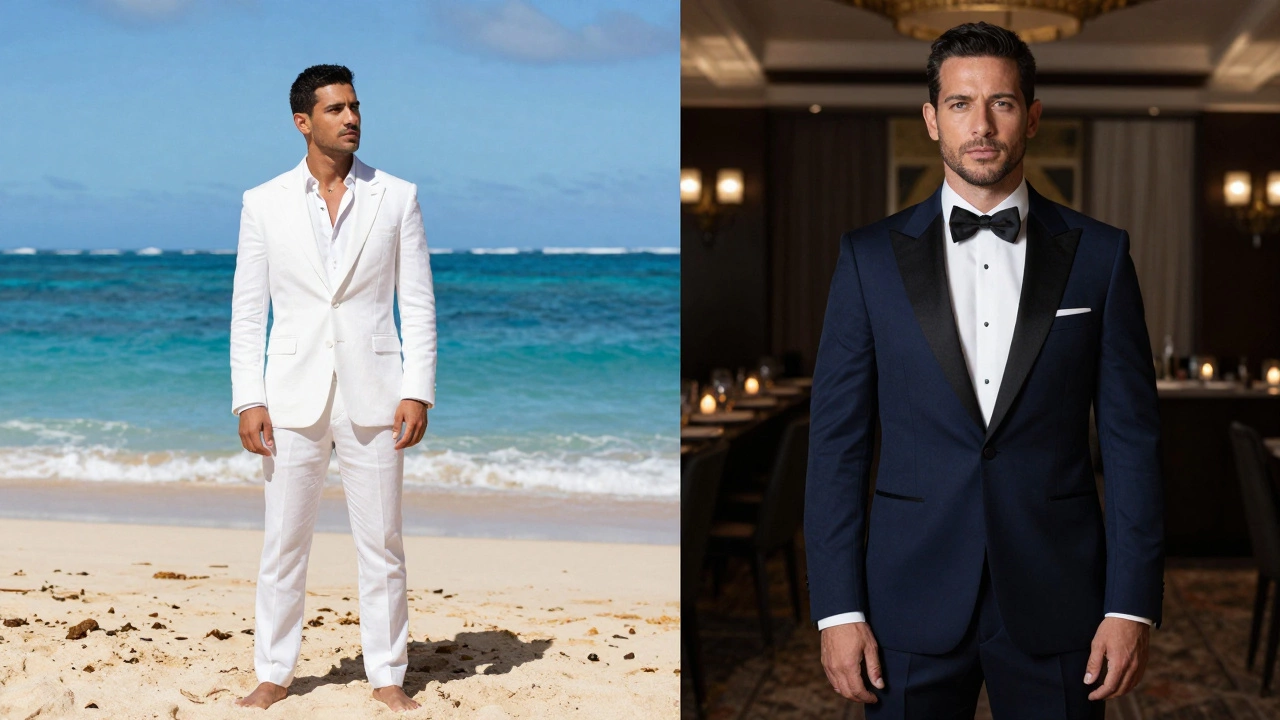
- Tropical Weddings: In hot, humid climates like Hawaii, the Caribbean, or Southeast Asia, heavy black wool is unbearable. Light-colored suits, including white linen or seersucker, are common. Here, the white suit signals relaxation and adaptation to the environment rather than a challenge to tradition.
- Summer Daytime Events: A cream or off-white suit can work for a garden party or beach wedding in July. However, it’s rarely pure white. Shades like ivory, beige, or light gray are preferred to soften the look and distinguish it from the bride’s dress.
- Cultural Traditions: In some South Asian weddings, the groom may wear a sherwani in white or cream, often embellished with gold embroidery. This is deeply rooted in local customs and differs significantly from the Western three-piece suit.
Even in these cases, the groom’s white is usually textured (linen, tweed) or colored (cream, ecru) to ensure it doesn’t clash visually with the bride’s smoother, brighter fabric.
The Risk of Clashing
The biggest practical reason against grooms wearing white is visual confusion. Wedding photography relies on contrast. If both partners are wearing similar shades of white, they blend together in photos. This makes it difficult for photographers to separate subjects from the background or from each other, especially in outdoor settings with bright sunlight.
Additionally, if the groom wears white, he risks upstaging the bride. The entire aesthetic of a traditional wedding is built around the bride being the brightest element in the room. A white suit disrupts this balance, creating a competitive dynamic that most couples want to avoid. You want the couple to look like a unit, not two solo acts fighting for attention.
Modern Alternatives to the Standard Black Suit
If you’re a groom who feels stifled by the idea of a black tuxedo but wants to avoid the pitfalls of white, you have plenty of stylish alternatives. The goal is to stand out without breaking etiquette.
| Color | Best Season | Vibe/Formality | Pair With |
|---|---|---|---|
| Midnight Blue | All Year | Formal/Elegant | Silver tie, white shirt |
| Charcoal Gray | Fall/Winter | Professional/Sleek | Burgundy pocket square |
| Light Gray | Spring/Summer | Smart Casual | Blue or pink tie |
| Navy Blue | All Year | Classic/Versatile | Gold accessories |
| Beige/Tan | Summer | Relaxed/Coastal | Brown shoes, no tie |
Midnight blue is particularly effective. From a distance, it looks black, satisfying traditional expectations, but in natural light, it reveals a rich depth that photographs beautifully. It also complements a wide range of skin tones better than stark black.
Breaking the Rules Without Breaking Tradition
Today, wedding etiquette is more flexible than ever. Some progressive couples choose to coordinate colors rather than follow the black-and-white dichotomy. You might see grooms in burgundy, forest green, or even pastel suits. However, when considering a light-colored suit, always consult with your photographer. They will tell you that contrast is king. If you go light, ensure your bride’s dress is distinct enough in texture or shade to maintain visual separation.
Ultimately, the reason grooms don’t wear white is a mix of historical inertia, practical stain management, and a desire to keep the focus on the bride. But fashion evolves. As long as you’re confident, comfortable, and coordinated with your partner, the color of your suit is less important than the fit and the feeling.
Can a groom wear a white tuxedo to a winter wedding?
Generally, no. White tuxedos are traditionally reserved for warm-weather or tropical weddings. In winter, white can look out of place against dark backgrounds and may appear too casual or summery. Stick to black, charcoal, or navy for winter events to match the seasonal tone.
Why do bridesmaids wear different colors than the groomsmen?
This is part of the visual hierarchy mentioned earlier. Bridesmaids’ dresses are chosen to complement the bride’s white gown and the groom’s dark suit. Typically, bridesmaids wear colors that pop against the dark suits of the groomsmen, creating a balanced and aesthetically pleasing palette for photos.
Is it rude for a guest to wear white to a wedding?
Yes, it is widely considered rude for guests to wear white, as it competes with the bride. This rule applies to both men and women. Guests should avoid white, ivory, or champagne-colored outfits to ensure the couple remains the center of attention.
What color suit should a groom wear if the bride is wearing ivory?
If the bride is wearing ivory, which is warmer and yellower than pure white, the groom should stick to classic dark neutrals like black, charcoal, or navy. Avoid light grays or beiges that might clash with the warmth of the ivory. A deep navy provides a sophisticated contrast that enhances the richness of the ivory dress.
Are there any cultures where grooms traditionally wear white?
In some traditional Indian ceremonies, grooms may wear white or cream-colored sherwanis, especially in North India. However, this is often heavily embroidered with gold or silver thread, distinguishing it from plain Western white suits. In Japan, grooms typically wear black montsuki haori hakama or Western-style black tuxedos, avoiding white for the same reasons as the West.