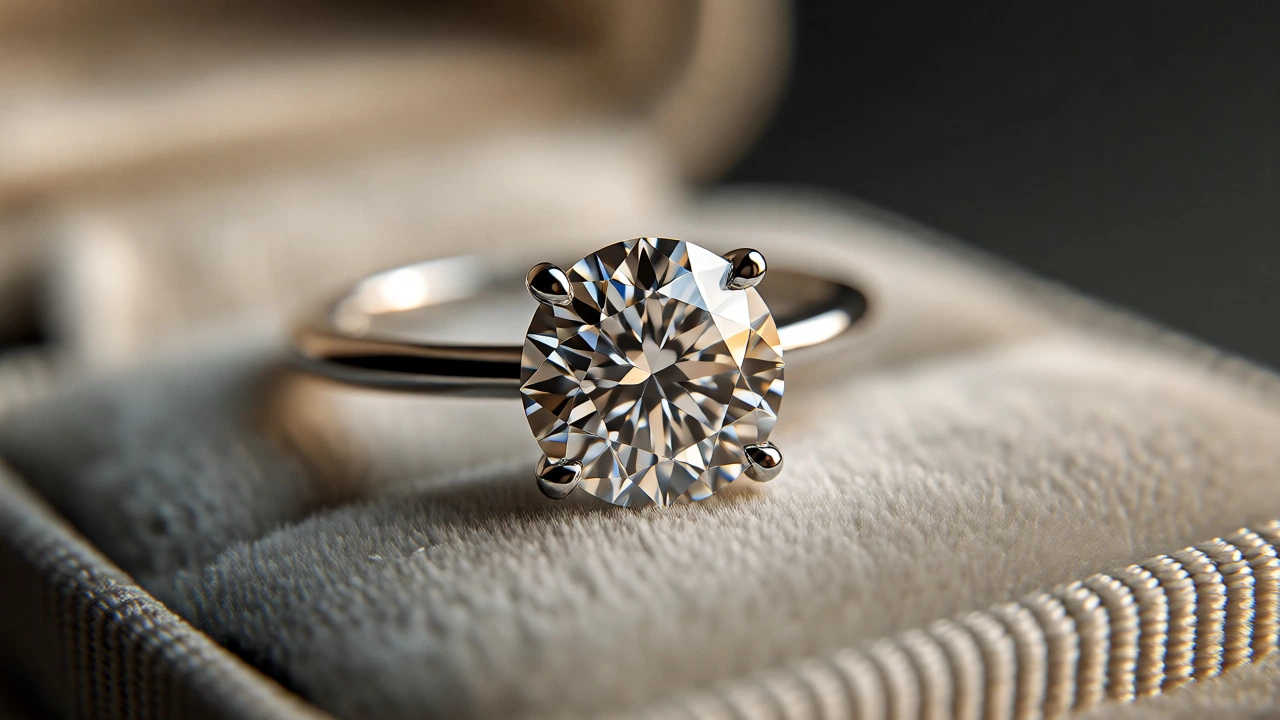
Wedding Ring Budget & Value Estimator
Estimated Stone Specs
-- Carats
Quality Expectation:
Calculating...
Financial Breakdown
- Stone Cost: $0
- Setting Cost: $0
- Total Upfront: $0
Long-Term Costs
Jewelry insurance is an ongoing expense.
Smart Shopping Tips for Your Budget
- Cut is King: Prioritize Excellent/Ideal cut over clarity or color for maximum sparkle.
- The Carat Trap: Consider buying slightly below round numbers (e.g., 0.90ct instead of 1.0ct) for significant savings.
- Certification: Always insist on a GIA report for diamonds. For Moissanite, check vendor warranties.
You just got the proposal, or maybe you’re planning to pop the question soon. Now comes the part where your wallet starts sweating: how much should you actually spend on that shiny circle of commitment? You’ve probably heard the old "two months’ salary" rule, but let’s be real-salaries vary wildly, and inflation doesn’t care about tradition. So, is $10,000 a good number for a wedding ring? The short answer is yes, it’s a very solid budget. But whether it’s "good" depends entirely on what you expect to get for that cash.
Most people assume $10k buys a massive rock. It doesn’t. It buys a high-quality, beautiful stone if you know where to look. If you walk into a big-box mall jeweler without a plan, you might leave with a mediocre diamond that looks smaller than expected. If you shop smart, you can drive home with something stunning. This guide breaks down exactly what $10,000 gets you in the current market, how to maximize its value, and when you might want to save it for a house deposit instead.
The Reality of the $10,000 Budget
Let’s cut through the marketing noise. In 2026, the average cost of an engagement ring in the US hovers around $5,500 to $6,000. That means a $10,000 budget puts you comfortably above average. You are not scraping by; you are in the upper-middle tier of buyers. This allows you to prioritize quality over size, which is usually the smarter move for long-term satisfaction.
However, context matters. If you live in New York City or San Francisco, $10,000 goes further in terms of lifestyle savings but less so in retail markup due to higher overheads. In rural areas or online-first retailers, your dollar stretches significantly further. The key is understanding that the price tag isn’t just about the diamond-it’s about the brand, the setting, and the middlemen.
Engagement Ring is a ring given as a promise of marriage, typically featuring a central gemstone such as a diamond or moissanite. Unlike a wedding band, which is often simpler, the engagement ring carries the bulk of the financial investment and emotional weight.
What Can You Actually Buy for $10,000?
If you allocate $10,000 correctly, here is the realistic breakdown. Most experts suggest spending about 70-80% of your budget on the center stone and 20-30% on the setting and labor. Let’s say you have $8,000 for the stone and $2,000 for the mounting.
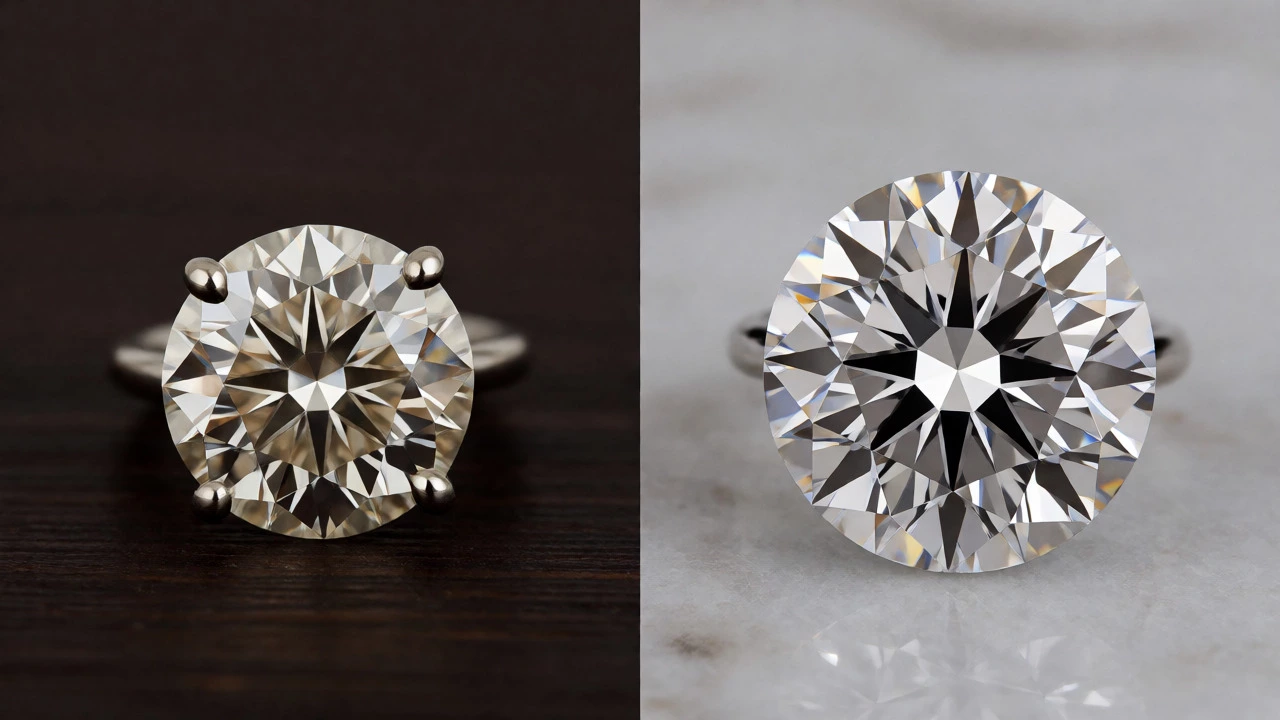
With $8,000, you can buy a natural diamond in the 1.0 to 1.2-carat range, depending heavily on the other three Cs (Cut, Color, Clarity). If you go lab-grown, you can jump up to 1.5 or even 2.0 carats for the same price. The trade-off isn’t visual quality-lab diamonds are chemically identical to mined ones-but resale value and perceived prestige among traditionalists.
Here’s a quick comparison of what your money buys across different stone types:
| Stone Type | Carat Weight | Quality Expectation | Best For |
|---|---|---|---|
| Natural Diamond | 0.9 - 1.2 ct | G-H Color, VS1-VS2 Clarity, Excellent Cut | Traditionalists, Resale Value |
| Lab-Grown Diamond | 1.5 - 2.0 ct | D-F Color, VVS Clarity, Ideal Cut | Size Lovers, Ethical Buyers |
| Moissanite | 2.0 - 3.0 ct | Flawless, High Brilliance | Budget Maximizers, Durability |
| Sapphire/Ruby | 1.5 - 2.5 ct | Vivid Color, Eye-Clean | Color Preference, Uniqueness |
The Four Cs: How to Stretch Your Dollar
Buying a diamond is basically buying four things: Cut, Color, Clarity, and Carat. If you want to make $10,000 feel like $15,000, you need to know which C to sacrifice.
Cut is king. Never compromise on cut. A poorly cut 2-carat diamond will look dull and lifeless. An excellently cut 1-carat diamond will sparkle from across the room. Prioritize "Excellent" or "Ideal" cut grades. This is non-negotiable.
Color is flexible. Unless you are colorblind to yellow tones, you don’t need a D-color (colorless) stone. G and H colors look white to the naked eye once set in metal. Buying a J-color diamond can save you 15-20% compared to a G-color, and most people won’t notice the difference unless they hold two stones side-by-side under harsh fluorescent light.
Clarity has diminishing returns. You do not need Flawless (FL) or Internally Flawless (IF) clarity. Those grades command huge premiums for imperfections invisible to the unaided eye. Aim for VS1 or VS2 (Very Slightly Included). These stones are "eye-clean," meaning no one can see flaws without a loupe. You’ll save thousands by skipping IF.
Carat is the trap. Everyone wants a bigger number. But remember, diamond prices rise exponentially, not linearly. A 1.0-carat diamond costs significantly more than a 0.90-carat diamond, even though the visual difference is negligible. Buying a 0.90-carat or 1.10-carat stone can save you hundreds or thousands while looking nearly identical to the round-numbered sizes.
Natural vs. Lab-Grown: The Big Decision
This is the biggest fork in the road for modern buyers. In 2026, lab-grown diamonds account for nearly half of all engagement ring sales. Why? Because they offer better value per carat.
A natural diamond retains some resale value, though it’s rarely sold back at retail price. Think of it as a luxury good, like a car, that depreciates immediately after purchase. Lab-grown diamonds currently have little to no resale market because their production costs keep dropping. If you buy a lab diamond today, you are paying for the experience and the beauty, not the asset value.
If your partner cares deeply about tradition or rarity, go natural. If they care about getting the biggest, cleanest sparkler possible, go lab. At $10,000, the lab option lets you buy a noticeably larger stone. Is that worth losing the "natural" label? Only the recipient can decide.
Don’t Forget the Setting and Hidden Costs
Newbies often blow their entire budget on the loose diamond and then panic when they realize they still need a ring setting. The setting-the metal band and prongs holding the stone-can cost anywhere from $500 to $3,000+ depending on the design and metal type.
- Platinum: Heavy, durable, hypoallergenic, but expensive ($800-$1,500 for a plain band).
- White Gold: Looks similar to platinum but requires rhodium plating every few years. Cheaper upfront ($400-$800).
- Yellow/Gold Rose Gold: Classic options, generally mid-range pricing.
Also, factor in insurance. A $10,000 ring needs to be insured against loss or theft. Jewelry insurance typically costs 1-2% of the replacement value annually. That’s $100-$200 a year, forever. Add that to your monthly budgeting spreadsheet.
When ,000 Might Be Too Much (or Too Little)
Is $10,000 too much? If you’re putting a down payment on a house together, maybe. Financial advisors often warn against going into debt for a ring. If paying $10k means draining your emergency fund, scale back. There’s no shame in a $3,000 ring if it means you start married life debt-free.
Is $10,000 too little? Rarely. Unless you are shopping in ultra-luxury boutiques like Tiffany’s or Cartier, where brand markup eats 50% of your budget, $10k buys excellent quality. In those flagship stores, $10k might only get you a 0.5-carat stone with average specs. Online retailers like Blue Nile, James Allen, or Brilliant Earth offer far better value for the same specifications.
Smart Shopping Strategies
To make sure your $10,000 works hard, follow these rules:
- Buy online first. Compare prices for specific specs (e.g., 1.0ct, G, VS1, Ideal Cut). You’ll see the market rate instantly.
- Get certified. Always insist on a GIA (Gemological Institute of America) report. Other labs exist, but GIA is the gold standard for consistency. Without it, you’re guessing.
- Check return policies. Ensure you can return the ring within 30 days if your partner hates the style. Engagement rings are personal tastes, not universal truths.
- Negotiate. Local jewelers often have wiggle room, especially on settings. Online retailers have fixed prices, but watch for holiday sales or financing deals.
Is $10,000 enough for a 2-carat diamond?
For a natural diamond, likely not with high quality. You might find a 2-carat natural diamond for $10k, but it will likely have lower color (J-M) or clarity (SI2-I1) grades. For a lab-grown diamond, yes, you can easily get a high-quality 2-carat stone for $10,000 total including the setting.
Should I spend $10,000 on a wedding band too?
Usually, no. Wedding bands are simpler and cost less. A typical men’s wedding band ranges from $300 to $800. Women’s bands vary from $200 to $1,000 depending on if they have small diamonds. Save the $10k budget primarily for the engagement ring.
Do I need to pay cash for a $10,000 ring?
Not necessarily. Many jewelers offer 0% interest financing for 12-24 months. However, if you miss a payment, interest rates skyrocket. Paying cash avoids debt stress, but financing can help preserve liquidity for other wedding expenses.
Which metal lasts longer: Platinum or White Gold?
Platinum is more durable in terms of structural integrity; it develops a patina rather than wearing away. White gold wears down over time and requires re-plating (rhodium dipping) every 2-3 years to stay bright white. Platinum is heavier and more expensive upfront but requires less maintenance.
Is Moissanite a fake diamond?
No, it is a distinct gemstone made of silicon carbide. It is naturally occurring but mostly lab-created for jewelry. It is harder than sapphire and second only to diamond on the Mohs hardness scale. It has more fire (rainbow flashes) than a diamond, which some love and others dislike.