Wedding Cake Tier Designer
If you've ever looked at a towering wedding cake and wondered why some look like slim cylinders while others look like chunky blocks, you're not alone. There is a massive difference between a "tier" and a "layer," and getting this wrong can lead to a cake that either collapses under its own weight or looks like a pancake on a fancy stand. Most people use these terms interchangeably, but for a baker, they are completely different things.
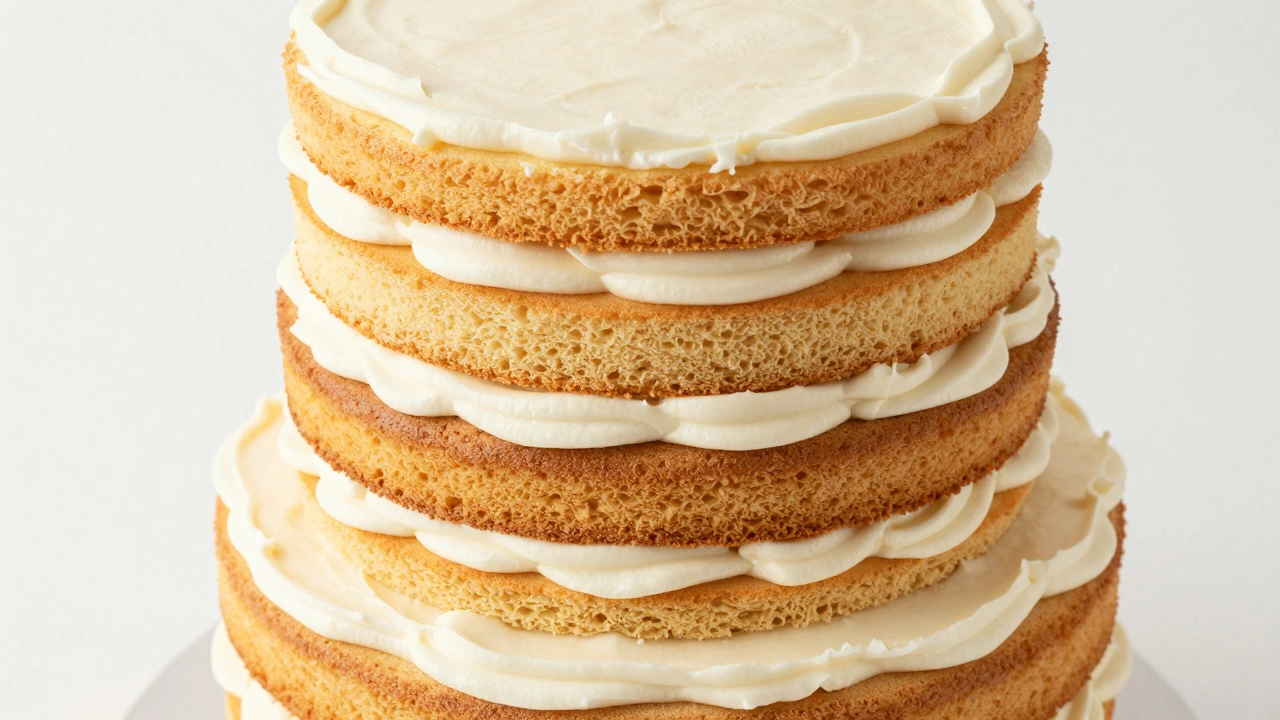
To put it simply, a wedding cake layer is a single slab of baked cake, usually circular or square, that is stacked with filling to create a larger unit. A tier, on the other hand, is the completed structural unit consisting of multiple layers and fillings. For example, if you have three slabs of sponge with two layers of jam in between, that whole assembly is one single tier.
The Quick Breakdown: What's the Standard?
- Standard Tier: Usually consists of 3 to 4 cake layers.
- Average Height: A professional wedding tier typically stands between 4 and 6 inches tall.
- Layer Thickness: Each individual sponge layer is usually about 1 to 1.5 inches thick.
- Filling Ratio: A good rule of thumb is that filling should be about 1/4 to 1/2 the thickness of the cake layer.
Why the Number of Layers Matters
You might think, "Why not just do two thick layers?" The problem is structural integrity. When you stack a 10-inch cake on top of a 12-inch cake, the bottom one is carrying a lot of weight. Using more, thinner layers with stable fillings allows the baker to create a more rigid structure. It's a bit like building a wall; a few thin bricks with plenty of mortar (filling) are often more stable than two giant slabs of rock.
Moreover, the ratio of cake to filling is what defines the eating experience. If you only have two thick layers, you end up with a massive bite of dry sponge and then a huge glob of frosting. With four thin layers, every single forkful contains a balanced mix of sponge and cream. This is why high-end boutiques almost always lean toward 4-layer tiers.
Choosing Your Tier Style: Tall vs. Traditional
Depending on the vibe of your wedding, you might choose a different architecture for your cakes. The trend has shifted heavily toward "double-barrel" tiers, which are essentially extra-tall tiers that look like they should be two separate levels but are actually just one giant unit of layers.
| Style | Typical Layers | Total Height | Best For... |
|---|---|---|---|
| Traditional | 2-3 Layers | 4 inches | Classic looks, easier to slice |
| Modern/Tall | 4-5 Layers | 6 inches | Dramatic silhouettes, luxury feel |
| Double Barrel | 6-8 Layers | 8-10 inches | Statement cakes, minimal tier count |
The Secret Engineering: Dowels and Boards
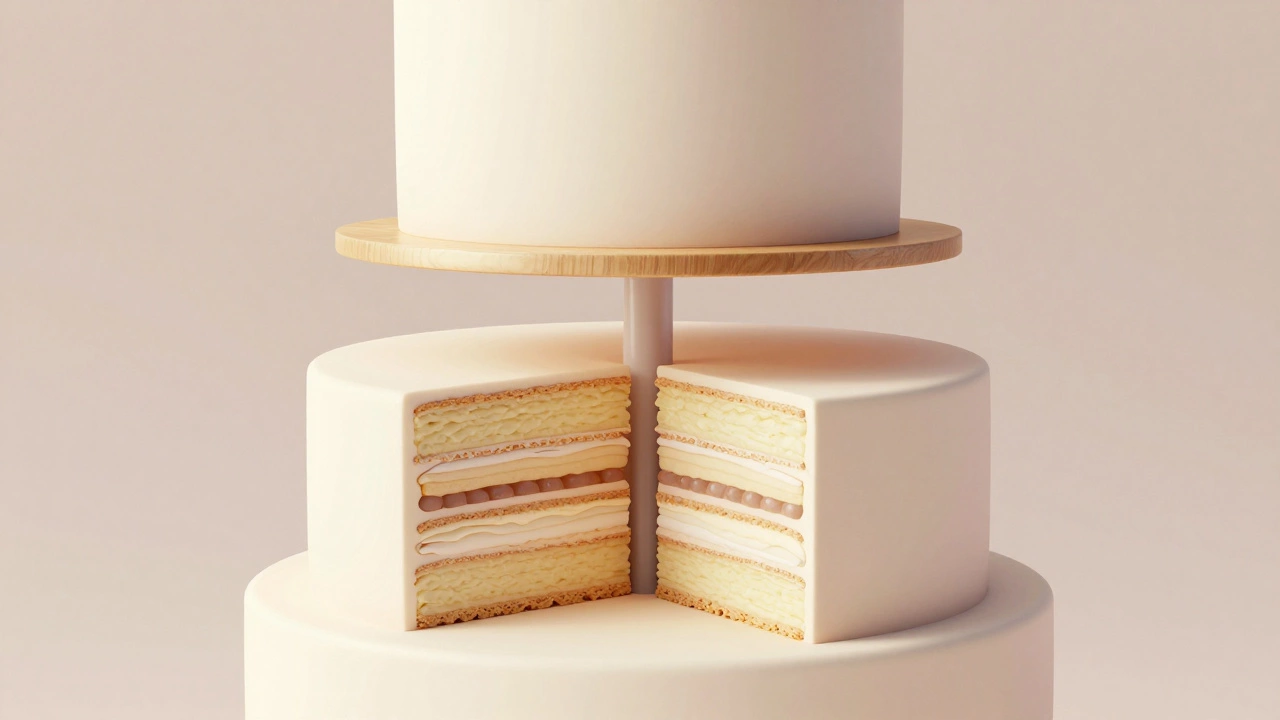
You can't just stack layers of cake and hope for the best. Once a tier reaches 4 inches or more, it needs support. This is where Cake Dowels come in. These are food-safe plastic or wooden rods inserted into the bottom tier to act as pillars. The tier above it doesn't actually sit on the cake itself; it sits on a thin Cake Board that is supported by those dowels.
If a baker tells you they are doing 5 layers per tier, they are definitely using a heavy-duty support system. Without it, the bottom layers would compress, and your cake would start to lean like the Tower of Pisa. This is why you'll often see a slight "lip" or a gap between tiers-that's the cake board doing its job.
Matching Layers to Filling Types
The type of filling you choose dictates how many layers you can actually have. A thick, stable Swiss Meringue Buttercream can support a 6-layer tier without breaking a sweat. However, if you want fresh strawberry preserves or a lemon curd, those are "slippery" fillings. They tend to migrate, which can cause layers to slide.
To fix this, professional bakers use a technique called "damming." They pipe a ring of stiff buttercream around the edge of the cake layer and fill the center with the softer jam. This ensures that even with 4 or 5 layers, the filling doesn't leak out the sides and ruin the exterior frosting.
Common Mistakes to Avoid
When discussing your cake with a baker, be very specific about "height" versus "layers." If you tell a baker you want a "three-layer cake," they might think you mean a cake with three tiers (the whole structure), or they might think you mean one tier made of three layers of sponge. This confusion leads to the dreaded "pancake cake"-where you expected a towering masterpiece but got something that looks more like a large cheesecake.
Another mistake is overfilling. If the filling layers are thicker than the cake layers, the structural integrity vanishes. Your cake becomes a sponge-sandwich that is prone to bulging. A pro tip: always insist on a 3:1 cake-to-filling ratio by volume to ensure the cake stays upright throughout the reception.
Does adding more layers increase the number of servings?
Yes, absolutely. Because a tier with 4 layers is taller than one with 2, you can cut thinner, rectangular slices that are still a satisfying height. This effectively increases the yield of the cake without needing to increase the diameter of the tiers.
Can I have a 5-layer tier without it being too sweet?
It depends on the filling. If you use a heavy frosting between every layer, it will be overwhelming. To balance a tall tier, bakers often use a thin layer of ganache or a fruit reduction between some layers and a more substantial buttercream between others.
What happens if a tier has too many layers?
If a tier is too tall without proper internal support, the weight of the top layers will compress the bottom sponges, leading to a distorted shape or a total collapse. This is why the "double barrel" method requires a center dowel that runs through the entire height of the cake.
Is it more expensive to have more layers per tier?
Generally, yes. More layers mean more baking time, more ingredients, and significantly more labor for leveling, filling, and stacking. It also requires more expensive support materials like longer dowels and additional boards.
How do you cut a tall, multi-layer tier?
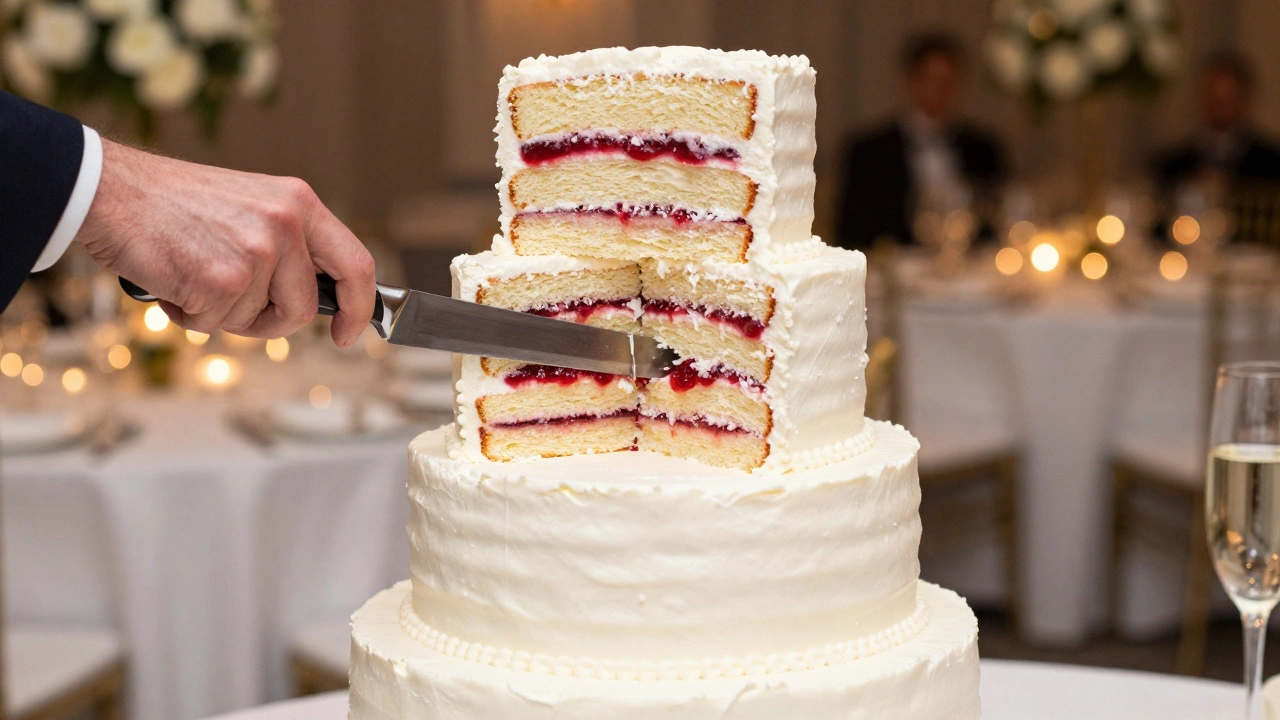
Instead of cutting traditional wedges (like a pizza), tall tiers should be cut into a grid. You cut the cake into a square of 2-inch by 1-inch rectangles. This ensures everyone gets a piece that showcases all those beautiful layers without the slice falling over.
Final Tips for Planning Your Cake
If you're still undecided, think about your cake's purpose. If it's purely for a photo op and a few tastes, go for the high-layer, "modern" look. If you're serving a crowd of 200 and want a seamless serving process, stick to a traditional 3-layer tier. The key is communication-show your baker a photo of the wedding cake layers and height you want, rather than just giving them a number, to ensure your vision becomes a reality.