Groom Garter Tradition Checker
When you think of wedding garters, you probably picture the bride tossing one to the single women at the reception. But what about the groom? Does he wear one too? The short answer: no, the groom doesn’t wear a garter in the traditional sense - and here’s why.
Where Did the Garter Tradition Come From?
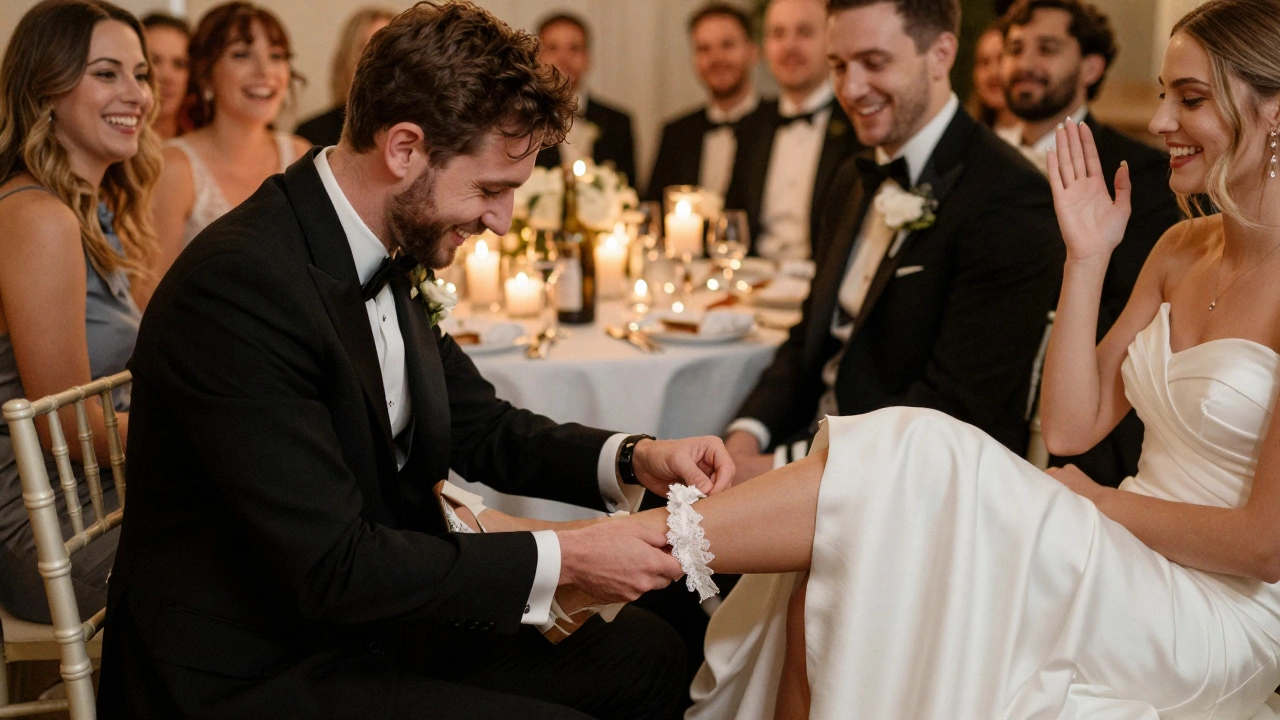
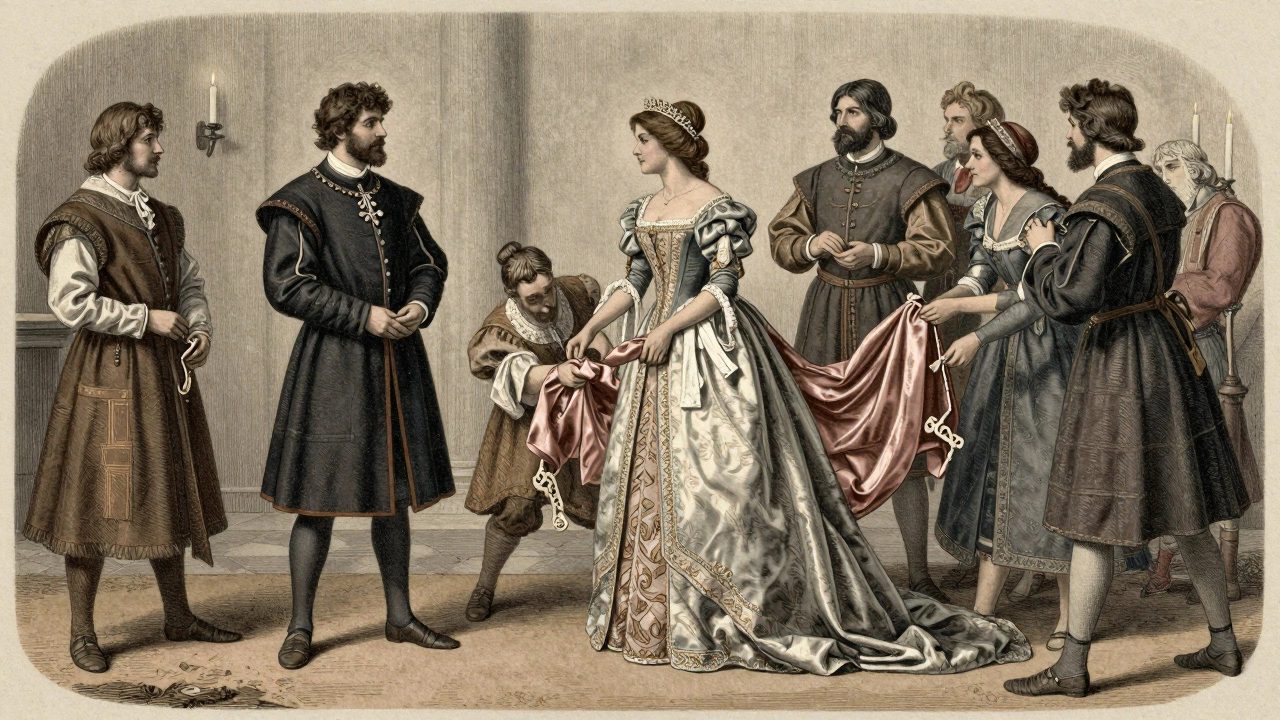
The garter tradition dates back to medieval Europe, long before modern weddings. Back then, guests would rush to the newlyweds’ bedroom after the ceremony to take pieces of the bride’s clothing as lucky charms. It got so wild that brides started wearing a special garter they could hand over - a way to give a keepsake without losing their dress. Over time, this became a ritual: the groom would remove the garter from the bride’s leg and toss it to the men. The one who caught it was said to be next to marry.
That’s the whole story - it was always about the bride’s garter. No mention of a groom’s version. It wasn’t a pair thing. It was a symbolic gesture tied to the bride’s attire and the superstitions around luck and fertility.
Why Don’t Grooms Wear Garters?
There’s no historical, cultural, or practical reason for a groom to wear a garter. Men’s formal wear - tuxedos, suits, dress pants - doesn’t have the same design elements as a wedding dress. Garters were made to hold up stockings, which women wore under their dresses before elastic became common. Men didn’t need them. And even today, men’s socks stay up just fine with modern fabric and fit.
Some people wonder if garters could be a gender-neutral tradition. But if you look at how weddings have evolved, it’s clear that traditions stick when they serve a purpose. The bride’s garter works because it’s part of a visual, theatrical moment - the removal, the toss, the laughter. There’s no natural equivalent for the groom. He’s not wearing something that needs to be removed for a crowd to see.
What About Modern Twists?
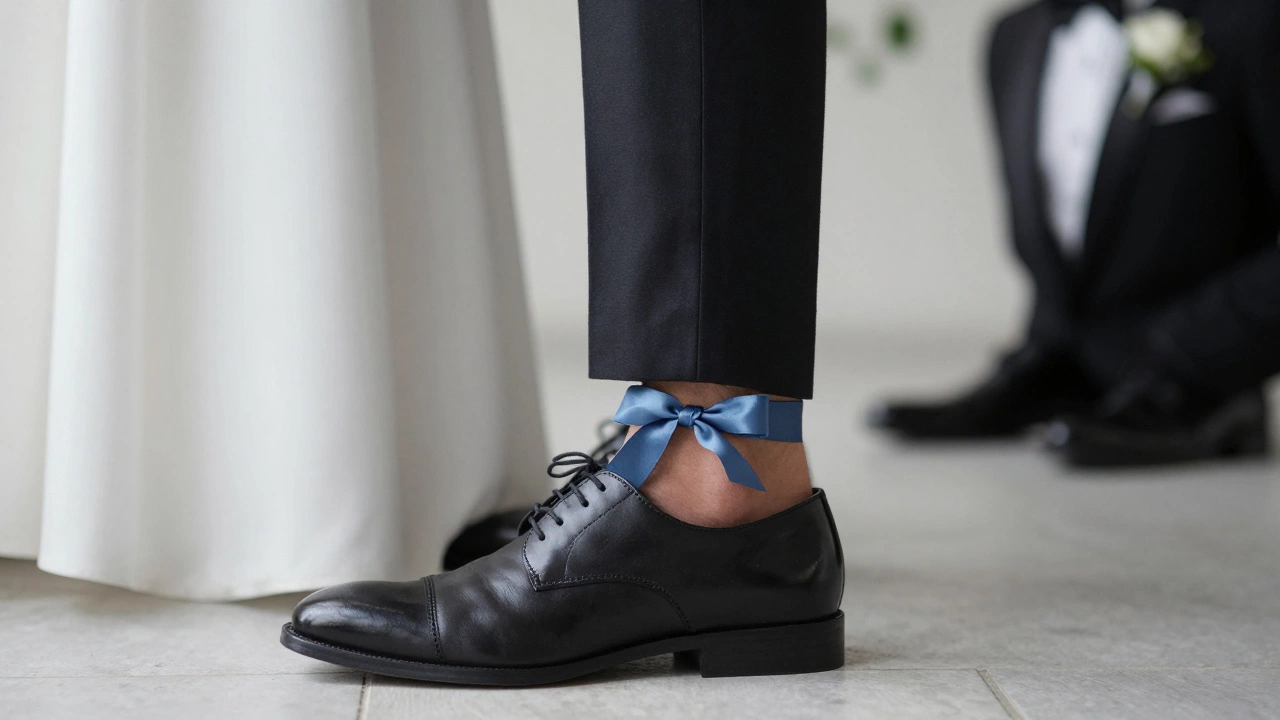
Wedding customs change. Couples today mix traditions, ignore them, or invent their own. So, you might hear of a groom wearing a garter - maybe as a joke, or as a matching accessory. Some grooms do wear a small garter-like band on their leg, usually just under the cuff of their pants. But it’s not for function. It’s for style. Sometimes it matches the bride’s garter in color or fabric. Other times, it’s a nod to a family tradition or a personal symbol - like a charm with their initials or a tiny ribbon.
These are exceptions, not norms. You won’t find this in wedding magazines from the 1950s or in etiquette guides from the 1980s. Even in 2026, most groomsmen and wedding planners still treat the garter as a bride-only item. If a groom wears one, it’s usually a quiet, personal choice - not part of the ceremony.
What Do Grooms Actually Wear?
While the groom doesn’t wear a garter, he does have other accessories that matter. A well-fitted suit or tuxedo is the foundation. Then come the details: cufflinks, pocket square, boutonnière, tie or bowtie, and sometimes a watch or wedding band. These items are chosen with care. They match the wedding theme, the bride’s dress, and the overall vibe.
Some grooms choose to wear a family heirloom - a ring, a pin, or even a handkerchief passed down from their father. These carry meaning. A garter? It doesn’t fit. It’s not part of men’s formalwear. It’s not practical. It’s not symbolic in the same way.
What’s the Real Purpose of the Bride’s Garter?
Even if you’re not planning to toss it, the bride’s garter has value beyond superstition. It’s a keepsake. Many brides save theirs. Some wear two: one for the toss, and one they keep. The one kept is often more delicate - lace, silk, or embroidered. It’s a memento of the day, tucked into a memory box alongside the veil, the invitation, or the bouquet.
For some couples, the garter toss is skipped entirely. Others replace it with a dance, a toast, or a photo moment. The point isn’t the garter itself - it’s the celebration of partnership, fun, and connection. The groom’s role? He’s there to smile, laugh, and maybe catch the bouquet if the bride decides to toss it.
Common Myths About Groom Garters
- Myth: Grooms wear garters to match the bride. Truth: Matching accessories are common - like boutonnieres and ties - but garters aren’t part of men’s formalwear.
- Myth: The groom’s garter catches luck too. Truth: No historical source supports this. Luck was always tied to the bride’s garment.
- Myth: You can buy groom garters at wedding shops. Truth: You might find one online as a novelty item, but no reputable bridal store stocks them as standard.
Should You Break the Rule?
If you’re a groom who really wants to wear one - go ahead. Weddings are about you and your partner. If a garter makes you feel connected to the day, or if it honors a family story, then it’s yours to wear. But know this: you’ll be the exception. You’ll get questions. You might even get a few laughs. That’s okay. Weddings aren’t about rules. They’re about meaning.
Most grooms don’t wear garters - and they don’t need to. Their role isn’t defined by accessories. It’s defined by presence. By standing beside the bride. By choosing to walk into this next chapter together.
Do grooms wear garters at all?
No, grooms don’t traditionally wear garters. The garter is a bride-only accessory rooted in historical customs meant to be removed and tossed. While some modern grooms may wear a decorative band for fun or personal meaning, it’s not part of standard wedding attire and has no ceremonial role.
Why do brides wear garters if they’re not needed?
Brides wear garters today mostly for tradition and photos. Historically, they helped hold up stockings before elastic was common. Now, they’re a symbolic item used in the garter toss, a playful moment that’s become part of wedding receptions. Many brides keep one garter as a keepsake and use a second one just for the toss.
Can a groom wear a garter that matches the bride’s?
Yes, but it’s unusual. Some couples choose matching accessories - like a garter and a cufflink, or a ribbon on the groom’s boutonnière - to tie their looks together. If a groom wears a decorative band under his pants, it’s usually a personal choice, not a tradition. It’s not expected, but it’s not wrong either.
Is the groom’s garter toss a real thing?
No, there is no groom’s garter toss. The toss is exclusively tied to the bride’s garter. Any version involving the groom is a modern novelty, not a tradition. If you’ve seen one, it was likely done for humor, personal symbolism, or a themed wedding - not because it’s a standard custom.
What should a groom wear instead of a garter?
A groom should focus on well-fitted attire: a suit or tuxedo, a crisp shirt, a tie or bowtie, cufflinks, and a boutonnière. These items complete his look and coordinate with the wedding’s style. Many also wear a family heirloom - like a watch, ring, or pin - to add personal meaning. These are far more meaningful and appropriate than a garter.