
Wedding Attire Budget Calculator
Groom's Expenses
Groomsmen Settings
Budget Breakdown
Groom's Total
Groomsmen Total
Grand Total: $0
Calculating...Walking down the aisle is supposed to be one of the happiest moments of your life. But if you’re staring at a bill for a custom-tailored tuxedo while wondering why your best man isn’t footing the bill for his own outfit, that happiness might take a backseat to financial stress. The question "does the groom pay for his suit?" sounds simple, but the answer depends entirely on whose rulebook you’re reading: the dusty pages of Victorian etiquette or the practical reality of modern weddings.
In short: yes, traditionally the groom pays for his own suit. However, in today’s landscape, that money often comes from the couple’s shared wedding fund rather than the groom’s personal savings. Things get more complicated when you bring the groomsmen into the mix. Are they paying for themselves? Is the bride covering it as a gift? Or are you splitting costs differently?
Let’s cut through the noise and look at how wedding attire budgets actually work in 2026, so you can plan without the awkward conversations.
The Traditional Rule vs. Modern Reality
To understand where we stand now, we have to look at where we started. For decades, wedding etiquette was rigid. The bride’s family paid for the ceremony and reception. The groom’s family paid for the rehearsal dinner. And the groom? He paid for his own attire, including his tuxedo or suit, along with the rental or purchase costs for his groomsmen.
This structure made sense in an era when families were more financially distinct and gender roles were strictly defined. Today, however, couples often live together before marriage, share bank accounts, and view the wedding as a joint project. According to recent data from The Knot, over 60% of couples now split wedding costs roughly 50/50, or contribute based on income ratios. When the couple funds the wedding jointly, the line between "his expense" and "her expense" blurs significantly.
So, does the groom pay? Technically, he still buys the suit. Practically, he’s likely pulling that cash from a joint account labeled "Wedding Fund." This shift means you don’t need to argue about who owes whom for fabric. You just need to agree on a total budget for attire early on.
Who Pays for the Groomsmen? The Biggest Point of Contention
If the groom’s own suit is a minor detail, the groomsmen’s attire is where most conflicts arise. There is no universal law here, but there are three common models. Choosing the wrong one can lead to resentment-or worse, friends bailing on your wedding because they can’t afford the $300 rental fee.
| Model | Who Pays? | Pros | Cons |
|---|---|---|---|
| Groomsmen Pay | The individuals | Lowest cost for couple; standard expectation in many regions | Risk of financial hardship for friends; potential dropouts |
| Couple Pays | Bride & Groom (or families) | Generous gesture; ensures everyone shows up; removes stress for friends | High upfront cost; requires larger overall budget |
| Hybrid Approach | Mixed (e.g., Couple pays rentals, Groomsmen buy ties) | Shares burden; flexible | Can feel confusing or unfair if not communicated clearly |
The Groomsmen Pay Model: This remains the most common approach in North America and parts of Europe. The logic is that being asked to stand by the groom is an honor, and part of that honor involves a modest financial contribution. If you choose this route, keep the cost under $150-$200 per person. If you ask them to spend $400 on a suit they’ll wear once, you’re prioritizing aesthetics over friendship.
The Couple Pays Model: Increasingly popular among millennial and Gen Z couples, this approach treats the groomsmen’s attire as part of the wedding’s visual design, funded by the hosts. It’s a generous move that signals gratitude. If you go this way, consider buying them high-quality shirts or cufflinks as a keepsake since they won’t own the suit.
The Hybrid Approach: Some couples rent the jackets and trousers (paying for these) but ask groomsmen to provide their own dress shirts and shoes. This works well if your groomsmen already own formal wear. Just be transparent. Don’t let them buy expensive shirts only to find out later they needed specific colors.
Rentals vs. Buying: What Makes Financial Sense?
Before deciding who pays, decide what you’re buying. The choice between renting and purchasing affects the bottom line dramatically.
Renting is usually cheaper upfront. A quality tuxedo rental might cost between $100 and $200. It includes cleaning and alterations. However, rentals often fit poorly because off-the-rack sizes are standardized. If you have a unique body shape-very tall, very short, or broad-shouldered-a rental might require extensive tailoring, which can push the price closer to buying.
Buying offers long-term value. A good wool suit costs between $300 and $800. Yes, it’s more expensive initially, but you can wear it to job interviews, other weddings, and holiday parties. In 2026, with remote work fading and office norms returning, a versatile navy or charcoal suit is a solid investment. If the groom and groomsmen are young professionals, buying might actually save them money in the long run compared to repeated rentals.
Consider the frequency of use. If this is your first formal event in years, buy. If you attend five weddings a year, rent. Calculate the cost-per-wear. A $500 suit worn ten times costs $50 per outing. A $150 rental worn once costs $150. Do the math.

Hidden Costs That Blow Up the Budget
When people ask "does the groom pay for his suit," they rarely think about the accessories. These small items add up quickly and are often overlooked in budget planning.
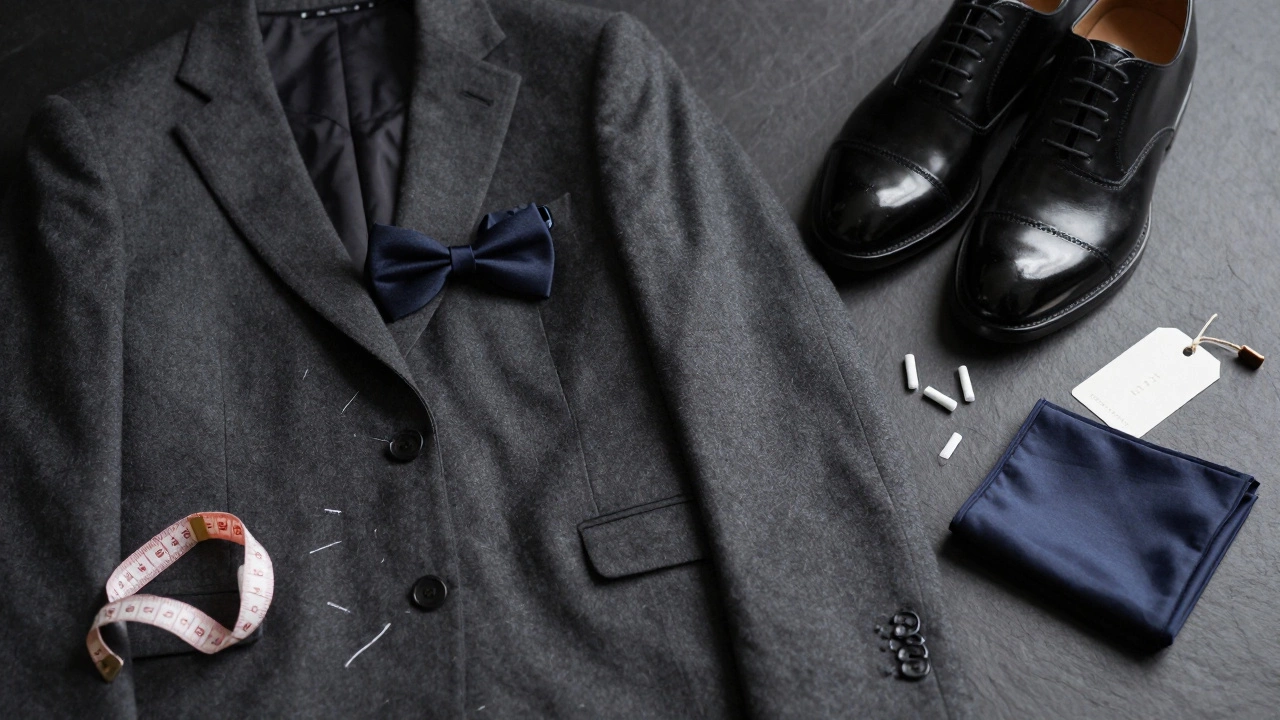
- Alterations: Even off-the-rack suits rarely fit perfectly. Budget $50-$150 for hemming pants, taking in the waist, and adjusting sleeve length. Tailors charge extra for complex changes like moving shoulders.
- Shoes: You can’t wear sneakers with a tuxedo. Black oxfords or loafers cost $80-$200. If the groomsmen don’t own formal shoes, factor this in.
- Ties and Bow Ties: Silk ties range from $20 to $60. If you want matching pocket squares, that’s another $15 each.
- Cleaning: If you buy, you must clean. Dry cleaning a suit costs $15-$30. If you rent, cleaning is included, but late fees for returns can be steep ($50+).
- Vest or Cummerbund: Optional, but if you want a three-piece look, expect to pay $30-$50 extra for these items.
A quick example: A groom rents a tuxedo for $150. He spends $80 on alterations, $120 on shoes, and $30 on a tie. His total "suit" cost is $380. Now imagine five groomsmen doing the same. That’s nearly $2,000 in accessory costs alone, even if the base rental was cheap.
How to Navigate Family Contributions
In some cultures and families, parents still play a significant financial role. In New Zealand, for instance, it’s common for both sets of parents to contribute to the venue and catering, leaving attire to the couple. In other traditions, the groom’s father might cover all male attire.
If parents offer to pay, accept graciously-but clarify expectations. Does "covering the suit" mean just the jacket, or everything including shoes and alterations? Misunderstandings here can cause friction. If the bride’s family is paying for the wedding, do they expect control over the aesthetic, including the groom’s style? Open communication prevents resentment.
Set a meeting early in the planning process. Discuss:
- Total budget for attire.
- Who contributes what percentage.
- Whether groomsmen are expected to pay.
- Deadline for payments to vendors.
Put it in writing. A simple email summary helps everyone stay on the same page.
Practical Tips for Managing Attire Expenses
Money talks, but smart planning whispers. Here’s how to keep costs down without looking shabby.
Shop Early: Sales happen. End-of-season clearance events in January and July can slash suit prices by 30-50%. If you start planning six months ahead, you can catch these deals. Last-minute purchases always cost more.
Choose Versatile Colors: Avoid bright blues, reds, or patterns unless you love them forever. Navy, charcoal, and black are timeless. They match any bride’s dress color and work for future events. Stick to classic styles: notch lapels for suits, peak lapels for tuxedos.
Coordinate, Don’t Match Exactly: You don’t need identical suits for the whole party. Let the groom wear a slightly different shade or texture (e.g., groom in velvet, groomsmen in wool). This reduces the need for everyone to buy the exact same expensive item. It also looks more modern and less uniform.
Use Group Discounts: Many rental shops and online retailers offer group rates for five or more suits. Ask. It can save 10-20%. Combine this with free shipping offers to maximize savings.
Be Honest With Friends: If you know a groomsman is struggling financially, offer to cover his cost privately. No one should miss your wedding because they couldn’t afford a tie. Discretion preserves dignity and friendship.
Conclusion: It’s About Partnership, Not Protocol
Does the groom pay for his suit? In the end, it doesn’t matter who writes the check. What matters is that the decision is made together, openly, and with respect for everyone’s financial situation. Whether you’re splitting costs 50/50, relying on parental help, or asking friends to chip in, clarity is key. Set the budget early, communicate honestly, and focus on the celebration-not the receipt. After all, the suit is just fabric. The marriage is the commitment.
Does the groom pay for his own wedding suit?
Traditionally, yes. The groom is responsible for his own attire, including the suit or tuxedo, shoes, and accessories. In modern weddings, this cost is often covered by the couple's joint wedding budget rather than the groom's personal funds.
Do groomsmen pay for their own suits?
It varies. In many cases, groomsmen pay for their own rentals or purchases. However, some couples choose to cover these costs as a gift to their friends. If groomsmen are paying, keep the total cost reasonable (under $200) to avoid financial strain.
Is it better to rent or buy a wedding suit?
Renting is cheaper upfront ($100-$200) and includes cleaning. Buying ($300-$800) is more expensive initially but offers long-term value if you plan to wear the suit again for interviews or other events. Consider your body type and future needs before deciding.
What hidden costs should I budget for with wedding attire?
Beyond the base suit cost, budget for alterations ($50-$150), formal shoes ($80-$200), ties/pocket squares ($20-$60), and dry cleaning ($15-$30). These accessories can add $100-$200 to the total cost per person.
Can parents pay for the groom's suit?
Yes, parents can absolutely pay for the groom's suit if they wish. This is common in some cultural traditions or family arrangements. Clear communication about what exactly is covered (suit, shoes, alterations) is essential to avoid misunderstandings.