Wedding Timeline & Etiquette Planner
Your Wedding Details
Visual Timeline
Send Save the Date by:
--
Send Invitations by:
--
Select your wedding details to see the perfect schedule.
Save the Date Checklist
Ensure your Save the Date follows proper etiquette before mailing.
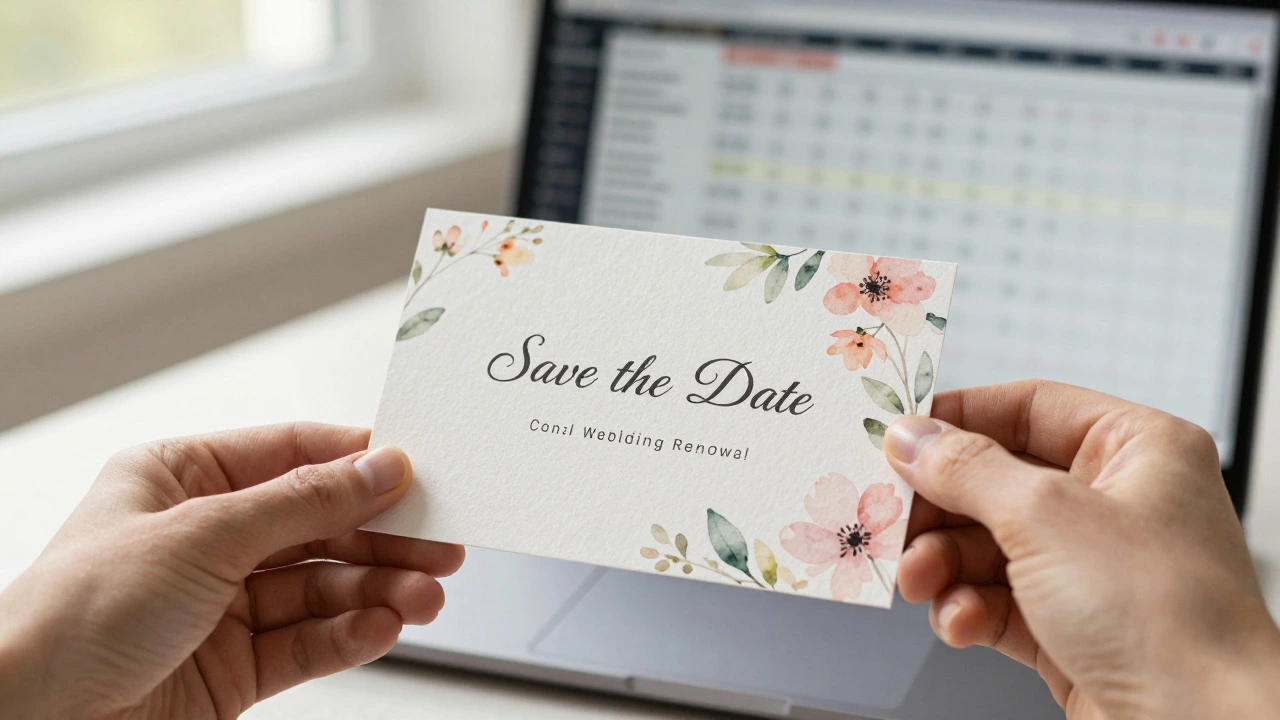
Imagine this: You’ve just mailed out your beautiful Save the Dates are pre-wedding announcements sent to guests to reserve the date in their calendars, typically 6-12 months before the wedding. They feature the couple's names, wedding date, and location, but usually exclude specific ceremony details. cards. They look amazing-custom watercolors, laser-cut wood, or sleek digital designs. Now, you’re staring at a blank spreadsheet, wondering if you should add a line asking guests to reply right now. Should you ask for an RSVP on a save the date?
The short answer is no. Traditionally, save the dates do not include RSVP requests. But wedding planning isn’t always black and white, especially when you’re dealing with tight venue deadlines or international travel logistics. Let’s break down why keeping these two steps separate matters, how to handle exceptions, and what actually happens if you mix them up.
The Purpose of Save the Dates vs. Wedding Invitations
To understand why you shouldn’t ask for an RSVP on a save the date, you first need to know what each piece of mail is supposed to do. Think of it like a two-step process rather than one big dump of information.
Save the Dates serve as a heads-up. Their job is simple: tell people, “Mark your calendar.” They give guests enough time to request time off work, book flights, or arrange childcare without the pressure of committing to attending yet. Most couples send these 6 to 12 months before the big day. If you’re having a destination wedding, you might push that closer to 12 months because international travel takes more planning.
On the other hand, the Wedding Invitation is the formal request for attendance, including specific ceremony and reception details, dress code, and RSVP instructions. This is where the commitment happens. It arrives 6 to 8 weeks before the wedding. By this point, guests have had months to plan around the date you gave them in the save the date. Now, they’re being asked to confirm whether they’ll be there.
Mixing these roles creates confusion. If you ask for an RSVP on a save the date, you’re forcing guests to commit to a major life event nine months out. Life changes. Jobs change. Budgets shift. A guest who says “yes” in January might find themselves unable to attend by August. That leads to awkward cancellations later, which is worse for your final headcount than waiting for a firm yes closer to the date.
Why Asking for Early RSVPs Backfires
You might think getting early responses helps you lock in numbers faster. In reality, it often causes more problems than it solves. Here’s why experienced planners advise against it:
- False Positives: Guests say yes enthusiastically, then cancel months later. You still have to track those cancellations, which adds administrative work instead of reducing it.
- Guest Anxiety: Some people feel pressured to commit before they know their financial situation or family obligations. This can make them resentful or stressed about your wedding.
- Outdated Information: If you collect RSVPs too early, you might need to update your caterer multiple times as plans change. Caterers prefer final counts within 3-5 days of the wedding, not nine months prior.
- Etiquette Confusion:** Guests may wonder if the save the date *is* the invitation. When the actual invite arrives months later, some might ignore it, thinking they already responded.
Think about it from your guests’ perspective. Would you want to commit to spending $300 on a flight and hotel nine months before knowing if your boss approved your vacation request? Probably not. Giving them breathing room shows respect for their lives outside your wedding.
When Exceptions Make Sense (And How to Handle Them)
There are rare scenarios where traditional etiquette bends. Don’t break the rules lightly, but here’s how to navigate tricky situations:
Destination Weddings: If most of your guests are flying internationally, you might want a rough idea of interest levels. Instead of an official RSVP, consider adding a polite note: “Please let us know if you’re planning to attend so we can share accommodation details.” This isn’t a binding RSVP-it’s just a way to gauge interest and provide helpful info. Use a dedicated email address or a simple online form labeled “Interest Only,” not “RSVP.”
Venue Deadlines: Some venues demand final headcounts far in advance due to staffing or catering contracts. Even then, wait until invitations go out. If you’re truly stuck, call your top-priority guests personally. A phone conversation feels personal and flexible, whereas a written RSVP on a save the date feels rigid and premature.
Digital Save the Dates: Electronic saves-the-dates sometimes include buttons that say “Respond.” Be careful! Label these clearly as “Notify Me” or “Add to Calendar,” not “RSVP.” Tools like Zola or popular wedding website platforms that offer free tools for managing invitations, RSVPs, registries, and guest lists allow you to set up pre-invitation interest trackers without confusing guests.

What to Include on Your Save the Date Instead
If you’re not asking for an RSVP, what *should* be on your save the date? Keep it clean, clear, and useful. Here’s the essential checklist:
- Couple’s full names
- Wedding date (month, day, year)
- City and state (or country) of the wedding
- A note saying “Formal invitation to follow”
- Your wedding website URL (optional but highly recommended)
That’s it. No registry links, no meal choices, no plus-one questions. Those belong on the invitation or your wedding website. Adding extra requests turns your save the date into a mini-survey, which dilutes its primary purpose.
Speaking of websites, this is where you can gather soft data. On your Wedding Website, you can create a section titled “Travel & Accommodations” with a button that says “Let Us Know You’re Interested.” This lets guests signal intent without making a hard commitment. You can use this data internally to estimate ranges, but never treat it as a final count.
Comparison: Save the Date vs. Wedding Invitation
| Feature | Save the Date | Wedding Invitation |
|---|---|---|
| Purpose | Reserve the date | Request attendance |
| Timing | 6-12 months before | 6-8 weeks before |
| RSVP Request | No | Yes, with deadline |
| Details Included | Date, location, couple’s names | Ceremony/reception times, dress code, map |
| Guest Commitment | None | Firm yes/no |
How to Track Interest Without Breaking Etiquette
If you’re anxious about not knowing who’s coming, try these low-pressure strategies:
- Use Your Wedding Website: Set up a “Guest List Manager” tool. Allow guests to mark themselves as “Attending,” “Maybe,” or “Declined” only after receiving the formal invitation. Before that, keep it open-ended.
- Send a Personal Email: For close friends and family, a casual message like “Hey! Just wanted to see if you’re thinking of coming to our wedding in June?” works wonders. It’s informal, friendly, and doesn’t carry the weight of an official RSVP.
- Leverage Social Media: Post a teaser on Instagram or Facebook with the caption “Save the date! Formal invites coming soon.” Watch engagement metrics. High likes/comments often correlate with higher attendance rates among your core circle.
- Create a Spreadsheet: Track who received save the dates, who visited your website, and who replied to emails. Use this to prioritize follow-ups when invitations go out.
Remember, accuracy improves as the date approaches. A guest who hasn’t responded to your save the date isn’t ignoring you-they’re likely waiting for the real invitation to check their schedule properly.
Common Mistakes to Avoid
Even well-meaning couples slip up. Here are pitfalls to dodge:
- Adding Registry Info Too Early: Save the dates aren’t gift solicitations. Wait until the invitation or wedding website to share registry details. It feels transactional otherwise.
- Forgetting “Formal Invitation to Follow”:** Without this phrase, guests assume the save the date is all they’ll get. Always clarify that more details are coming.
- Sending Save the Dates After Engagements Announce: Aim to send them within 1-2 months of announcing your engagement. Delaying reduces the value of the early notice.
- Using Complex Reply Mechanisms: If you must collect any info, keep it dead simple. One click, one checkbox. Nothing requiring forms or phone calls at this stage.
Final Thoughts: Trust the Process
Wedding planning thrives on structure. Respecting the separation between save the dates and invitations keeps things organized for you and stress-free for your guests. Yes, it’s tempting to get answers early. But patience pays off. When you wait until the invitation stage to ask for RSVPs, you’ll receive more accurate, reliable responses. Your caterer will thank you. Your budget will stay intact. And your guests will appreciate the courtesy of not being forced into a corner nine months out.
Stick to the basics. Send beautiful save the dates that inform, don’t demand. Then, when the time is right, send elegant invitations that invite, not interrogate. Your wedding day will be smoother, and your relationships stronger, for it.
Should I include an RSVP card with my save the date?
No, traditionally you should not include an RSVP card with your save the date. The save the date’s purpose is to alert guests to reserve the date, not to secure a commitment. Including an RSVP card can confuse guests into thinking it’s the formal invitation. Wait until the wedding invitation arrives 6-8 weeks before the wedding to request a response.
Can I ask guests to respond via my wedding website on the save the date?
You can link to your wedding website, but avoid labeling any action as an “RSVP.” Instead, use phrases like “Notify Us of Your Interest” or “Add to Calendar.” This allows you to gauge potential attendance without pressuring guests into a firm commitment months before the wedding. Treat any early responses as estimates, not final counts.
What if my venue requires a headcount six months in advance?
If your venue has an unusually early deadline, contact your top-priority guests personally via phone or text. Explain the situation and ask for a tentative yes or no. Frame it as a favor to help you plan, not a formal requirement. For other guests, rely on historical data from similar weddings or conservative estimates based on past events.
Is it rude to send a save the date without an RSVP?
Not at all. It’s actually the standard etiquette. Guests expect save the dates to be informational only. Being rude would be forcing them to commit too early. Most guests appreciate the advance notice without the pressure of immediate confirmation. Just ensure your save the date clearly states “Formal Invitation to Follow.”
How long before the wedding should I send save the dates?
For local weddings, send save the dates 6-9 months in advance. For destination weddings or holidays, aim for 9-12 months. This gives guests ample time to arrange travel and accommodations. Sending them earlier than 12 months is generally unnecessary unless you have unique circumstances like a very large guest list or complex logistics.
What information must be on a save the date?
Essential elements include the couple’s names, the wedding date, the city and state (or country), and a note that a formal invitation will follow. Optional but helpful additions are your wedding website URL and accommodation details for out-of-town guests. Avoid including registry information, meal choices, or specific ceremony times.
Can I combine save the dates and invitations to save money?
While possible, combining them defeats the purpose of early notice. If you skip save the dates entirely, send invitations at least 3-4 months before the wedding for local events, or 6+ months for destination weddings. However, losing the 6-12 month lead time means fewer guests may be able to attend due to scheduling conflicts. Separate pieces are worth the cost for better attendance.
What should I do if a guest replies to my save the date?
Thank them warmly and acknowledge their enthusiasm. Clarify that while you appreciate their early response, the official RSVP will come with the formal invitation. Note their interest in your tracking system, but don’t count them as confirmed until they respond to the invitation. This prevents overcommitting your headcount.