
Engagement Ring Return Calculator
Use this tool to understand the general legal principles regarding engagement rings in different U.S. states. Note: This is for informational purposes only and does not constitute legal advice.
Imagine this: You’re sitting in your living room, packing boxes after a long relationship ends. Your ex-partner asks for the engagement ring, which is a symbol of commitment given during a proposal. Do you hand it over immediately? Or do you keep it because you paid for it? This isn’t just an emotional question-it’s a legal minefield that changes depending on where you live and why the wedding didn’t happen.
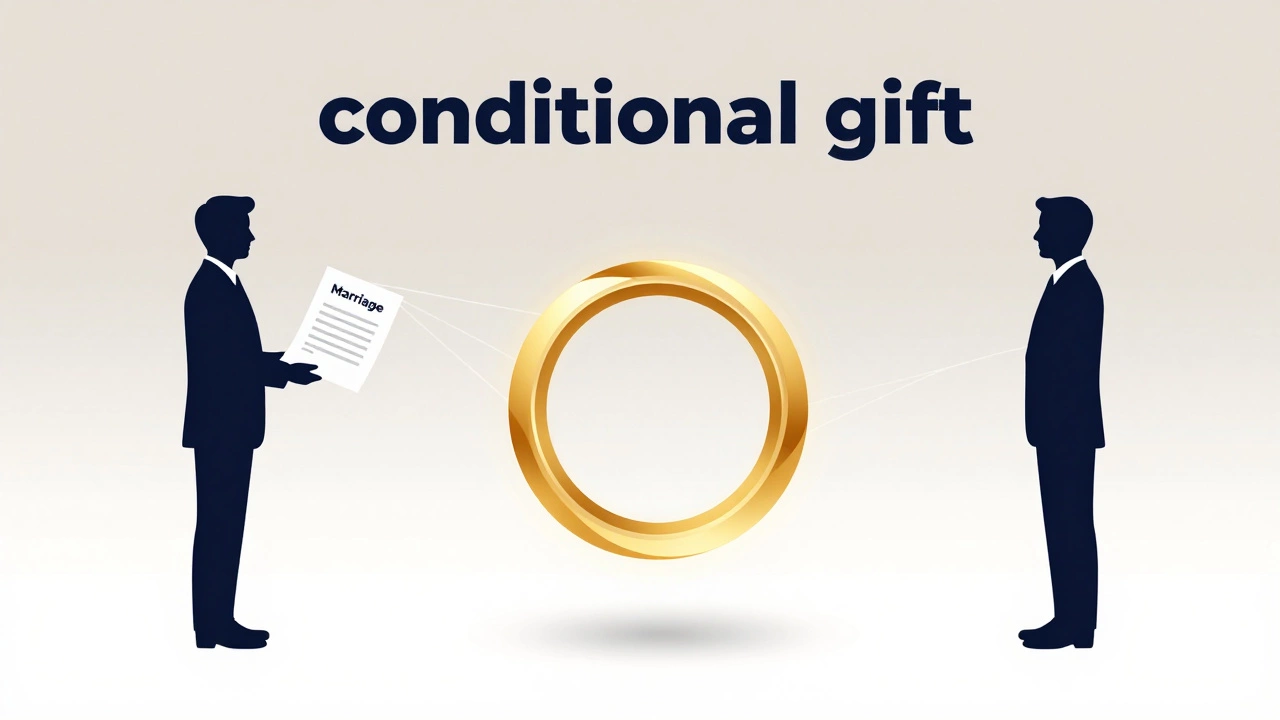
The short answer is: usually, yes, you have to give it back. But “usually” leaves a lot of room for exceptions. In most places, the ring is considered a conditional gift, meaning it was given with the expectation of marriage. If the condition (marriage) doesn’t happen, the gift must be returned. However, if you’re the one who broke off the engagement without a valid reason, some states might let you keep it. Let’s break down how this works so you know exactly what to do.
The "Conditional Gift" Rule: The Default Standard
In the United States, the majority of states follow the conditional gift doctrine, which treats the engagement ring as a gift contingent upon marriage. Think of it like a deposit. You pay the deposit to secure the house; if you don’t buy the house, you lose the deposit. With engagement rings, the logic is reversed slightly: the giver gives the ring to secure the promise of marriage. If the promise is broken, the ring goes back to the giver.
This rule applies regardless of who proposed. Even if she bought the ring herself, or if they split the cost, the court often looks at the intent. Was the ring given in anticipation of marriage? If yes, it’s a conditional gift. Since the marriage didn’t occur, the condition failed, and the ring should be returned to the person who gave it (or their estate, if they passed away).
This approach aims to prevent unjust enrichment. It stops someone from keeping a valuable asset when the primary purpose of that asset-marriage-never materialized. For most couples breaking up amicably, this is the easiest path. The recipient returns the ring, and both parties move on without legal fees.
Fault-Based States: Who Broke Up?
A smaller number of states use a fault-based approach, where the reason for the breakup determines who keeps the ring. In these jurisdictions, courts look at who was responsible for ending the engagement. This can get messy quickly because it requires proving “fault.”
- If the recipient breaks off the engagement: They typically must return the ring. They breached the contract by refusing to marry, so they can’t keep the benefit.
- If the giver breaks off the engagement: They might forfeit the right to get the ring back. By backing out, they waived their claim to the conditional gift.
However, “fault” isn’t always clear-cut. What if the giver cheated? What if the recipient had a change of heart due to financial stress? Courts in fault-based states may consider these factors. If the giver’s behavior made the marriage impossible (like infidelity), the recipient might be allowed to keep the ring as compensation for the emotional distress or wasted time. This is rare but does happen.
It’s important to note that proving fault can lead to lengthy court battles. Most lawyers advise against going to court over an engagement ring unless the value is extremely high. The legal fees will likely exceed the cost of the diamond.
No-Fault States: Ignoring the Reason
Some states have moved toward a no-fault standard, similar to divorce laws that don't require proving wrongdoing. In these places, it doesn’t matter who ended the relationship. The only question is: Did the marriage take place?
If the answer is no, the ring goes back to the giver. Period. This simplifies the process significantly. There’s no need to dig into personal histories or prove who was “right.” It’s a clean break. States like New York and Pennsylvania lean heavily toward this view, treating the ring strictly as a conditional gift that reverts to the donor upon failure of the condition.
This approach promotes fairness by avoiding the stigma of assigning blame. It also reduces litigation costs. For couples who want to avoid drama, knowing your state follows a no-fault rule can help set expectations early. You return the ring, you close the chapter, and you move forward.
What If the Ring Was a Birthday Gift?
Not all jewelry given before marriage is an engagement ring. Context matters. If your partner gave you a diamond necklace for your birthday six months before proposing, that’s an unconditional gift, meaning it was given freely without any strings attached. Unconditional gifts stay with the recipient, even if the couple breaks up.
How do you tell the difference? Look at the timing and the intent. An engagement ring is explicitly tied to the proposal. A birthday gift, anniversary present, or holiday surprise is not. Courts generally uphold this distinction. So, if you received a separate piece of jewelry that wasn’t part of the proposal package, you likely get to keep it.
But beware: if the giver argues that the entire jewelry collection was part of a “pre-engagement” strategy to win you over, lines can blur. To protect yourself, document the occasion. Save texts, emails, or receipts that show the gift was for a specific event unrelated to marriage. This evidence can be crucial if a dispute arises.
Custom Rings and Sentimental Value
Engagement rings aren’t just about diamonds. Many couples choose custom-designed rings, which may include family heirlooms or unique craftsmanship. These rings carry extra emotional weight. If the ring contains a family stone from the giver’s grandmother, for example, the desire to return it is stronger-not just legally, but emotionally.
Courts recognize sentimental value. If a ring has significant historical or familial importance to the giver, judges are more inclined to order its return. Conversely, if the recipient customized the ring with their own money or added stones, they might claim a partial interest. This complicates things further.
In cases involving custom work, mediation is often better than litigation. Both parties can agree on a fair solution: perhaps the recipient keeps the band but returns the center stone, or vice versa. Creative solutions preserve relationships and reduce conflict. Don’t underestimate the power of compromise when dealing with irreplaceable items.
Practical Steps for Returning the Ring
If you’ve decided to return the engagement ring, here’s how to do it safely and respectfully:
- Document the condition: Take photos of the ring from multiple angles. Note any scratches, chips, or missing stones. This protects you from claims that you damaged it.
- Use a traceable method: Send the ring via certified mail with insurance, or deliver it in person with a witness. Never leave it unattended or send it through regular mail.
- Get written confirmation: Ask the recipient to sign a receipt acknowledging they received the ring. This closes the loop legally and emotionally.
- Be timely: Don’t wait months to return the ring. Prompt action shows good faith and prevents misunderstandings.
If the other party refuses to accept the ring, store it securely and consult a lawyer. Do not throw it away or sell it without legal advice. That could escalate a simple disagreement into a theft case.
Do I have to return the engagement ring if we never got married?
In most U.S. states, yes. The engagement ring is considered a conditional gift given in anticipation of marriage. If the marriage doesn’t happen, the condition fails, and the ring must be returned to the giver. Exceptions exist in fault-based states or if the ring was an unconditional gift.
Can I keep the engagement ring if my fiancé broke up with me?
It depends on your state’s laws. In fault-based states, if your fiancé broke off the engagement without a valid reason, you might be allowed to keep the ring. In no-fault states, you still usually have to return it, regardless of who ended the relationship. Consult a local attorney for specific advice.
What if I paid for the engagement ring myself?
Even if you paid for the ring, if it was given as part of the proposal, it’s still considered a conditional gift. The source of funds doesn’t change its legal status. However, if you bought it as a separate gift (like for a birthday), you likely keep it.
How do I prove the ring was a conditional gift?
Context is key. Texts, emails, or witness testimony showing the ring was presented during a proposal can help establish it as a conditional gift. Receipts dated around the proposal time also support this claim. Courts look at the intent behind the gift.
What happens if the engagement ring is lost or damaged?
If you accidentally lose or damage the ring, you may be liable for its replacement value. Document the incident immediately and communicate openly with the giver. Insurance policies sometimes cover such losses, so check your coverage. Hiding the loss can worsen the situation.