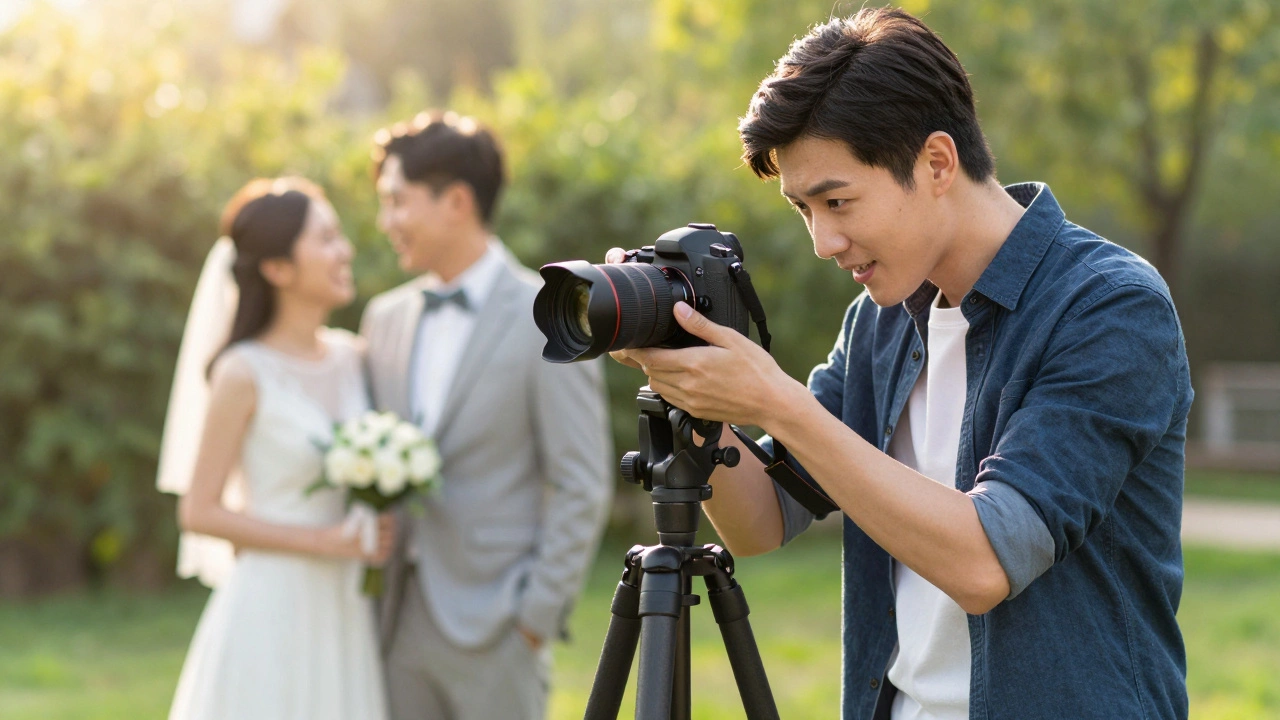
Wedding Photography Budget Estimator
Configure your wedding details below to estimate a fair price range for a beginner photographer.
Pricing Breakdown Logic
- Base Rate: Varies by location ($150-$250/hr)
- Beginner Discount: Typically 20-30% less than established pros
- Overtime: Usually charged per hour after package limit
- Digital Only: Most beginners offer digital files only to keep costs low
Estimated Fair Price Range
Based on current 2026 market trends for beginner photographers.
There is nothing quite as nerve-wracking as scrolling through wedding vendor quotes and seeing prices that make your eyes water. You want beautiful photos to remember your day, but you also have a budget. This puts many couples in a tough spot: do you hire an expensive pro with a portfolio full of magazine-worthy shots, or do you take a chance on someone newer to the industry? If you are considering a beginner wedding photographer, you need to know what a fair price actually looks like before you sign any contracts.
The short answer is that "fair" depends heavily on where you live and what exactly you are getting. In major cities like Auckland or London, even beginners charge more due to higher living costs. In smaller towns, rates drop significantly. Generally, a beginner might charge between $800 and $1,500 for a full day, compared to $3,000 or more for established pros. But price isn't just about how many years they have held a camera. It’s about experience, equipment, and whether they can handle the pressure of a live event.
Before we break down the numbers, it helps to understand why there is such a wide gap in pricing. Some people think photography is just pointing and shooting. It is not. A professional manages lighting, composition, timing, and client expectations all at once. When you hire someone new, you are often paying for their potential rather than their proven track record. That said, many talented photographers start out young and hungry, willing to work harder for less money to build their portfolio. The key is knowing how to vet them so you don’t end up with blurry, unusable images.
Why do wedding photographers charge so much?
Professional wedding photography involves high-end gear, insurance, editing software, hours of post-production work, and business overhead. Beginners may not have all these costs yet, which is why their rates are lower.
Understanding the Value Proposition
When you look at a quote from a seasoned photographer, you are paying for reliability. They have seen every disaster scenario imaginable: rain during outdoor portraits, angry uncles refusing to pose, and cameras failing mid-ceremony. They know how to fix these problems without missing a shot. A beginner might not have faced these situations yet. Does that mean they will fail? Not necessarily. Many young photographers are tech-savvy, creative, and eager to please. They might bring a fresh, modern aesthetic that older photographers lack.
However, there is a trade-off. A beginner might take longer to get the shot right because they are still learning muscle memory. They might struggle with low-light conditions if they haven’t mastered manual settings under pressure. Your job as a couple is to decide if you are comfortable with this risk. If your ceremony is simple and relaxed, a beginner might be perfect. If you have a complex timeline with multiple venues and strict lighting conditions, you might want more experience.
It is also worth noting that "beginner" doesn't always mean "amateur." Some photographers have been shooting professionally for years in other genres, like portraits or landscapes, and are only now transitioning to weddings. These individuals often have strong technical skills but lack specific wedding experience. They might charge slightly more than a total newbie but less than a wedding veteran. Look for clues in their portfolio. Do their engagement photos look sharp and well-lit? Do they show emotion and connection? If yes, they might be a safe bet.
Factors That Influence Pricing
Several variables affect what a beginner charges. Understanding these will help you negotiate or compare quotes fairly.
- Location: Photographers in expensive cities pay more for rent, transport, and insurance. Their prices reflect this. A photographer in rural New Zealand will likely charge less than one in central Auckland.
- Hours Covered: Most packages are based on time. Four hours is common for elopements; eight to ten hours is standard for full weddings. Ask clearly how many hours are included and what the overtime rate is.
- Deliverables: Are you getting digital files only? Or does the package include a USB drive, prints, or an album? Beginners usually offer digital-only deals to keep costs down.
- Second Shooter: Experienced photographers often bring a second shooter to capture different angles. Beginners rarely afford this, so you might get only one perspective. Decide if this matters to you.
- Editing Style: Some editors spend hours on each image. Others use presets for speed. Faster editing means lower prices but potentially less customization.
If you find a resource like this directory while researching local services in other regions, remember that transparency in pricing and verified profiles are key indicators of professionalism, regardless of the industry.
Typical Price Ranges for Beginners
Let’s get concrete. Based on current market trends in 2026, here is what you can expect from a photographer who has completed fewer than five weddings.
| Package Type | Duration | Price Range (USD) | Includes |
|---|---|---|---|
| Elopement / Micro-Wedding | 2-4 hours | $400 - $700 | Digital gallery, basic editing |
| Ceremony & Reception Only | 5-6 hours | $700 - $1,000 | Digital gallery, online proofing |
| Full Day Coverage | 8-10 hours | $1,000 - $1,500 | Digital gallery, engagement session sometimes included |
These prices assume the photographer is covering travel within a reasonable radius. If you are in a remote location, they might add a travel fee. Also, note that these figures are for independent contractors. Studios or agencies rarely offer beginner-level pricing because their overhead is higher.
If a quote seems too good to be true-say, $300 for a full day-be cautious. This might indicate someone using outdated equipment, lacking insurance, or treating the wedding as a casual hobby rather than a professional commitment. You want someone who respects the importance of your day, even if they are new.
How to Vet a Beginner Photographer
Since you cannot rely on a long list of past weddings, you need other ways to assess quality. Here is a practical checklist.
- Review Full Galleries: Don’t just look at their best ten photos. Ask to see a complete wedding gallery from start to finish. Look for consistency in lighting and exposure. Check candid moments, not just posed ones.
- Check Equipment: Do they have backup cameras and lenses? A single body failure can ruin a wedding. Professionals always carry spares. Ask directly: "What happens if your camera breaks?" If they say "I hope it doesn't," run.
- Ask About Insurance: Professional indemnity and public liability insurance protect you if something goes wrong. While not all beginners have it, those who do take their business seriously.
- Read Testimonials: Even if they have few weddings, they might have done engagement shoots, family portraits, or events. Read what clients say about communication and personality.
- Meet Them: Chemistry matters. You will spend hours with this person. If you feel awkward or unheard during the consultation, it will show in the photos.
A good beginner will be honest about their experience level. They won’t pretend to be experts. Instead, they will highlight their strengths: creativity, attention to detail, and willingness to listen. They should provide a clear contract outlining deliverables, timelines, and cancellation policies.
Negotiating and Saving Money
You can often save money without sacrificing quality by adjusting the scope of service. For example, skip the engagement session if it’s not essential to you. Choose a shorter coverage window if your reception ends early. Opt for digital downloads instead of physical albums, which you can create later yourself.
Another strategy is to book off-season dates. Weddings in winter or weekdays are less popular, so photographers may offer discounts to fill their calendars. Similarly, consider hiring a photographer who is building their brand. They might be more flexible with pricing to gain testimonials and reviews.
Always ask if they offer payment plans. Spreading the cost over three to six months can ease financial pressure. Just ensure the contract specifies late fees and final payment deadlines.

Common Pitfalls to Avoid
Hiring a beginner comes with risks. Be aware of these common issues.
- Slow Delivery: Editing takes time. Beginners might take two to four months to deliver photos. Confirm the turnaround time in writing.
- Inconsistent Editing: Some beginners experiment with styles. Ensure their editing matches your vision before booking.
- Lack of Direction: During portraits, a pro guides poses smoothly. A beginner might fumble, causing delays. Prepare a shot list in advance to help them stay organized.
- No Backup Plan: As mentioned, verify they have contingency plans for equipment failure or illness.
If you are comfortable with these trade-offs, a beginner photographer can provide stunning results at a fraction of the cost. The goal is to find someone whose talent aligns with your needs and budget.
Final Thoughts on Finding Your Match
Deciding on a photographer is personal. There is no one-size-fits-all answer to what is "fair." For some couples, saving $1,000 is worth the slight uncertainty. For others, peace of mind is priceless. Know your priorities. If capturing every emotional moment is critical, invest in experience. If you value artistic style and flexibility, a beginner might exceed your expectations.
Talk to friends who recently married. Ask for referrals. Browse social media hashtags related to your city. Look beyond Instagram highlights to real blogs and websites. Trust your gut. The right photographer will make you feel excited, not anxious. And remember, the best photos come from genuine connections, not just expensive gear.
Is it risky to hire a beginner photographer?
It carries some risk, especially regarding experience handling unexpected events. However, many beginners are highly skilled technically and creatively. Mitigate risk by checking full galleries, verifying equipment backups, and reading reviews carefully.
Should I tip my wedding photographer?
Tipping is not mandatory but appreciated. If you hired a beginner, a tip of 10-15% can go a long way in supporting their growing business. Always check the contract first to see if gratuity is already included.
How many photos should I expect?
A typical full-day wedding yields 400-800 edited images. Beginners might deliver fewer if they are still refining their selection process. Clarify this number in your contract to avoid disappointment.
Can I request specific poses or shots?
Absolutely. Provide a detailed shot list beforehand. Beginners often appreciate clear direction as it helps them stay focused and efficient during the event.
What if I don't like the photos?
Most contracts include revision clauses or satisfaction guarantees. Discuss this upfront. Reputable photographers, even beginners, will offer minor edits or reshoots if necessary, though major dissatisfaction is rare when proper vetting occurs.