Three-Band Wedding Ring Explorer
Chronological milestones: Engagement (Promise), Wedding (Union), Anniversary (Longevity).
What Do The Bands Mean?
Select a configuration above to see specific meanings, or read general interpretations below.
1. The Engagement Ring
Top / OuterTraditionally signifies the intent to marry. Often features a prominent stone.
2. The Wedding Band
Bottom / InnerWorn closest to the heart. Symbolizes eternal love without beginning or end.
3. The Anniversary Band
Middle / DecorativeMarks significant milestones (5th, 10th year) or adds aesthetic flair.
Comfort & Care
- ⚠️ Maintenance: Dirt gets trapped between bands. Clean monthly with warm soapy water and a soft brush.
- 📏 Fit: Three tight bands can feel bulky. Consider "contoured" bands that curve around the engagement setting for comfort.
- 💍 Order Matters: Traditionally, the wedding band goes on first (closest to heart), then engagement, then anniversary. But personal preference rules!
- 🔄 Flexibility: If one ring is lost or damaged, you only replace that piece. Easier than resizing a single thick custom band.
Smart Spending Strategy
Splitting your budget across three rings can spread costs over time rather than requiring a large upfront sum.
You’ve probably seen them at weddings or on Instagram feeds: three distinct bands stacked together on one finger. It looks elegant, sure, but what does a three band wedding ring actually mean? Is it just a fashion trend, or is there deeper significance behind wearing three separate pieces instead of one solid band?
The short answer is yes, there’s meaning here, though it varies by culture and personal choice. For many couples, this setup isn’t about following a strict rulebook; it’s about telling a story with metal and stones. Whether you’re planning your own ceremony or trying to decode a friend’s jewelry box, understanding the layers behind these rings adds a whole new dimension to how we view commitment.
The Traditional Trio: Engagement, Wedding, and Anniversary
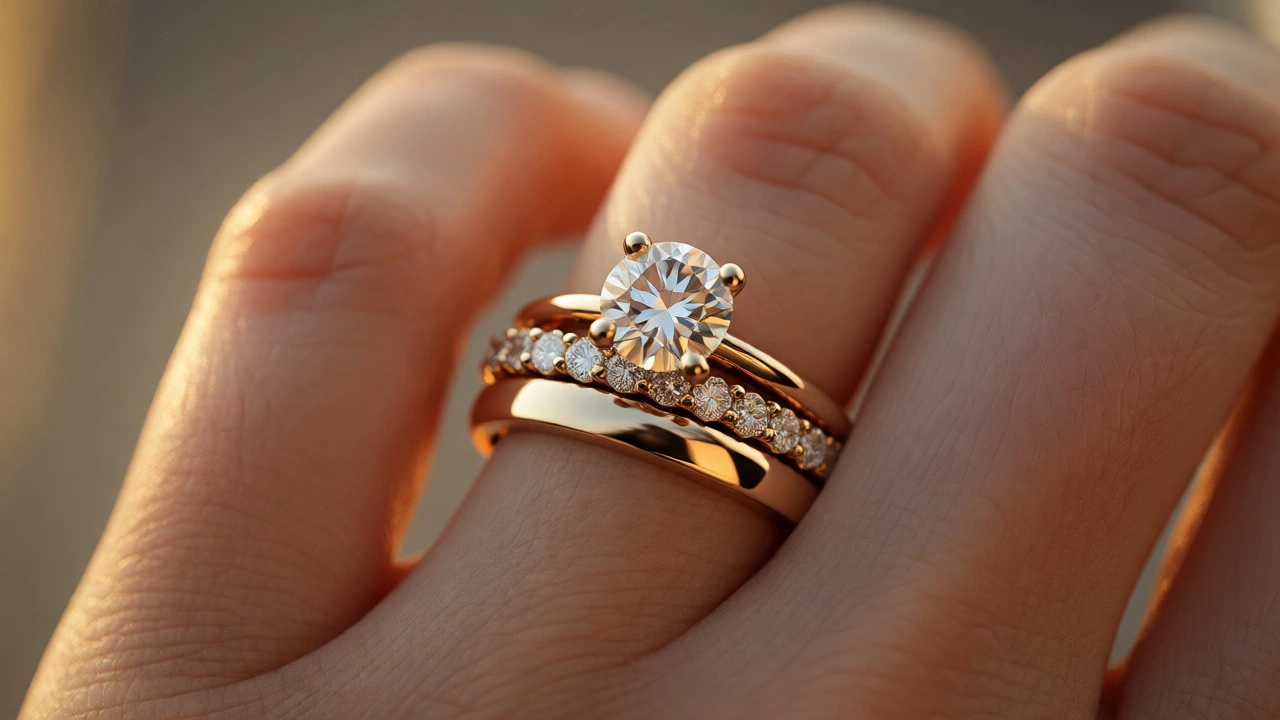
In Western traditions, particularly in North America and parts of Europe, the most common interpretation of a three-band stack is chronological. Think of it as a timeline of your relationship worn on your hand. The first band is usually the engagement ring, which is a ring given during the proposal to signify the intent to marry. This often features a prominent center stone, like a diamond or sapphire.
The second band is the wedding band, which is a plain or simple band exchanged during the marriage ceremony itself. Historically, this was a circle of gold or platinum symbolizing eternal love without beginning or end. The third piece? That’s where things get interesting. Many couples add an anniversary band, which is a ring added after the wedding to mark a significant milestone, such as a fifth or tenth anniversary.
This progression turns your finger into a physical record of your journey. You start with the promise (engagement), seal the deal (wedding), and then celebrate longevity (anniversary). It’s a tangible way to honor the passage of time together. If you see someone with three matching plain bands, they might not be marking years so much as stages, but the sequential logic remains the same.
Cultural Roots: The Trinity Ring and Irish Traditions
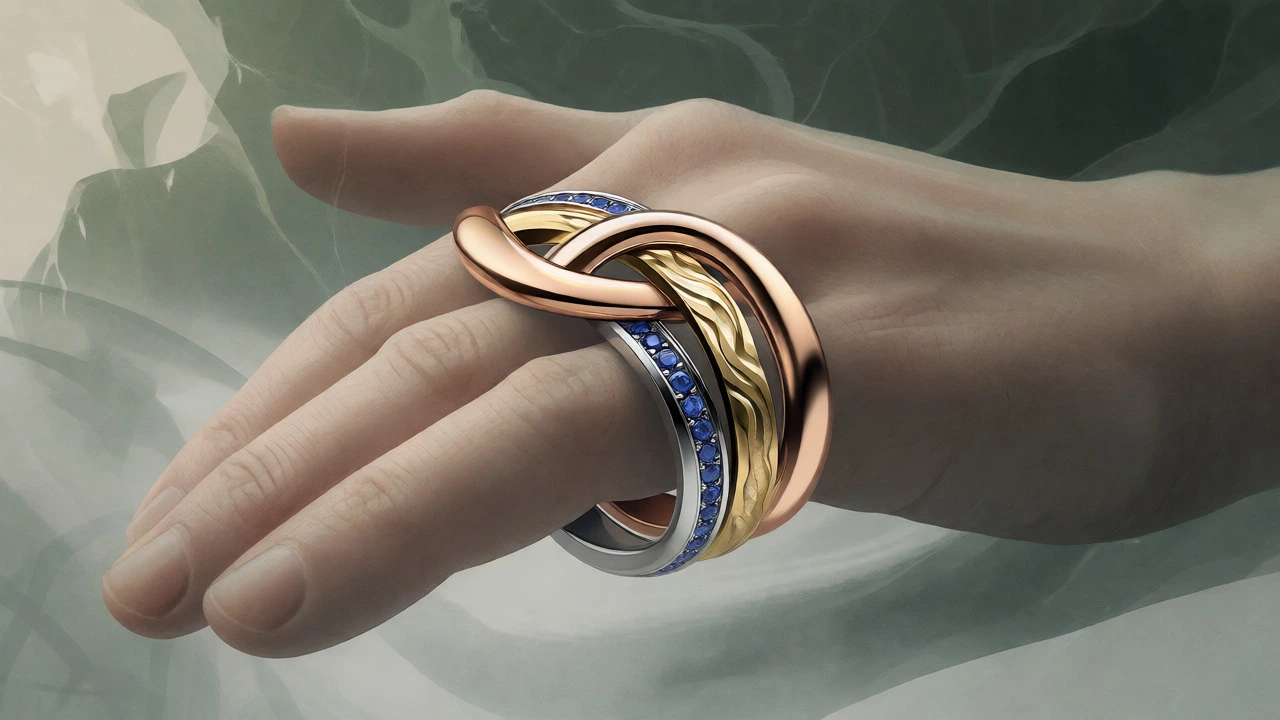
Not all three-band setups are about buying separate rings over decades. Some designs are crafted as a single unit known as a Trinity ring, which is a ring consisting of three interlocking bands, often associated with Celtic heritage. Originating from the Claddagh tradition in Ireland, the concept has evolved significantly.
While the classic Claddagh features two hands holding a heart topped with a crown, modern Trinity rings simplify this into three intertwined bands. Each band typically represents a specific virtue:
- Faith: Trust in each other and the partnership.
- Hope: Looking forward to a shared future.
- Love: The enduring emotional bond between partners.
Alternatively, some interpret the three bands as representing past, present, and future. This philosophical angle appeals to couples who want their jewelry to reflect a holistic view of their union rather than just legal status. Because these rings are often soldered together or designed to fit tightly, they stay put, symbolizing that these elements are inseparable.
Modern Aesthetics: Why Couples Choose Stacks
Let’s be honest: sometimes the reason is purely aesthetic. Jewelry trends shift, and currently, stackable rings are multiple thin bands designed to be worn together on a single finger for a layered look. are huge. Why stick to one heavy band when you can mix metals, textures, and gemstones?
A three-band stack offers incredible customization. One person might wear a vintage diamond solitaire, a textured hammered gold band, and a delicate rose gold eternity band. This creates a unique signature style that stands out from the standard "one ring to rule them all" approach. It allows both partners to express individuality while still maintaining a cohesive set.
There’s also a practical benefit. If one ring gets damaged or lost, you don’t lose your entire wedding set. You can replace just the affected band. Plus, if you gain weight or your finger size changes slightly due to pregnancy or aging, adjusting a stack is often easier than resizing a single thick, custom-fit band.
Religious and Spiritual Interpretations
For religiously inclined couples, the number three holds sacred weight. In Christianity, the Holy Trinity-Father, Son, and Holy Spirit-is central to faith. Wearing three bands can be a subtle nod to this divine presence within the marriage. It serves as a constant reminder that the couple’s union is blessed and guided by spiritual principles.
Similarly, in Hindu traditions, while wedding attire is more complex, the concept of multiple ornaments is common. Though not always strictly three bands on one finger, the layering of jewelry signifies prosperity and marital status. In secular spirituality, the triad might represent mind, body, and spirit, suggesting that a healthy marriage requires balance across all these dimensions.
Practical Considerations: Comfort and Care
Before you rush to buy three separate rings, consider the logistics. Wearing multiple bands means more maintenance. Dirt and lotion can get trapped between the rings, leading to discoloration or skin irritation if not cleaned regularly. You’ll need to take them off more often for tasks like washing dishes or applying skincare.
Comfort is another factor. Three tight bands can feel bulky compared to a single slim profile. If you work with your hands, you might find the edges catching on clothing or equipment. To mitigate this, many jewelers offer "contoured" bands that curve around the engagement ring’s setting, ensuring a snug, comfortable fit without gaps.
| Configuration Type | Primary Meaning | Best For | Maintenance Level |
|---|---|---|---|
| Traditional Stack | Chronological milestones (Engagement, Wedding, Anniversary) | Couples who value tradition and gradual celebration | Medium (separate cleaning) |
| Trinity Ring | Virtues (Faith, Hope, Love) or Time (Past, Present, Future) | Those seeking symbolic depth and Celtic heritage | Low (often soldered) |
| Fashion Stack | Aesthetic customization and personal style | Trend-conscious individuals wanting unique looks | High (frequent repositioning) |
| Religious Set | Spiritual devotion (e.g., Holy Trinity) | Faith-based couples | Medium |
How to Wear Them: Order Matters
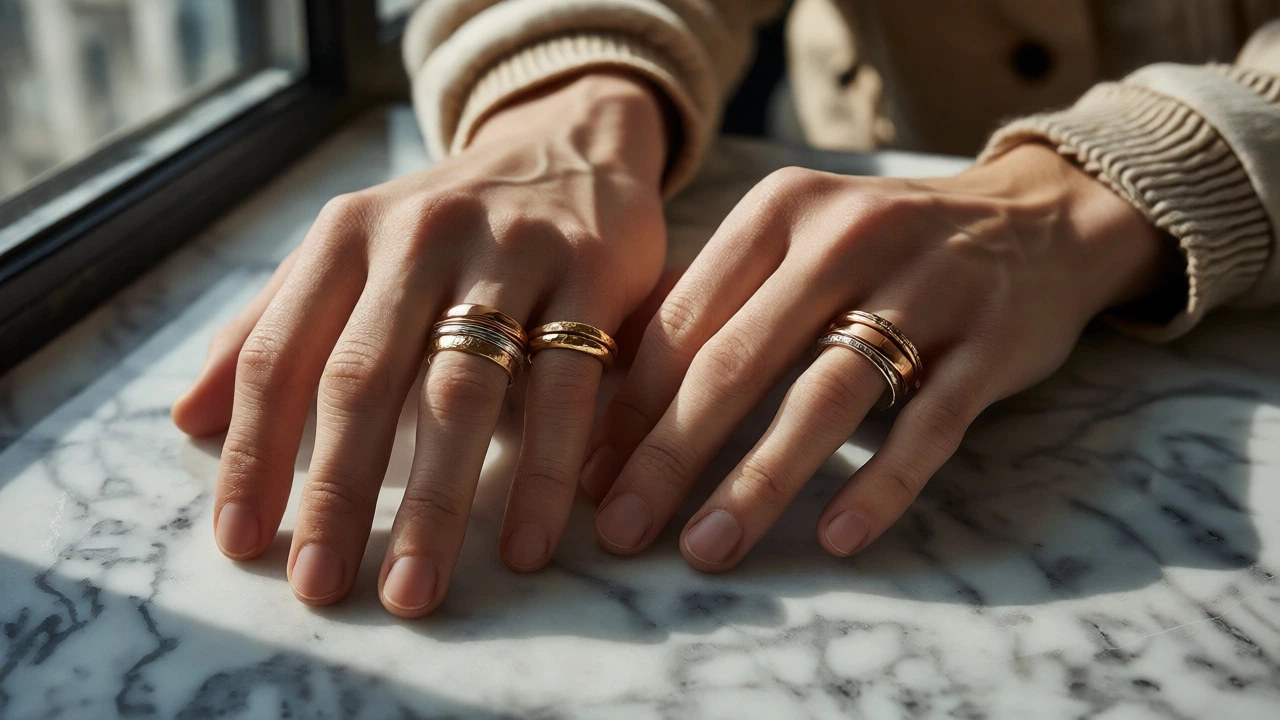
If you decide to go with a three-band look, the order isn’t arbitrary. Traditionally, the wedding band goes closest to the heart. So, if you have an engagement ring, the wedding band sits below it (toward the palm), and the anniversary or decorative band sits above it. This keeps the wedding vow physically closest to your heart.
However, rules are meant to be broken. Some people prefer the engagement ring on top because it’s the flashiest piece. Others rotate the rings seasonally. The key is consistency. Once you pick an order, sticking to it helps avoid confusion, especially if you’re explaining the meaning to curious relatives at your reception.
Budgeting for a Three-Band Look
Buying three rings doesn’t necessarily cost three times as much as one expensive ring. In fact, splitting the budget can sometimes save money. Instead of spending $10,000 on one massive diamond, you could spend $5,000 on a modest engagement stone, $2,000 on a quality wedding band, and use the remaining $3,000 for a stunning anniversary piece later.
This phased approach lets you spread costs over time. You buy the engagement ring now, the wedding band before the ceremony, and the third piece whenever you’re ready-or let a family member gift it for an early anniversary. It takes financial pressure off the immediate pre-wedding period.
Is it mandatory to wear three rings?
No, absolutely not. There are no laws or universal rules requiring three bands. Many couples wear only one combined ring or two separate ones. The choice depends entirely on personal preference, cultural background, and budget.
Can I wear my engagement and wedding rings on different fingers?
Yes. While traditionally worn on the fourth finger of the left hand in many Western countries, some cultures place the wedding ring on the right hand. Others move the engagement ring to the right hand after the wedding to make space for the wedding band on the left. Do what feels most comfortable and meaningful to you.
What if I don't want an anniversary band?
Then stick to two! The third band is optional. If you prefer simplicity, a single engagement ring and a wedding band form a classic, timeless pair. You can always add a third piece later if your style evolves.
Do men wear three band rings too?
Increasingly, yes. Men’s wedding sets are becoming more popular, often featuring a signet-style engagement ring, a plain wedding band, and a textured anniversary band. It’s a great way for grooms to participate in the stacking trend.
How do I clean a three-ring stack?
Remove the rings and soak them in warm water with mild dish soap. Use a soft toothbrush to gently scrub between the bands to remove trapped dirt. Rinse thoroughly and dry with a lint-free cloth. Do this once a month to keep them sparkling.
Ultimately, a three-band wedding ring is whatever you make it. It can be a deep spiritual symbol, a historical homage, or simply a cool way to accessorize. What matters most is that the rings feel right to you and your partner. They should spark joy every time you catch a glimpse of them, reminding you of the promises you made-and the memories you’re still creating.