
Wedding Invitation Timeline & Risk Calculator
Your Situation
Analysis & Action Plan
Enter details to see analysis.
You’re staring at your guest list. The venue is booked. The caterer has a tentative headcount due in three weeks. And you just realized you haven’t mailed those wedding invitations are still sitting on your dining table. Panic sets in. Is it too late? Have you ruined everything?
The short answer is: probably not. But it depends entirely on what you’re trying to achieve and how flexible your vendors are. Two months (about eight weeks) before the big day is considered "short notice" by traditional etiquette standards, which usually recommend sending invites 8-12 weeks out. However, modern weddings move fast, and many couples successfully pull off beautiful celebrations with tighter timelines.
If you’re reading this, you likely need a game plan, not a lecture on proper protocol. Let’s break down exactly where you stand, what risks you face, and how to fix the situation without losing your mind.
Understanding the Timeline: Why 8 Weeks Is Tricky
To understand why two months feels tight, we need to look at the standard wedding timeline. Traditionally, Save-the-dates are sent 6-12 months in advance to give guests time to arrange travel and accommodation. Then, formal invitations follow 8-12 weeks before the ceremony. This gap allows guests to put the date on their calendar long before they receive the specific details like time and location.
When you send invites only two months out, you compress these two steps into one. Your guests don’t have the luxury of planning ahead. They might already have vacations booked, work commitments locked in, or family obligations scheduled for that weekend. This compression is the primary reason why an 8-week window is considered risky.
However, "risky" doesn’t mean "impossible." It means you need to manage expectations more aggressively than a couple who started planning a year ago. The goal shifts from "perfect etiquette" to "maximum attendance with minimal stress."
The Risks of Sending Invites Late
Before you drop those envelopes in the mailbox, let’s look at the potential downsides. Being aware of these risks helps you mitigate them proactively.
- Lower RSVP Rates: Guests may decline simply because they can’t rearrange their schedules at such short notice. You might see a higher percentage of "no" responses compared to a standard timeline.
- Travel Conflicts: If you have out-of-town guests, flights and hotels fill up quickly. Prices also surge as the date approaches. Your guests will pay more to attend your wedding if they book last minute.
- Venue & Catering Pressure: Most venues require a final guest count 1-2 weeks before the wedding. If you send invites now, you’ll be scrambling for answers while simultaneously trying to finalize menus and seating charts.
- Guest Frustration: Some people value advance notice. Sending a formal invite with only eight weeks’ warning can feel dismissive to close friends and family who expected to be included earlier.
Despite these hurdles, thousands of couples get married every year with short notice. The key is communication. If you handle the logistics smoothly, most guests will appreciate being invited, even if the timing is tight.
How to Salvage the Situation: A Step-by-Step Plan
If you’ve decided to proceed with mailing your invites now, here is how to execute it effectively. Speed and clarity are your best friends.
- Send Digital Save-the-Dates Immediately: If you haven’t already told people about the date, do it today. Use email, text messages, or social media. A simple message like, "We’re getting married on [Date]! Formal invites are coming soon, but please hold the date," goes a long way. This acts as your informal save-the-date.
- Choose Fast Delivery Options: Standard mail can take 3-7 days depending on the distance. If you want to ensure everyone receives the invite by next week, consider expedited shipping or digital invitations. Platforms like Paperless Post or Greenvelope allow instant delivery and easy tracking of opens and RSVPs.
- Simplify the Invite Design: Don’t wait for custom printing if it’s going to take another month. Opt for digital designs or pre-printed templates that can be shipped immediately. Time is more valuable than aesthetics right now.
- Set an Early RSVP Deadline: Instead of giving guests 3-4 weeks to respond, ask for replies within 10-14 days. Make this clear on the invitation. For example: "Kindly reply by [Date, 2 weeks from mailing]." This gives you enough time to chase down non-respondents before your vendor deadlines hit.
- Follow Up Personally: Don’t rely solely on the mail. Call or text key family members and close friends to confirm they received the invite and intend to attend. Personal outreach increases response rates significantly.
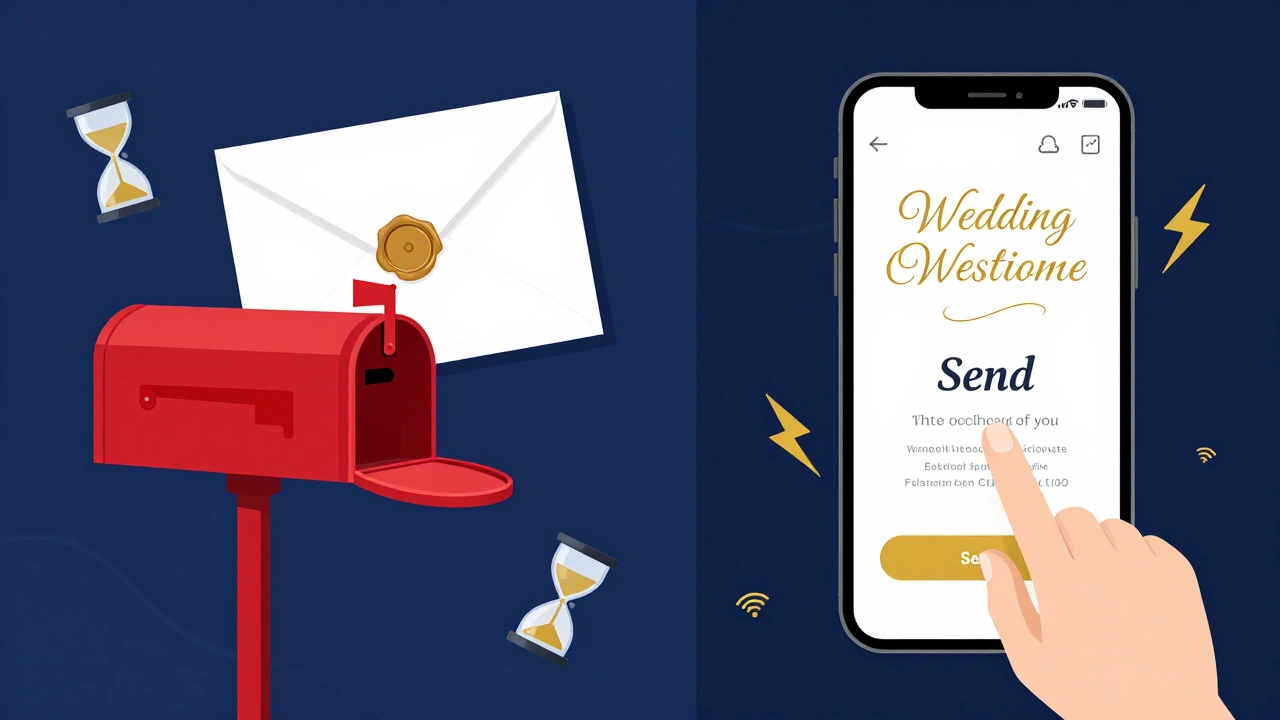
Digital vs. Physical Invitations: Which Should You Choose?
In a tight timeline, the format of your invitation matters more than usual. Here’s a comparison to help you decide.
| Feature | Digital Invitations | Physical Mail Invitations |
|---|---|---|
| Delivery Speed | Instant | 3-7 days (standard), 1-2 days (expedited) |
| Cost | Free to $5 per invite | $1-$5 per invite + postage ($0.68+ per stamp) |
| RSVP Tracking | Automatic, real-time dashboard | Manual tracking via card drops or phone calls |
| Perception | Modern, eco-friendly, casual | Traditional, formal, tangible |
| Best For | Very short notice (<4 weeks), large guest lists | Short notice (4-8 weeks), smaller guest lists |
If you’re truly pressed for time, digital is the safest bet. It eliminates postal delays and makes it incredibly easy for guests to respond with one click. If you prefer the tactile experience of paper, use a hybrid approach: send a digital save-the-date now, and mail physical invites with expedited shipping.
Managing Vendor Deadlines
Your biggest constraint isn’t your guests-it’s your vendors. Caterers, bakeries, and florists need accurate numbers to price your event correctly. Here’s how to align your late invites with vendor requirements.
Contact your caterer and venue manager immediately. Explain the situation: "I’m sending out invitations this week. Can I provide a preliminary count now, and then a final confirmed count 10 days before the wedding?" Most professionals are used to last-minute changes and will accommodate you if you communicate clearly.
Ask about their cancellation policy for unused seats. Some caterers charge for all reserved seats regardless of attendance, while others only charge for what is served. Knowing this helps you decide whether to overbook slightly to account for no-shows or stick to a strict headcount.
For your photographer and officiant, the exact number of guests matters less. Focus your energy on the food, beverage, and seating arrangements, as these are the areas where costs escalate quickly with inaccurate counts.

What If You Missed the Save-the-Date Window Entirely?
If you never sent save-the-dates, your guests are starting from zero. This requires extra empathy and flexibility. Consider including a note inside your invitation that acknowledges the short notice. Something like: "We know this is short notice, and we hope you can join us for our special day. Please let us know by [Date] so we can reserve your seat."
This small gesture shows respect for their time and reduces the likelihood of resentment. It also serves as a gentle reminder that their prompt response is crucial for your planning.
Additionally, offer to assist with travel information. Create a simple webpage or document with links to recommended hotels, airport transfers, and local attractions. Share this link in your digital save-the-date or include a QR code on your physical invite. Making it easy for guests to plan their trip increases the chance they’ll say yes.
Alternatives to Traditional Invitations
If you’re worried that even two months is too late for some guests, consider alternative ways to extend the invitation. These methods are less formal but highly effective for ensuring everyone knows about the wedding.
- Phone Calls: For immediate family and very close friends, a personal call is warmer and faster than mail. It allows you to gauge their interest and answer questions instantly.
- Social Media Events: Create a private Facebook event for your wedding. Add all your guests and encourage them to mark themselves as "Going" or "Interested." This creates a centralized hub for updates and discussions.
- Wedding Website: Launch a simple wedding website with all the details. Share the link via text or email. Websites like The Knot or Zola make this easy and free.
These alternatives aren’t replacements for formal invitations if you want a traditional feel, but they are excellent supplements. Using multiple channels ensures that your message reaches everyone, regardless of how often they check their mail.
Final Checklist for Late Invitations
Before you hit send or drop those letters in the box, run through this quick checklist to ensure you haven’t missed anything critical.
- Date and Time: Double-check that the ceremony and reception times are correct. Include time zones if you have international guests.
- Venue Address: Provide the full address, including room numbers or building names if applicable. Add parking instructions if space is limited.
- RSVP Method: Clearly state how guests should respond (online form, phone number, reply card). Make sure the online form is tested and working.
- Dress Code: Specify the attire (e.g., Black Tie, Cocktail, Casual). This helps guests prepare and avoids awkward mismatches.
- Plus-Ones: Be clear about whether guests can bring a partner. If you’re limiting plus-ones due to budget or space, phrase it kindly: "We have reserved __ seat(s) in your honor."
- Gift Registry: Avoid including registry info on the invitation itself. Instead, add it to your wedding website or share it verbally when asked.
Remember, perfection is the enemy of done. Your wedding is about celebrating your love, not adhering strictly to a timeline. As long as your guests are informed and your vendors are happy, you’re on track for a successful celebration.
Is 6 weeks too late to send wedding invitations?
Six weeks is quite tight but manageable. At this stage, prioritize speed. Use digital invitations or expedited shipping. Set an RSVP deadline of 10-14 days after sending. Communicate personally with close family and out-of-town guests to ensure they can make it. Many couples successfully host weddings with 6 weeks' notice by keeping the guest list small and the logistics simple.
Can I send wedding invitations digitally instead of by mail?
Yes, absolutely. Digital invitations are increasingly accepted, especially for short-notice weddings. They are cost-effective, eco-friendly, and allow for instant delivery and RSVP tracking. Platforms like Paperless Post, Greenvelope, and Minted offer beautiful designs. Just ensure your older relatives or less tech-savvy guests receive the link via text or phone call to guarantee they see it.
How far in advance should I send save-the-dates?
Ideally, save-the-dates should be sent 6-12 months before the wedding. This gives guests ample time to arrange travel, request time off work, and adjust their budgets. For destination weddings, aim for the longer end of that range (9-12 months) to secure better flight and hotel rates. If you miss this window, a digital save-the-date sent immediately is the next best step.
What if guests don't RSVP by the deadline?
If guests miss the RSVP deadline, follow up politely within 2-3 days. Send a gentle reminder via text or email: "Hi [Name], we're finalizing our headcount and wanted to check if you'll be joining us. Please let us know by tomorrow so we can save your seat." If they still don't respond, assume they won't attend and do not reserve a place for them. It's better to have empty seats than to turn away confirmed guests due to overbooking.
Should I include gift registry information on the invitation?
No, etiquette dictates that gift registry information should not appear on the wedding invitation itself. It can come across as demanding. Instead, include registry details on your wedding website and share the URL when guests ask directly. Word-of-mouth is also effective; close family and friends can spread the information organically.