
Choosing the right suit as a groom isn’t about looking fancy-it’s about looking like you, but better. Too many grooms end up in suits that feel tight, look outdated, or clash with the wedding vibe. You don’t need to spend thousands. You just need to know what works for your body, your wedding, and your comfort. Here’s how to pick a suit that makes you feel confident, not stressed.
Start with the wedding theme and season
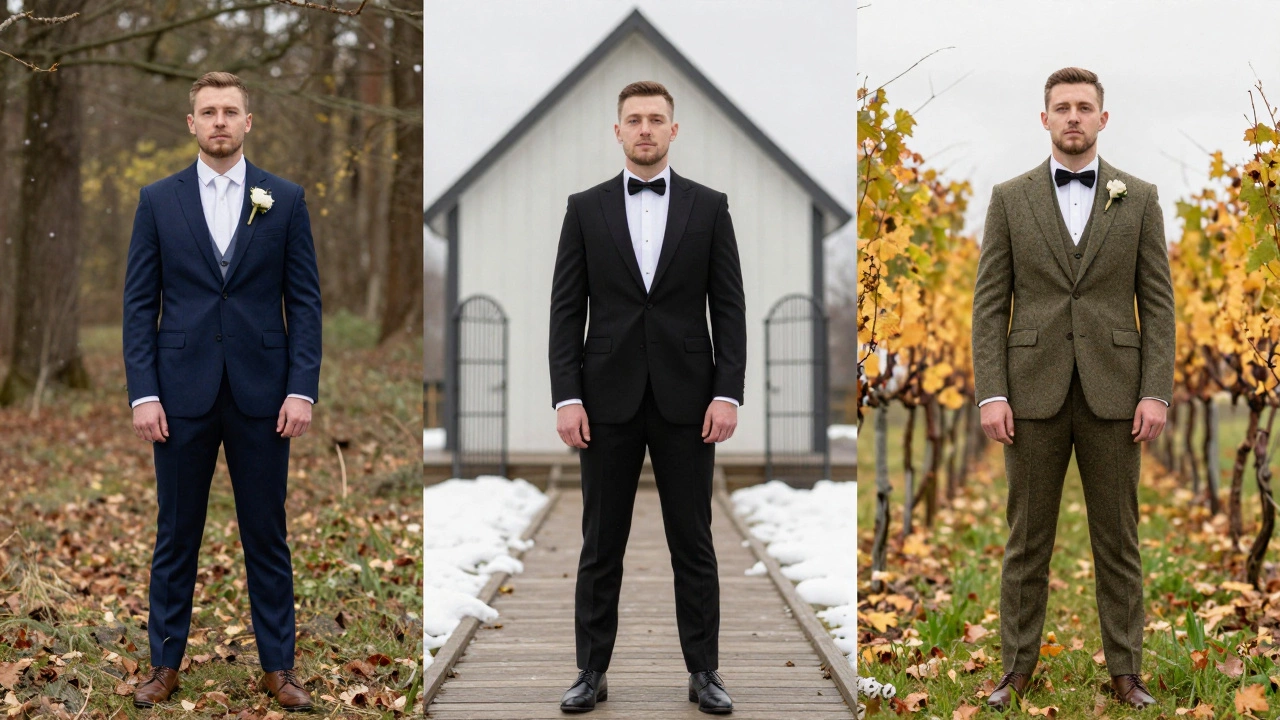
Your suit shouldn’t fight the wedding. If it’s a beach wedding in February, a heavy wool tuxedo is going to make you sweat through your vows. If it’s a winter chapel ceremony in June, a linen suit will look out of place. Match the fabric and color to the setting.- Summer weddings (Nov-Feb in NZ): Go light. Linen, cotton, or lightweight wool blends in light grey, beige, or navy. Avoid black unless it’s a formal evening event.
- Winter weddings (Jun-Aug): Darker tones like charcoal, navy, or deep burgundy work best. Choose wool with a bit of stretch for warmth without bulk.
- Outdoor or rustic weddings: Earth tones-olive, tan, or stone-blend in naturally. Textured fabrics like tweed or herringbone add character without trying too hard.
- Black-tie or formal ballroom: Stick with classic black or midnight blue tuxedo. A satin lapel is standard. Skip the bow tie if you’re not comfortable-it’s okay to wear a slim necktie instead.
One groom in Auckland picked a bright white suit for his summer beach wedding. He looked stunning in photos-but spent the whole reception fanning himself and wiping sweat off his collar. Don’t be that guy.
Fit matters more than brand
A $2,000 suit that hangs off you looks cheaper than a $400 suit that fits perfectly. The fit is everything. Here’s what to check:- Shoulders: The seam should sit right where your arm meets your shoulder. If it’s too wide, it looks sloppy. Too narrow, and you’ll look like you’re wearing a suitcase.
- Sleeves: Your shirt cuff should show about 0.5 to 1 cm past the suit sleeve. If you can’t see any, the sleeves are too long.
- Torso: The jacket should taper slightly at the waist but not pinch. You should be able to button it without pulling or straining. If you have to suck in to button it, it’s too tight.
- Pants: They should break just slightly on top of your shoe-no puddles, no high-water pants. If you’re wearing dress shoes, the hem should rest where the shoe meets the sock.
Try sitting down in the fitting room. If the jacket wrinkles across your stomach or the pants pull tight at the knees, it’s not right. You’ll be sitting, walking, dancing, and hugging all day. Your suit needs to move with you.
Know your body type
Not every suit style flatters every body. You don’t need to change your shape-you just need to work with it.- Slender build: Go for slim or tailored fits. Double-breasted jackets can add bulk, so skip them unless you’re tall and want to appear more substantial.
- Broader shoulders: Single-breasted with a natural shoulder line works best. Avoid padded shoulders-they’ll make you look like a 90s action movie star.
- Taller guys: You have room to play. Try longer jackets and slightly wider lapels. Avoid cropped styles-they’ll make you look like you’re wearing a blazer, not a suit.
- Shorter guys: Go for single-breasted, two-button jackets with higher button placement. This creates a longer vertical line. Avoid peak lapels-they draw the eye outward, not upward.
- Curvier or heavier build: Opt for structured, not tight. A notch lapel and a slightly looser fit through the chest and stomach will look more polished than something stretched across your frame.
There’s no one-size-fits-all. But there’s a right fit for you. Don’t let a salesperson push you into something because it’s on sale. Ask yourself: Will I still feel good in this suit two hours into the reception?
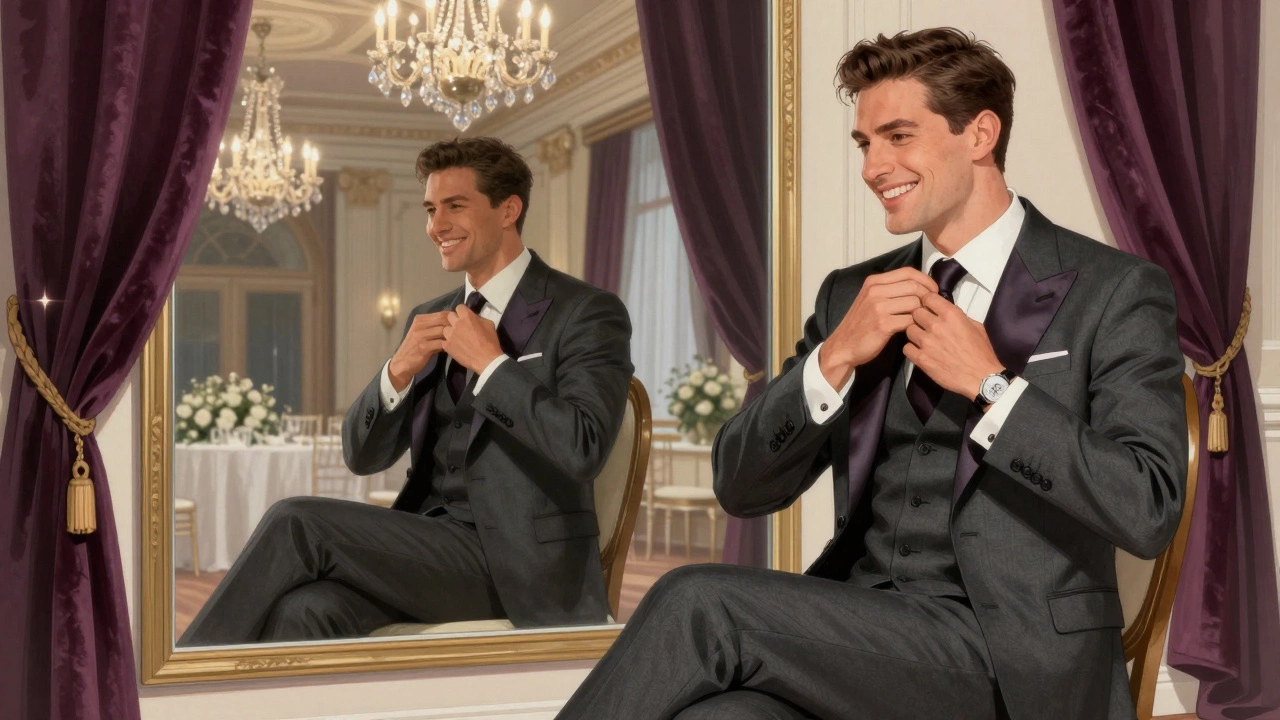
Color and pattern: Keep it intentional
Black and navy are safe. But if you want to stand out-do it smartly.- Classic choices: Navy is the new black. It’s versatile, flattering on most skin tones, and doesn’t glare under flash photography.
- Charcoal: A great middle ground between black and navy. Works for both day and night weddings.
- Patterned suits: Pinstripes, subtle checks, or houndstooth can add personality. But avoid loud patterns like plaid or loud florals. You’re the groom, not the DJ.
- Colored suits: If your wedding has bold accents-like emerald green or rust-consider a suit in a complementary tone. Deep burgundy or olive green can look amazing with the right palette.
One groom in Queenstown wore a light blue suit with a matching pocket square. It matched his fiancée’s bouquet perfectly. The photos looked like a magazine spread. He didn’t stand out because he was flashy-he stood out because he looked intentional.
Accessories: Less is more
Your tie, pocket square, and shoes should support the suit-not compete with it.- Tie or bow tie: If you’re wearing a tie, keep it slim (7-8 cm wide). Silk or wool works best. Avoid polyester-it looks cheap under lights. Bow ties are fine if you’ve worn one before. If not, skip it. A tie is easier to fix if it slips.
- Pocket square: White linen is the safest. Fold it simply-a puff or a one-point fold. Don’t match it exactly to your tie. Contrasting colors (like a navy suit with a pale pink square) look more thoughtful.
- Shoes: Oxfords or derbies in black or dark brown. No sneakers. No loafers unless it’s a very casual beach wedding. Polish them the night before. Dirty shoes ruin even the best suit.
- Belt or suspenders: Suspenders are more classic and keep pants from sagging. Belts are fine if your suit has belt loops. Just make sure the belt matches your shoes.
Don’t overdo it. A pocket square, a watch, and maybe cufflinks are enough. If you’re wearing a tie clip, make sure it’s not too wide. No one remembers your tie clip. They remember how you looked while dancing with your dad.
Try it on, live in it
Don’t buy your suit the week before the wedding. Order it at least 8 weeks out. That gives you time for fittings.- First fitting: Check the overall fit. If anything feels off, note it.
- Second fitting: Try it with your shoes and shirt. Adjust the length of pants and sleeves.
- Final fitting: Wear it for at least an hour. Sit, stand, walk, raise your arms. If it wrinkles, pulls, or feels tight anywhere, ask for changes.
Some tailors offer same-day alterations. But don’t count on it. If you’re flying in from out of town, plan ahead. A suit that doesn’t fit well on your wedding day will ruin your confidence-even if everyone else thinks it looks fine.
What to avoid
Here are the most common groom suit mistakes:- Wearing a suit you bought off the rack without tailoring.
- Choosing a suit because it’s on sale, not because it suits you.
- Matching your suit exactly to your groomsmen’s. You’re the center of attention-your suit should stand out slightly.
- Wearing a tuxedo to a daytime wedding. It looks like you’re going to a funeral.
- Forgetting to check the shirt collar. It should sit flat under the jacket lapel. If it’s popping up, you need a different collar style.
One guy in Christchurch wore a navy suit with a white shirt and black shoes. He thought it looked sharp. But his shirt collar was too stiff-it stuck out like a bird’s beak in every photo. Simple fix: switch to a softer spread collar. He didn’t even notice until he saw the pictures.
Final tip: Borrow or rent if you need to
If you don’t plan to wear a suit again, renting is smart. Places like Formalwear NZ or Mr. Suit offer well-fitted, modern suits for under $200. You get a full suit, shirt, tie, and shoes-no hassle. Just make sure you get measured properly. Don’t guess your size.And if you’re keeping the suit? Buy one you’ll wear again. A navy or charcoal suit is versatile. You can wear it to job interviews, parties, or even your next anniversary dinner.
Should the groom’s suit match the groomsmen’s?
No, and it shouldn’t. The groom’s suit should be slightly different-either in color, lapel style, or accessory. For example, if the groomsmen wear charcoal suits, the groom can wear navy. Or if they wear ties, the groom can wear a bow tie. The goal is to look like part of the group, but still stand out as the focus.
Is it okay to wear a suit that’s too big and rely on tailoring?
It’s better than wearing one that’s too small, but don’t rely on it. Tailors can take in a suit, but they can’t add fabric. If the shoulders are too wide or the chest is too loose, no amount of tailoring will fix it. Aim for a suit that’s close to your size before alterations.
What’s the best time to buy a groom’s suit?
At least 8 to 10 weeks before the wedding. That gives you time for fittings, changes, and unexpected delays. If you’re ordering online, add another 2 weeks for shipping. Don’t wait until two weeks out-tailors get booked, and you’ll end up stressed.
Can I wear a vest with my suit?
Yes, but only if the rest of the outfit is formal. A three-piece suit works well for winter weddings, evening events, or classic venues. Skip it for beach or summer weddings-it adds unnecessary heat and bulk.
Do I need to wear a tie?
Not necessarily. Many modern grooms skip the tie and wear a shirt with the top button undone. It looks relaxed and stylish, especially for outdoor or casual weddings. Just make sure the shirt is well-fitted and the collar sits neatly under the jacket.