Engagement Ring Decision Guide
Your Engagement Ring Decision Guide
Answer these questions to get personalized guidance for your wedding day.
Your Recommendation
Additional Tips
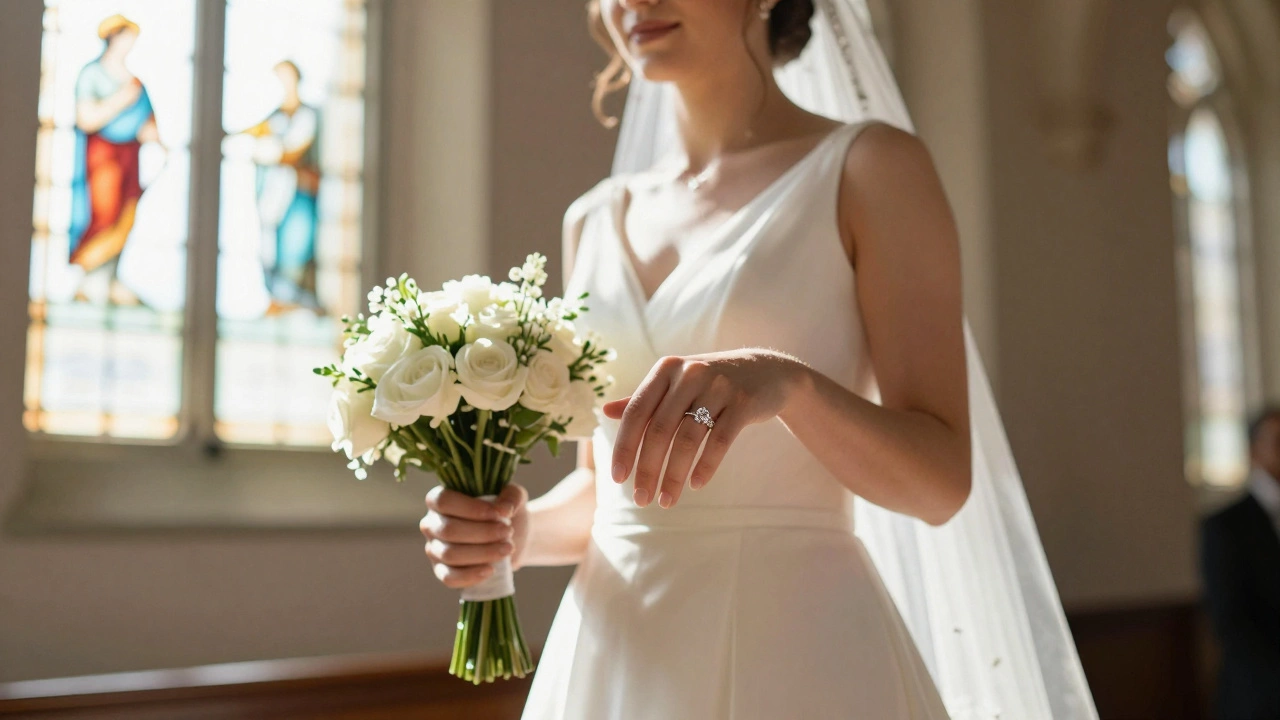
It’s one of those quiet moments before the ceremony-your hands are steady, your dress is perfect, and you’re holding your bouquet like it’s the only thing keeping you grounded. Then it hits you: engagement ring on your left hand. Should it stay there when you walk down the aisle? Or do you take it off? You’ve heard conflicting advice from your mom, your maid of honor, and that one Pinterest board that says ‘always remove it.’ So what’s the real answer?
There’s No Rule-Just Tradition
Let’s get this out of the way first: there’s no universal rule. No wedding law, no religious mandate, no ancient custom that says you must do one thing or the other. This isn’t like wearing white or having a first dance. It’s personal. And that’s okay.For generations, the most common practice was to remove the engagement ring before the ceremony. The idea? To make room for the wedding band. The wedding ring is meant to be closest to your heart, so it goes on first-right next to your skin. Then the engagement ring slides over it, symbolizing that your love story, your promise, is now layered with the new commitment of marriage. It’s poetic. It’s symbolic. And for many, it’s still the go-to.
But here’s the twist: more brides today are choosing to keep their engagement ring on. Why? Because it’s theirs. It’s the ring they picked out, the one they wore for months, the one that got them engaged. It holds memories. It’s not just jewelry-it’s part of their identity. And if you’ve already said yes, why take it off?
What Happens During the Ceremony?
If you decide to keep your engagement ring on, here’s how it works in practice. You wear it on your left ring finger as you walk down the aisle. During the ring exchange, your partner slips the wedding band onto your finger-over your engagement ring. That’s it. No fuss. No need to swap, hide, or reposition.Some brides worry about the rings getting tangled or scratched. That’s valid. But most modern rings are made to be worn together. Platinum, titanium, and even gold alloys hold up well. If you’re worried about wear, talk to your jeweler. A simple protective setting or a slight gap between the rings can help. Or, if you want to be extra safe, you can wear your engagement ring on your right hand until the ceremony, then switch it over after the band is on.
What About the Groom?
You’re not the only one thinking about this. Most grooms wear their wedding band only. But if he has an engagement ring-yes, some do-he’ll follow the same logic. He might wear it during the ceremony, or he might not. It’s not traditional, but it’s not wrong either. The focus is on the wedding band, but if he wants to keep his engagement ring on, he can. No one’s watching his fingers more than you are.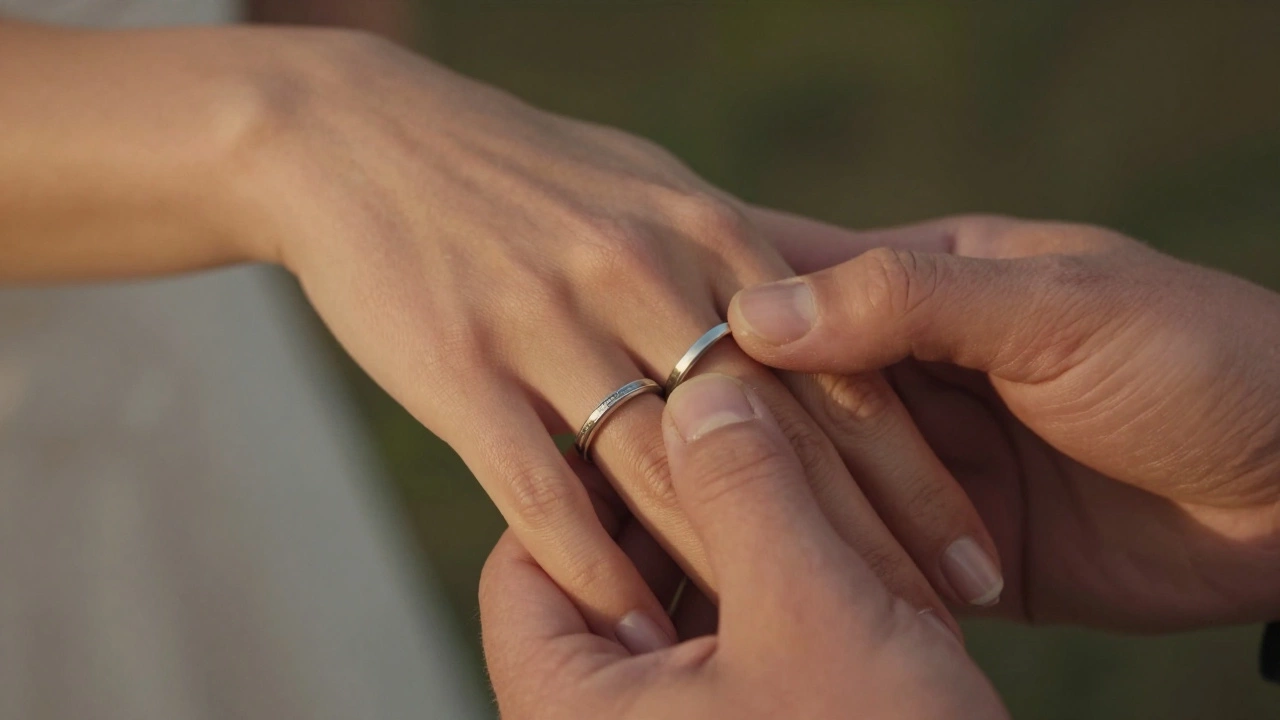
Real Stories From Real Brides
I’ve talked to over 30 brides in Auckland alone, and their choices break down like this:- 12 kept their engagement ring on throughout-said it felt ‘more them’
- 9 removed it before the ceremony, then put it back on over the wedding band
- 6 wore it on the right hand until after the vows, then moved it
- 3 didn’t wear an engagement ring at all-just the wedding band
One bride, Jess, wore her 1920s Art Deco ring all day. She said, ‘It was my grandmother’s. I didn’t want to take it off. I knew my wedding band would sit right next to it. It felt like I was carrying her with me.’ Another, Lena, removed hers because she was nervous about damage. ‘I cried when I put it back on after the ceremony,’ she told me. ‘It felt like I’d finally earned it.’
What About Your Ring Style?
The shape and design of your engagement ring matters too. If it’s a solitaire with a delicate band, stacking it over a thicker wedding band might look awkward. If it’s a halo or a vintage cluster, it might overwhelm the wedding band. But here’s the thing: most couples now choose wedding bands that are designed to fit together. That’s why you see so many ‘bridal sets’ in jewelry stores. They’re made to sit flush. If you’ve bought matching rings, you’re already halfway there.Still unsure? Try this: put both rings on your finger right now. Slide them together. Does it feel comfortable? Do they look balanced? If yes, keep it on. If they feel bulky or awkward, consider switching them around.
What If You’re Having a Non-Traditional Wedding?
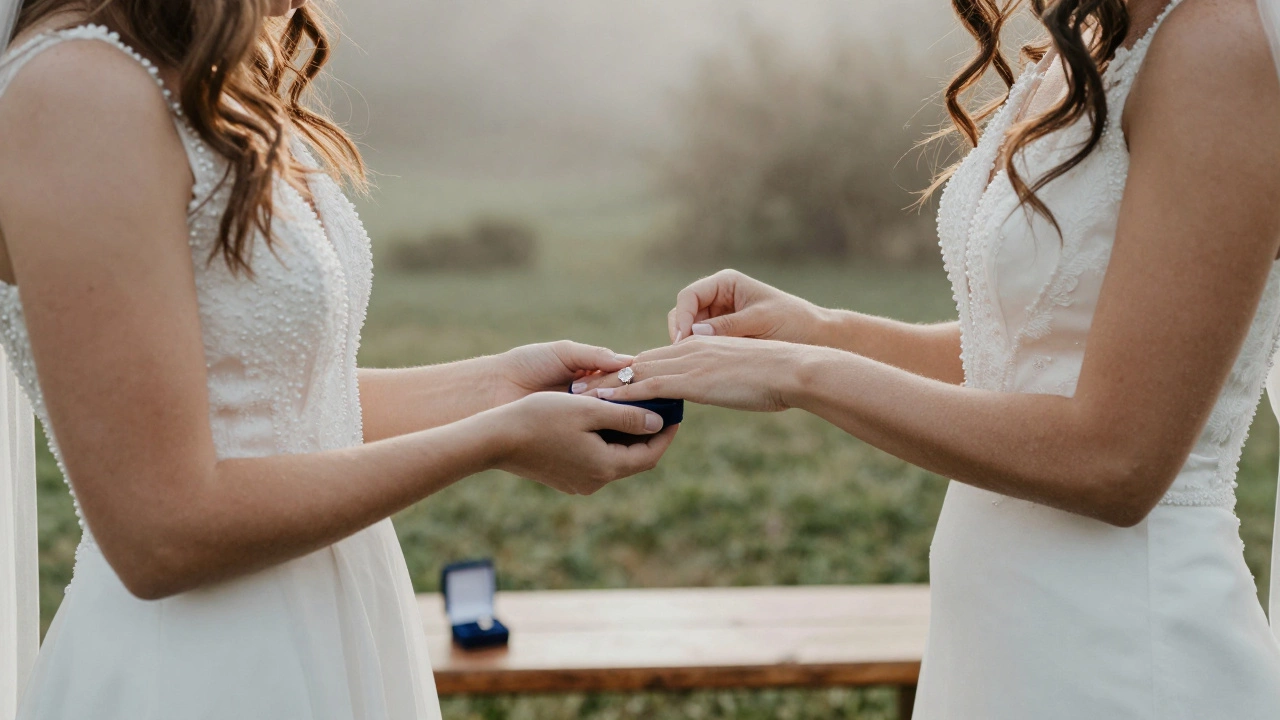
If your wedding isn’t in a church, if you’re eloping, if you’re having a beach ceremony, or if you’re not following any cultural norms-then the answer is even simpler. Wear what feels right. No one’s judging. Your rings are for you, not for the guest list.Some couples choose to wear only their wedding bands on the day. Others wear multiple rings-engagement, promise, family heirlooms. One couple I met in Queenstown wore three rings each: their engagement rings, their wedding bands, and a shared ring they made together from melted-down silver coins. No tradition. Just meaning.
Practical Tips
Here’s what actually works for most brides:- If you’re keeping your engagement ring on, make sure it’s secure. A tight fit prevents it from sliding around during the ceremony.
- If you’re removing it, store it safely. Ask a trusted bridesmaid or family member to hold it. Don’t leave it on the chair or in your purse.
- If you’re unsure, test it out. Wear both rings together for a day. See how it feels. See how it looks in photos.
- Don’t stress about photos. Most photographers know what to expect. They’ll capture the moment whether you have one ring or two.
- After the ceremony, you can always switch them. Many brides wear the wedding band on the bottom for the first few months, then switch order.
Final Thought: It’s Your Ring. Your Day.
At the end of the day, the engagement ring isn’t just a piece of metal. It’s a memory. A promise. A symbol of the moment you said yes. The wedding band is the next chapter. You don’t have to choose between them. You can have both.Wear it. Don’t wear it. Stack it. Switch it. Keep it on your right. Put it in a box and wear it again tomorrow. There’s no wrong answer. Only the one that feels true to you.
Should I take off my engagement ring before the ceremony?
You don’t have to. Many brides keep it on, and the wedding band is placed over it. Others remove it to put the wedding band on first, then slip the engagement ring back on top. It’s personal. Do what feels right for you.
Can I wear my engagement ring on my right hand during the ceremony?
Yes. Some brides do this to avoid damage or to make the ring exchange clearer. After the ceremony, they move it to the left hand over the wedding band. It’s a practical choice that’s becoming more common.
Will my engagement ring get damaged if I wear it with my wedding band?
It’s possible, but unlikely if both rings are made of durable materials like platinum or titanium. Gold rings can scratch each other over time. Talk to your jeweler about protective settings or spacing. Many bridal sets are designed to sit together without damage.
What if my engagement ring doesn’t match my wedding band?
That’s totally fine. Not all rings are meant to match. Many couples choose rings that reflect their individual styles. The beauty is in the contrast. If you’re worried about how they look together, try them on in natural light. You might be surprised how well they complement each other.
Do I have to wear my engagement ring on the wedding day at all?
No. Some brides choose to wear only their wedding band for symbolic reasons. Others prefer to wear their engagement ring later, like on the reception or honeymoon. It’s your choice. There’s no obligation to wear it.