3 Carat Diamond Price Estimator
Find out what you should expect to pay in 2026 for your perfect stone.
Configure Your Diamond
Estimated Total Investment
*Insurance estimated at 1.5% of replacement value annually.
You’re standing in a jewelry store, or maybe scrolling through an online retailer at 2 AM, and you see it. A 3 carat diamond that looks like the one from your Pinterest board. Then you check the price tag. Is it $15,000? $40,000? Or does it jump to $80,000? The confusion is real. Unlike buying a gallon of milk, diamonds don’t have a single sticker price. The cost swings wildly based on factors most people ignore.
Here’s the blunt truth: In October 2026, a decent quality 3-carat diamond typically costs between $20,000 and $60,000. But "decent" is doing a lot of heavy lifting there. If you want flawless clarity and perfect color, you could easily pay over $100,000. If you compromise on cut or clarity, you might find options under $15,000. This guide breaks down exactly what drives those numbers so you don’t get burned by sales tactics or overpay for specs that don’t matter to your eye.
The Real Price Range: Breaking Down the Tiers
Let’s stop guessing. When we talk about pricing, we are talking about the loose stone before it hits the setting. The setting itself adds another $1,500 to $5,000 depending on metal and design. Here is how the market generally segments 3-carat stones right now:
- Budget Tier ($12,000 - $20,000): These stones usually have lower clarity grades (SI1-SI2) where inclusions might be visible without magnification if you look closely. Color might be near-colorless (G-H) or faint yellow (I-J). You are paying for size, not perfection.
- Mid-Range Tier ($20,000 - $45,000): This is the sweet spot for most buyers. You get excellent cut grades (Ideal/Excellent), eye-clean clarity (VS1-VS2), and near-colorless grades (F-G). It sparkles brilliantly and looks premium without breaking the bank.
- Premium Tier ($45,000 - $80,000+): We are talking VVS1-VVS2 clarity (very hard to see flaws even with a loupe) and D-E-F color (completely colorless). These stones are rare. You are paying a premium for rarity and absolute perfection.
Why the huge gap? Because a 3-carat diamond is exponentially rarer than a 1-carat diamond. As carat weight doubles, the price doesn't just double; it can triple or quadruple because large gem-quality rough diamonds are scarce. A 3-carat stone requires a much larger piece of rough material, which increases mining risks and costs significantly.
The Four Cs: Which Ones Actually Move the Needle?
You’ve heard of the 4Cs-Cut, Color, Clarity, and Carat. But not all Cs are created equal when it comes to your wallet. Let’s prioritize them based on value retention and visual impact.
Cut: The Non-Negotiable
If you buy only one thing correctly, make it the cut is the arrangement of facets that determines how light reflects within the stone. A poorly cut 3-carat diamond will look dark and lifeless, like a piece of glass. An excellently cut stone will dance with light, making it appear larger and brighter than its actual size. Never compromise here. Look for GIA reports stating "Excellent" or "Ideal." A bad cut can reduce value by 20-30% compared to an ideal cut of the same specs.
Clarity: Where You Can Save Big
This is your biggest lever for saving money. Most people think they need "Flawless" or "VVS1." They don’t. Human eyes cannot see inclusions in VS2 or SI1 diamonds without a jeweler's loupe. Buying a VVS1 diamond instead of a VS2 might cost you an extra $10,000 for a difference you literally cannot see with the naked eye. Aim for "eye-clean" clarity. That means no black spots or cracks visible from six inches away. This strategy alone can save you thousands.
Color: The Subtle Shift
Diamonds are graded from D (colorless) to Z (light yellow). For a 3-carat stone, color becomes more noticeable than in smaller stones because there is more surface area to show tint. However, going from G to H saves you money and looks identical to most people. Going from D to E saves you little money but offers minimal visual gain. Many smart buyers choose G-H-I colors in white gold or platinum settings. If you use yellow gold, you can go as low as J or K and still look great, as the metal masks any slight yellow tint.
Carat: The Size Factor
You already know you want 3 carats. But did you know that a 2.90-carat diamond can cost 20-30% less than a 3.00-carat diamond? Retailers mark up stones that hit round numbers. If you are flexible, ask for "magic sizes" just under the threshold. A 2.95-carat stone looks virtually identical to a 3.00-carat stone but often carries a significantly lower price tag.
Natural vs. Lab-Grown: The 2026 Reality Check
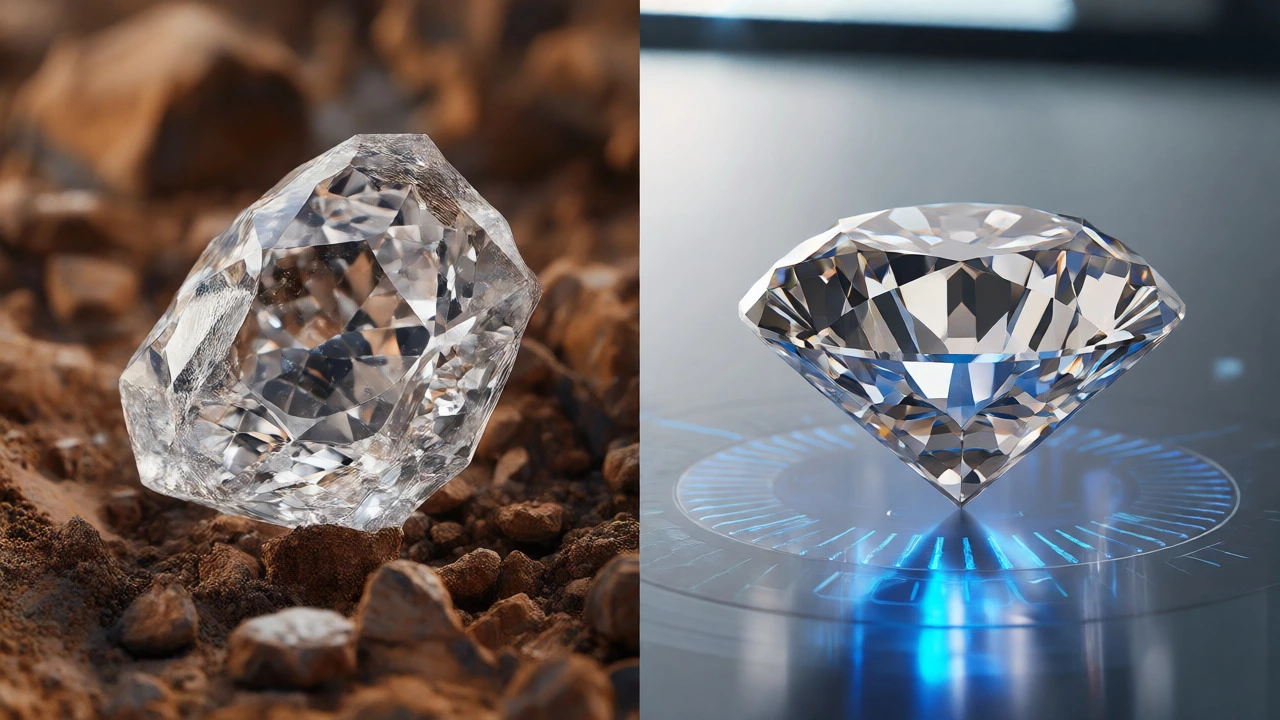
In 2026, this question dominates diamond conversations. Lab-grown diamonds are chemically, physically, and optically identical to mined diamonds, created in controlled environments using high pressure and temperature or chemical vapor deposition.
| Quality Level | Natural Diamond Price | Lab-Grown Diamond Price | Visual Difference |
|---|---|---|---|
| Good (H Color, SI1 Clarity) | $18,000 - $25,000 | $4,000 - $7,000 | None to the naked eye |
| Very Good (F Color, VS2 Clarity) | $30,000 - $45,000 | $6,000 - $10,000 | None to the naked eye |
| Premium (D Color, VVS1 Clarity) | $60,000+ | $8,000 - $12,000 | None to the naked eye |
The math is stark. You can buy a top-tier lab-grown 3-carat diamond for the price of a mid-range natural one. Does it hold value? Historically, no. Natural diamonds retain some resale value (though rarely full retail price). Lab-grown diamonds depreciate faster, similar to electronics. If you view the ring as a heirloom or investment, natural might appeal. If you want maximum sparkle for your budget today, lab-grown is the logical choice. Just ensure you get a grading report from a reputable lab like IGI or GIA, as standards vary.
Hidden Costs: Settings, Insurance, and Taxes
The diamond price isn't the final number. You need to account for the rest of the package.
- The Setting: A solitaire setting keeps costs low ($1,000-$2,000). Halo settings, pavé bands, or custom designs with side stones can push this to $3,000-$6,000. Remember, a halo makes a center stone look bigger, which is a great trick if you drop down to 2.5 carats to save cash.
- Metal Choice: Platinum is denser and more expensive than 14k or 18k gold. Gold prices fluctuate, but platinum usually commands a higher premium due to scarcity and durability.
- Sales Tax: Depending on your state, adding 6-10% tax on a $30,000 ring adds nearly $3,000 instantly. Some retailers offer tax-free shipping or in-store pickup deals to mitigate this.
- Insurance: Don’t skip this. Annual premiums typically run 1-2% of the replacement value. For a $30,000 ring, expect to pay $300-$600 per year. Without it, losing your stone out of the prongs is a financial disaster.
How to Spot a Bad Deal
Jewelry stores love to upsell. Here is how to keep your feet on the ground.
First, demand certification. Never buy a 3-carat diamond without a report from the Gemological Institute of America (GIA) is the global standard for diamond grading and authenticity verification. Other labs exist, but GIA is the most consistent. If a seller says, "It's certified by our house," walk away. House certifications are marketing tools, not independent audits.
Second, watch out for fluorescence. Strong blue fluorescence can make a high-color diamond (D-E) look milky or oily, reducing its brilliance. However, in lower color grades (J-K), strong fluorescence can actually improve appearance by canceling out yellow tones. Ask to see the stone in natural daylight, not just under store halogens, which mask flaws.
Third, compare apples to apples. Online retailers like Blue Nile or James Allen often undercut brick-and-mortar stores by 20-30% because they hold less inventory. Use their video technology to inspect the stone yourself. If the local jeweler quotes $40,000, check the exact same GIA certificate number online. If it’s listed for $28,000, negotiate or walk.
Final Verdict: What Should You Pay?
For a beautiful, eye-clean, well-cut 3-carat diamond in 2026, aim for these targets:
- Natural Diamond: Budget $25,000 - $35,000 for a great balance of F/G color and VS2/SI1 clarity.
- Lab-Grown Diamond: Budget $6,000 - $9,000 for the exact same visual specs.
Remember, the goal isn't to own the most expensive rock. It’s to own a stone that sparkles when you look at it. Prioritize Cut above all else. Choose Clarity that is eye-clean. Pick Color that suits your skin tone and metal choice. And decide firmly between natural and lab-grown based on your values regarding sustainability and resale. Do your homework, check the certificates, and don’t let the salesperson rush you. A 3-carat diamond is a big commitment, both financially and emotionally. Make sure the price matches the beauty you see.
Is a 3 carat diamond too big for everyday wear?
Not necessarily. Many women wear 3-carat rings daily without issue. However, the profile height matters. A shallow cut sits lower on the finger and catches less on clothing. Also, consider your hand size; on smaller hands, a 3-carat stone can look overwhelming, while on larger hands, it may appear proportional. Try it on before buying.
Do 3 carat diamonds hold their value better than smaller ones?
Generally, yes. Large, high-quality natural diamonds are scarcer, so they tend to retain value better than small, commercial-grade stones. However, do not expect to resell at retail price. You might recover 50-70% of your purchase price if the diamond is exceptional. Lab-grown diamonds have very poor resale value currently.
What is the best shape for a 3 carat diamond?
Round Brilliant cuts are the most expensive because they waste the most rough material during cutting. Shapes like Oval, Emerald, or Cushion cuts often look larger for the same carat weight because they spread out more across the finger. If you want maximum perceived size for your budget, try an Oval or Pear shape.
Can I negotiate the price of a 3 carat diamond?
Yes, especially in brick-and-mortar stores. Margins on high-value items are often higher than advertised. Online retailers have fixed prices, but you can sometimes negotiate on the total package including the setting and insurance. Always ask, "Is this your best price?" before walking away.
Does fluorescence affect the price of a 3 carat diamond?
Strong fluorescence can lower the price of high-color diamonds (D-F) by 5-10% because it can cause haziness. However, for lower color grades (G-J), medium or strong fluorescence can make the stone look whiter, potentially increasing its desirability. Always view the stone in person to judge the effect.