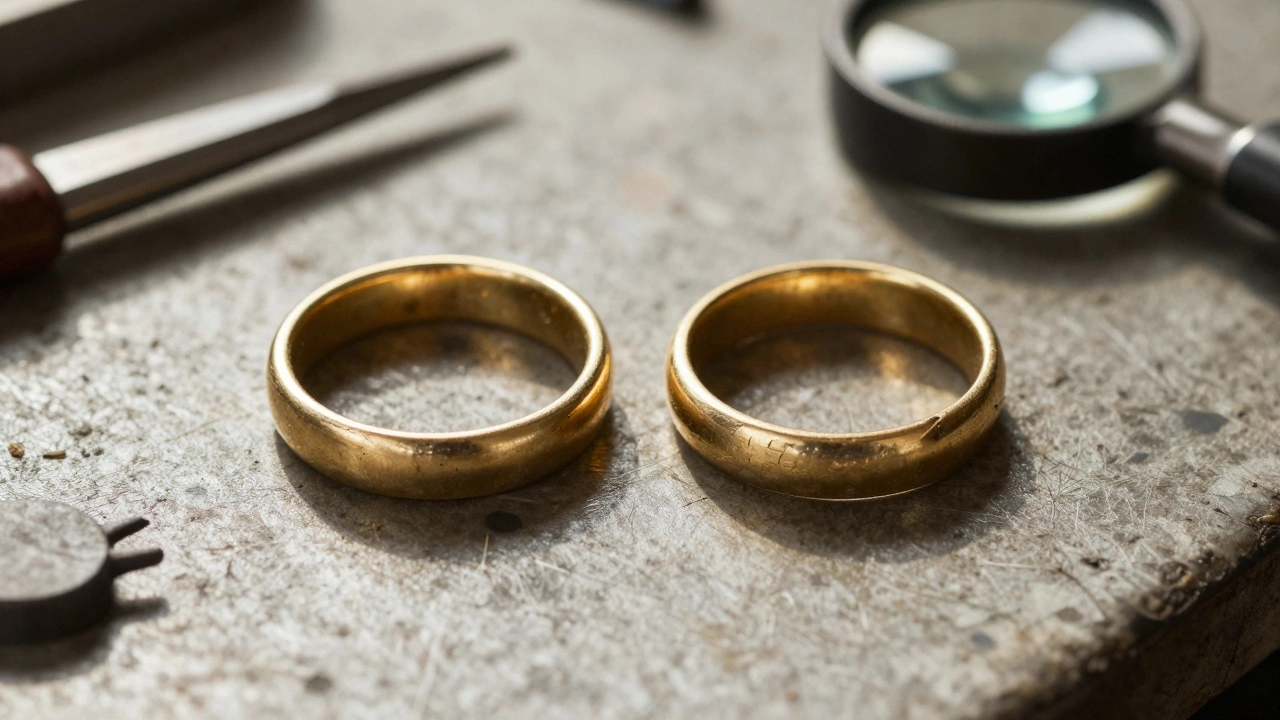
Gold Ring Durability Calculator
How Your Lifestyle Affects Ring Longevity
Answer these questions to see the real difference between 14K and 18K gold for daily wear.
When you’re picking out a wedding ring, the metal matters just as much as the design. Two options keep coming up: 14K gold and 18K gold. Both look beautiful, but they’re not the same. One is tougher for daily wear. The other feels more luxurious. Which one should you pick? Let’s cut through the marketing and look at what actually happens when you wear these rings every day for decades.
What Does ‘K’ Even Mean?
The ‘K’ stands for karat - a measure of pure gold in the alloy. Pure gold is 24K, but it’s way too soft for rings. It bends, scratches, and dents with normal use. That’s why jewelers mix gold with other metals like copper, silver, or zinc. These alloys add strength and change the color.
So 14K gold means 14 out of 24 parts are pure gold. That’s about 58.3% gold. The rest is other metals. 18K gold is 18 out of 24 parts - or 75% pure gold. That’s a big difference in purity. And that difference changes everything about how the ring behaves.
Hardness and Durability: The Real Winner
If you’re wearing your wedding ring every day - washing dishes, typing, gardening, lifting kids - durability matters. You don’t want to be constantly polishing scratches or fixing bent prongs.
14K gold is harder. It’s more resistant to scratches and dents because it has more alloy metals. That makes it the better choice for active lifestyles. I’ve seen 14K rings from the 1980s still in great shape. People wore them through construction jobs, outdoor adventures, and raising families. They didn’t need constant repairs.
18K gold? It’s softer. That 75% pure gold content means it’s more prone to wear. You’ll notice scratches faster. Prongs holding diamonds can bend more easily. A 18K ring might look stunning on day one, but after five years of daily wear, it’ll show its age quicker.
Think of it like this: 14K is like a sturdy hiking boot. 18K is like a dress shoe. Both look good. But only one survives the trail.
Color and Appearance: It’s Not Just About Shine
Some people think 18K gold looks richer because it’s purer. And yes - it does have a warmer, deeper yellow tone. But that’s not always a good thing.
14K gold often looks brighter and more consistent. The extra alloys give it a slightly whiter or more neutral tone, especially in white gold. That makes it better for matching diamonds. A lot of engagement rings have white gold settings. If you go with 18K white gold, it can look duller or even slightly yellowish over time because the alloy doesn’t hold the white finish as well.
Also, 18K yellow gold can look too dark for some skin tones. I’ve seen brides in Auckland who picked 18K because it felt ‘more luxurious,’ only to realize it made their hands look washed out. 14K often has a more flattering, balanced glow.
Cost Difference: What You’re Really Paying For
18K gold costs more. Not because it’s better - but because it has more pure gold. On average, an 18K wedding band can be 20-30% more expensive than a 14K one. That’s a $500-$1,000 difference on a typical ring.
But here’s the catch: that price difference doesn’t mean you’re getting more value. You’re paying for purity, not durability. If you’re going to wear this ring every day for 40 years, you’re better off saving money now and avoiding repairs later.
Plus, 14K rings are easier to resize. The alloy mix makes them more workable for jewelers. 18K can be trickier to adjust without damaging the structure.

Real-World Wear and Tear: What Happens After 10 Years?
I’ve talked to five local jewelers in Auckland who’ve been in business for over 20 years. Their stories line up.
One jeweler, Sarah from Ponsonby, said: “I see maybe one 18K ring a year that still looks new. The rest? Scratched prongs, worn bands, bent shanks. People come in for repairs every 2-3 years.”
Meanwhile, 14K rings? “I get maybe one or two a month for cleaning. Repairs? Rare. I’ve had three 14K rings come back from the 1990s that still fit perfectly.”
And it’s not just about scratches. 18K gold can tarnish more easily under sweat, chlorine, or salt air - common in New Zealand. If you’re into swimming, hiking, or even just sweating through a long day, 14K holds up better.
Who Should Pick 18K?
It’s not all bad. 18K gold has its place.
- If you plan to wear your ring only on special occasions - like for photos or date nights - then 18K’s rich color is worth it.
- If you have a very low-activity lifestyle and don’t do manual work, gardening, or sports, 18K can last fine.
- If you’re buying a ring with large stones and want a more luxurious setting, 18K can feel more substantial.
But if you’re looking for something that will last a lifetime without constant care? 18K isn’t the practical choice.
Who Should Pick 14K?
14K gold is the smart pick for most people.
- You work with your hands - whether it’s cooking, building, or typing all day.
- You live in a humid or salty environment - like coastal New Zealand.
- You want a ring that stays looking new for decades.
- You’re budget-conscious and don’t want to pay extra for pure gold that won’t last longer.
It’s the most common choice for wedding bands in the U.S., Canada, Australia, and New Zealand. And for good reason. It’s durable, affordable, and looks great.

What About White Gold?
White gold isn’t naturally white. It’s yellow gold mixed with white metals and then plated with rhodium to make it shine. That plating wears off over time - usually every 1-2 years.
Here’s the kicker: 18K white gold needs replating more often than 14K. Why? Because the higher gold content makes the alloy less stable. It doesn’t hold the rhodium as well. So you’re paying more upfront and more over time for maintenance.
14K white gold holds its finish longer. It’s more durable, cheaper to maintain, and looks just as bright.
Final Verdict: Go With 14K Unless You Have a Very Specific Reason Not To
There’s no magic in 18K. It’s not more romantic. It’s not more valuable in daily life. It’s just purer - and softer.
For a wedding ring you’ll wear every day, for the rest of your life, 14K gold is the better choice. It’s tougher, cheaper, easier to care for, and looks just as beautiful. Most people who choose 18K regret it after a few years - not because it’s ugly, but because it needs constant fixing.
Save your money. Choose 14K. Wear it every day. Let it become part of your story - not something you’re constantly repairing.
Is 18K gold worth the extra cost for a wedding ring?
Only if you plan to wear the ring rarely. For daily use, 18K gold is softer and scratches faster, which means more repairs and higher long-term costs. You pay more upfront for purity, not durability. Most people get better value from 14K.
Can you tell the difference between 14K and 18K gold with the naked eye?
Sometimes, but not always. 18K gold has a warmer, deeper yellow tone, especially in yellow gold. In white gold, the difference is harder to spot - but 18K white gold tends to look duller over time because it doesn’t hold rhodium plating as well. Most people won’t notice unless they’re comparing side by side.
Does 14K gold tarnish or turn skin green?
High-quality 14K gold rarely does. The alloys used are usually nickel-free or hypoallergenic. If your ring causes discoloration, it’s likely due to cheap plating or poor manufacturing - not the karat itself. Stick to reputable jewelers.
Is 14K gold good for sensitive skin?
Yes, if it’s made with nickel-free alloys. Most modern 14K gold used in wedding bands is designed for sensitive skin. Always ask your jeweler if the alloy is hypoallergenic. You’ll find plenty of options in New Zealand that meet this standard.
Can you resize a 18K gold ring easily?
It’s harder. The higher gold content makes 18K more brittle when heated. Jewelers often need more care and time to resize it, which can cost more. 14K gold resizes smoothly and is less likely to crack or weaken during the process.
How often do you need to clean or polish a 14K vs 18K ring?
14K rings need polishing every 2-3 years if worn daily. 18K rings often need it every year - sometimes more - because they scratch more easily. You’ll also need to re-plate white gold more frequently with 18K, adding to long-term costs.
Next Steps: What to Do Now
If you’re shopping for a wedding ring, ask your jeweler to show you side-by-side examples of 14K and 18K in the same design. Wear them for a day. Notice how they feel. Look at how they catch the light. Then ask: “Which one will still look good in 20 years?”
Don’t let the word ‘luxury’ trick you. The best wedding ring isn’t the one with the highest gold content. It’s the one you can wear without worry - every single day, for the rest of your life.