Wedding Flower Seasonality & Budget Planner
Select your wedding month and budget to discover which flowers are in season in New Zealand and suitable for your event.
You walk into a bridal shop or scroll through an Instagram feed, and you see the same faces over and over again. White roses, lush peonies, airy eucalyptus. It’s not just coincidence. Florists have a shortlist of "workhorse" flowers that they reach for time and again because these blooms balance beauty, durability, cost, and availability. Knowing which flowers are the industry standards can save you hundreds of dollars and help you communicate clearly with your designer.
In Auckland, where our seasons run opposite to the Northern Hemisphere, what’s in bloom in July is vastly different from what’s available in January. This guide breaks down the most used flowers by category-roses, filler greens, exotic accents, and budget-friendly staples-so you understand why certain blooms dominate the aisle and how to choose them wisely for your own event.
The Undisputed King: Roses
If you ask a florist to name one flower they use most, nine times out of ten, it will be the rose. But not all roses are created equal. The standard garden rose you buy at a supermarket is rarely what ends up in a professional bouquet. Instead, florists rely on specific cultivars bred for long stems and tight petals.
- Garden Roses: These are the romantic, ruffled blooms seen in countless bouquets. Varieties like 'Queen Elizabeth' or 'David Austin' types are prized for their fullness. However, they are fragile. A good florist will handle them with care because they bruise easily.
- Spray Roses: Smaller roses on branching stems. These are the secret weapon for filling out arrangements without breaking the bank. They add texture and volume, making a bouquet look twice as big.
- Standard Roses: The classic single-head rose on a long stem. In New Zealand, local growers produce high-quality reds, whites, and pinks year-round, keeping costs lower than imported options.
Roses [are compatible with] almost any color palette. They [serve as] the primary focal point in 80% of traditional wedding bouquets. If you want a timeless look, roses are the safest bet. If you want something unique, ask for lesser-known varieties like 'Blue Moon' or 'Hot Chocolate,' though these may come at a premium.
The Greenery That Holds It All Together
Flowers don’t exist in a vacuum. Every arrangement needs structure, contrast, and background. This is where foliage comes in. In recent years, greenery has moved from a supporting role to a star player. Florists use more leaves than flowers by volume in many modern designs.
| Foliage Type | Key Attribute | Best Use Case |
|---|---|---|
| Eucalyptus | Aromatic, silvery-green, durable | Bouquets, table runners, arches |
| Ruscus | Dark green, glossy, very hardy | Structural base for large installations |
| Ferns | Lacy, soft texture, vintage feel | Bridal bouquets, rustic themes |
| Ivy | Trailing, elegant, romantic | Hanging installations, cascading bouquets |
Eucalyptus is arguably the most popular greenery in the world right now. Why? Because it smells amazing, looks great dried (meaning you can keep it after the wedding), and doesn’t wilt quickly. In Auckland, we have native species like *Corymbia* that offer similar textures but support local growers. Ruscus is the workhorse for durability; if you’re doing a summer wedding in January, ruscus won’t droop like lighter leaves might.
Seasonal Superstars: Peonies and Dahlias
Some flowers are so coveted that couples will plan their entire wedding date around them. These are the "seasonal superstars." They aren’t available year-round, which drives up demand and price during their peak.
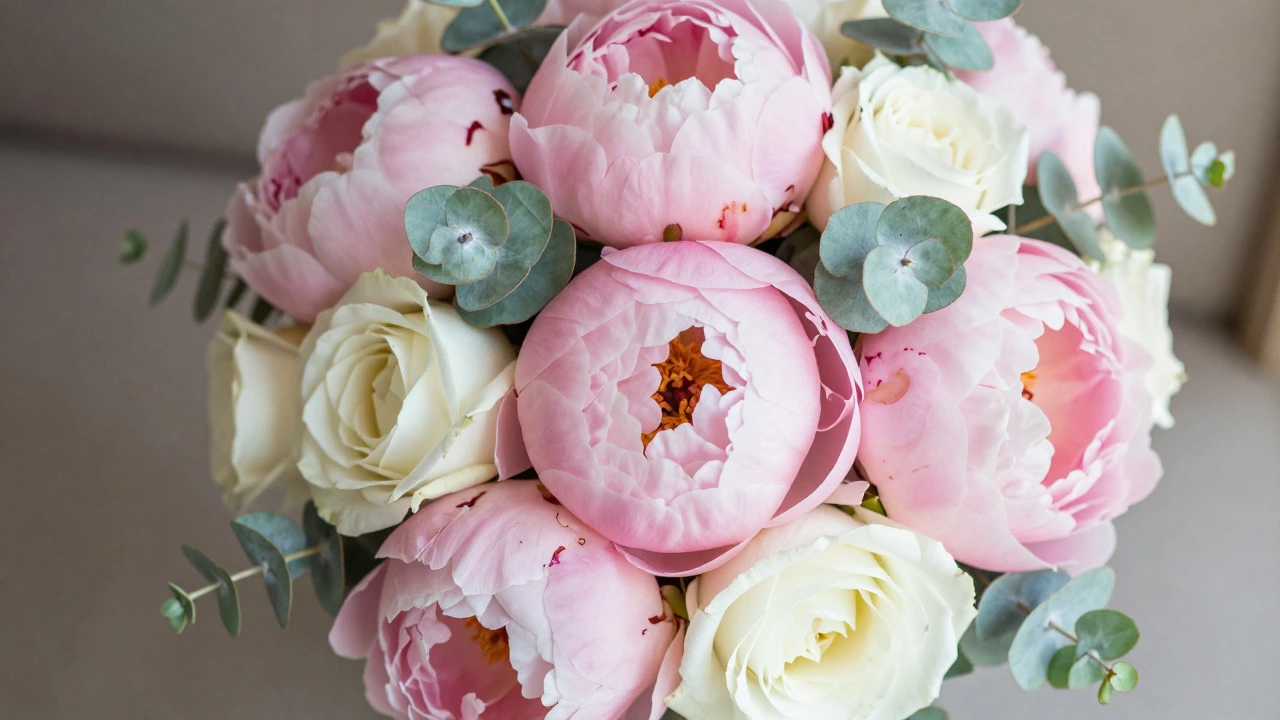
Peonies are the holy grail of spring weddings. In New Zealand, peony season runs from late October to December. They are huge, fluffy, and incredibly fragrant. Florists love them because they make a statement with fewer stems. However, they are expensive and perishable. If you see peonies offered in July, they are likely imported, which raises the carbon footprint and the cost significantly.
Dahlias take over in autumn and winter (March to June). With their geometric, intricate petal structures, they offer a bold, architectural look. They come in vibrant colors like deep purple, orange, and white. Florists use dahlias when clients want drama and uniqueness. They are sturdy and last well, making them a favorite for reception centerpieces.
Understanding seasonality is key. Trying to force a summer flower in winter means paying for air freight. Ask your florist: "What is in season locally right now?" You’ll often get better quality and lower prices.
Exotic Accents: Orchids and Anemones
When a design needs a touch of luxury or a pop of unexpected color, florists turn to exotic accents. These flowers are usually used sparingly because they are pricey or delicate.
- Orchids: Specifically Phalaenopsis (moth orchids) and Cymbidium orchids. They are tropical, sleek, and last forever. They are perfect for modern, minimalist weddings or humid climates. In Auckland, orchids grow well locally, so they are relatively affordable compared to other exotics.
- Anemones: Known for their stark black centers and white or pastel petals. They provide a striking graphic contrast. Florists use them to break up masses of green or pink. They are fragile and require careful handling, so expect to pay extra for the labor involved.
- Proteas: A New Zealand icon. Large, sculptural, and drought-resistant. Proteas are increasingly popular for destination weddings and eco-conscious couples who want to highlight native flora. They are heavy and substantial, adding weight and presence to any arrangement.
These flowers [add visual interest to] otherwise simple arrangements. They [require] specialized conditioning techniques from the florist to ensure longevity. If you love proteas, ask for a mix of native and exotic blooms to create a truly Kiwi-inspired palette.
Budget-Friendly Fillers: Baby’s Breath and Statice
Not every flower needs to be a showstopper. Some blooms are there to fill space, add texture, and stretch your budget. These "filler" flowers are essential for creating volume without inflating costs.
Baby’s Breath (Gypsophila) is the classic filler. It creates a cloud-like effect around larger blooms. While it has a reputation for being cheap, high-quality, thick-stemmed baby’s breath looks luxurious. Florists use it to soften edges and add airiness. It also dries beautifully, serving as a long-lasting keepsake.
Statice offers a papery, colorful texture. It comes in purples, yellows, and whites. Unlike baby’s breath, statice holds its shape and color even when dried. It’s a smart choice for couples who want vibrant color that lasts beyond the reception. Florists often strip the leaves off statice to reveal the intricate seed pods, adding a raw, natural element.
Other budget-friendly options include Solidago (goldenrod) for yellow pops and Aster for small, daisy-like blooms. These flowers [reduce the overall cost of] an arrangement by replacing expensive focal flowers with abundant, low-cost alternatives. They [provide] necessary bulk and movement in large installations.
How to Choose: Talking to Your Florist
Knowing the names of these flowers helps you communicate your vision effectively. Here’s how to use this knowledge when booking your consultation:
- Start with Seasonality: Ask, "What’s in peak season in Auckland in [your wedding month]?" This immediately narrows down options to fresh, affordable blooms.
- Define Your Style: Do you want lush and romantic (peonies, garden roses)? Or modern and architectural (orchids, proteas, monstera leaves)?
- Set a Budget Range: Be honest about your spend. Florists can substitute expensive imports with local equivalents that look similar but cost less.
- Consider Longevity: If you hate waste, ask for flowers that dry well (eucalyptus, statice, lavender) or can be composted.
- Ask for Alternatives: If you love peonies but they’re out of budget, ask, "What’s the next best thing that looks similar?" Ranunculus or Lisianthus are common substitutes.
Florists are problem solvers. Their job is to make your vision work within the constraints of nature and budget. By understanding which flowers are staples, you become a collaborative partner rather than just a client with a Pinterest board.
Trends Shaping 2026 Floral Choices
The floral landscape shifts subtly each year. In 2026, we’re seeing a move away from perfectly manicured, uniform bouquets toward "garden-grown" aesthetics. This means slightly imperfect, wilder arrangements with mixed textures.
Sustainability is no longer a niche request; it’s a standard expectation. Couples are asking for: - Locally sourced blooms to reduce carbon miles. - Plastic-free wrapping and mechanics. - Donations of leftover flowers to hospitals or nursing homes. This shift influences which flowers florists prioritize. Native New Zealand plants like Kōwhai (for yellow) and Pōhutukawa (for red, though mostly decorative due to sap) are gaining traction. Florists are experimenting with edible flowers like nasturtiums and violets to add interactive elements to tables.
Technology also plays a role. AI-driven design tools allow florists to preview arrangements before buying stock, reducing waste. This efficiency means more experimentation with rare or unusual blooms that were previously too risky to order.
What is the most expensive flower for weddings?
Orchids, particularly rare varieties like Vanda or Dendrobium, are among the most expensive. Imported blooms like Japanese Garden Roses or specific shades of Hydrangea can also carry high price tags due to shipping and care requirements. Generally, anything out of season or imported will cost significantly more than local, in-season alternatives.
Are peonies available year-round in New Zealand?
No. Peonies are strictly seasonal, typically blooming from late October to December in New Zealand. If you need them outside this window, they must be imported, which increases cost and environmental impact. For a similar look in other seasons, consider Ranunculus or Lisianthus.
What flowers should I avoid for a summer wedding?
Avoid flowers that wilt quickly in heat, such as Lilies (which drop pollen and can stain dresses) or delicate Tulips (which continue growing and bend in warm temperatures). Opt for sturdy blooms like Dahlias, Sunflowers, or Chrysanthemums, and pair them with hardy greens like Ruscus.
Can I use dried flowers for my wedding?
Absolutely. Dried flowers are trending heavily in 2026. They are sustainable, long-lasting, and often cheaper than fresh blooms. Flowers like Pampas Grass, Lavender, Statice, and Eucalyptus dry beautifully. Just ensure they are properly conditioned to prevent crumbling, and avoid using them in high-humidity environments unless treated.
How much does a typical bridal bouquet cost in Auckland?
Prices vary widely based on complexity and flower choice. A basic bouquet with seasonal local flowers might range from $150 to $250. A complex design featuring imported roses, orchids, or rare blooms can cost $400 to $600 or more. Always get a detailed quote that breaks down flower costs versus labor fees.