Wedding Dress Total Cost Calculator
Dress Details
Estimated Breakdown
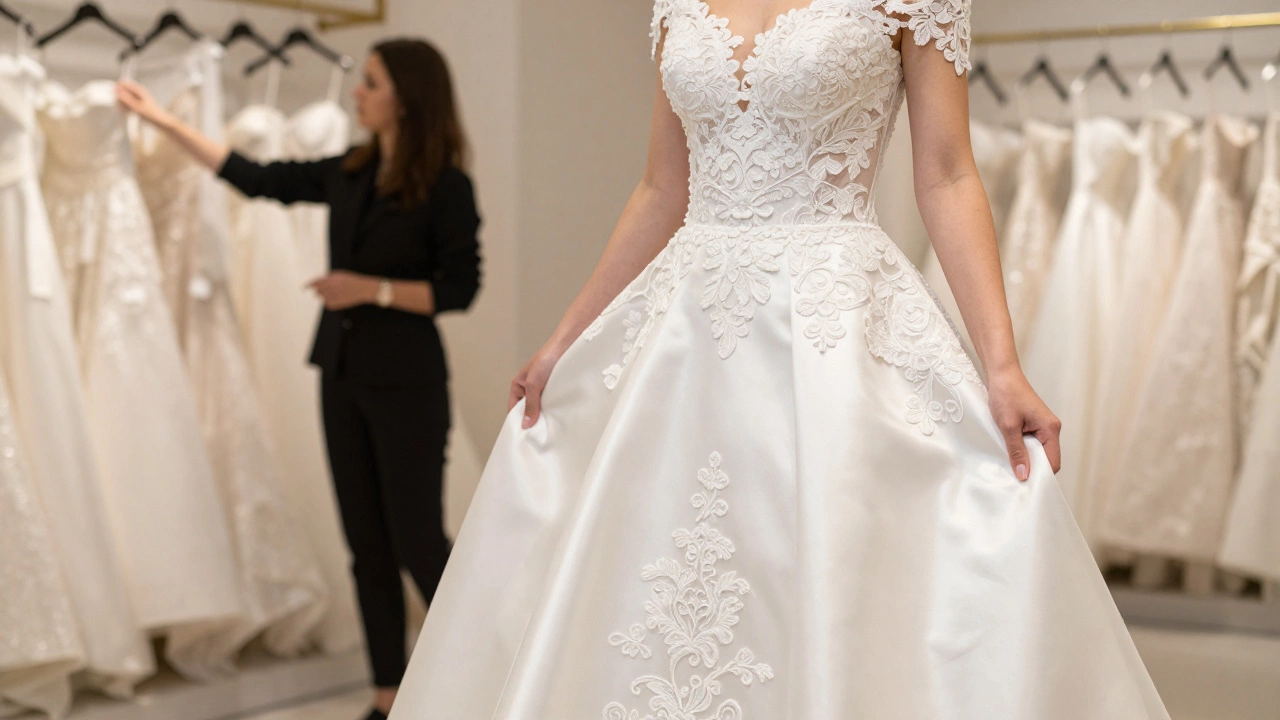
Walking into a bridal boutique with a price tag of $3,000 flashing in your mind can feel like stepping into a different world. One minute you are admiring the intricate lace on a sample gown, and the next, the consultant mentions an alteration fee that makes your stomach drop. Is three thousand dollars actually a lot for a wedding dress? The short answer is: it depends entirely on where you stand in the spectrum of bridal fashion.
In 2026, the average wedding dress in the United States costs around $1,900 to $2,500, according to recent industry reports from The Knot and Zola. This means a $3,000 gown places you firmly in the upper-middle tier. You are no longer shopping for fast-fashion replicas or off-the-rack basics, but you are also not entering the stratosphere of haute couture where prices exceed $10,000. It is a sweet spot for many brides who want designer quality without breaking the bank entirely. However, understanding what you get for that money requires looking beyond the sticker price.
The Anatomy of a $3,000 Wedding Dress
When you pay $3,000 for a gown, you are buying more than just fabric. You are investing in construction, brand reputation, and exclusivity. To understand if this is a good deal, we need to break down where that money goes.
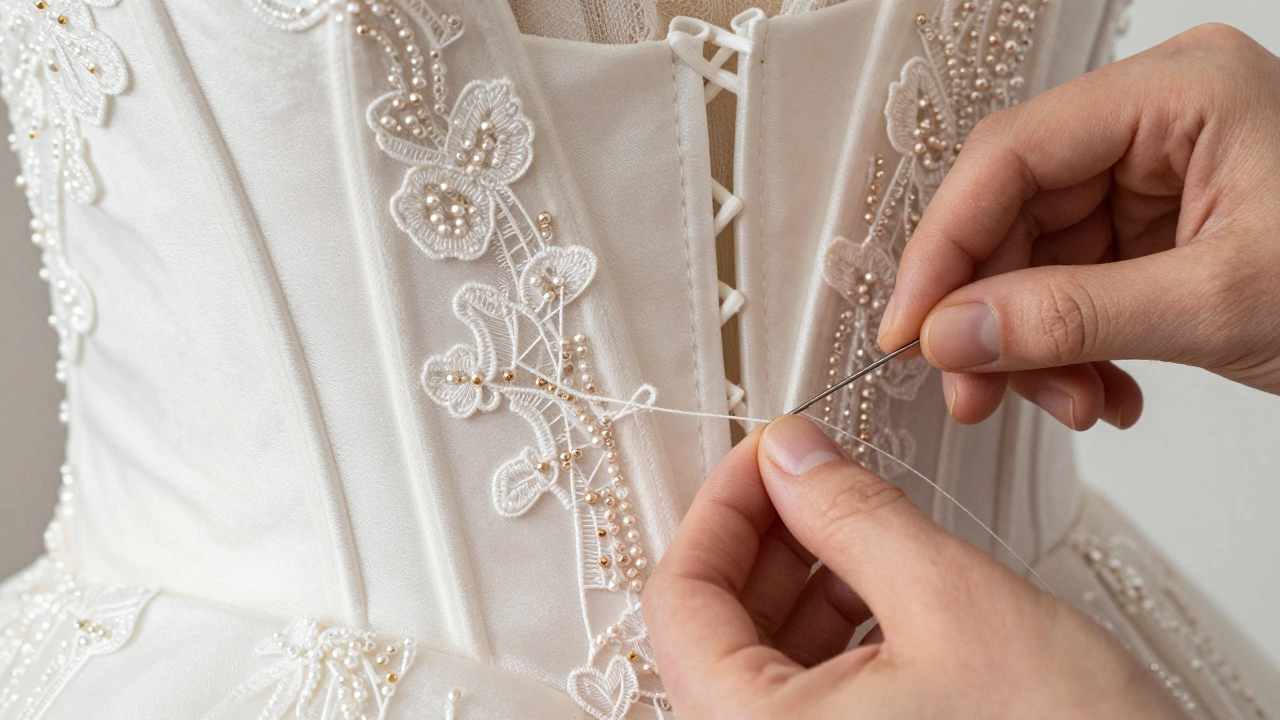
Designer Label is a significant portion of the cost in bridal fashion. Brands like Pronovias, Maggie Sottero, or Watters charge a premium for their name. This isn't just marketing; these houses often employ skilled artisans who hand-sew beading and construct complex corsetry. If you buy a white-label dress from a generic manufacturer, the same materials might cost half as much because there is no brand markup.
Consider the fabric. A $3,000 dress typically uses high-quality silk mikado, French Chantilly lace, or imported Swiss tulle. These materials drape better, breathe easier, and photograph more beautifully than synthetic blends found in cheaper gowns. For example, silk mikado has weight and structure that holds its shape all day, whereas polyester satin might wrinkle after sitting for an hour. That difference in comfort and appearance during your eight-hour reception is worth noting.
| Price Range | Typical Brand Type | Fabric Quality | Construction Level |
|---|---|---|---|
| $500 - $1,000 | Fast Fashion / Off-the-Rack | Synthetic Blends (Polyester) | Machine Stitched, Basic Lining |
| $1,000 - $2,500 | Mid-Tier Designer | Mixed Silk/Synthetic, Standard Lace | Hand-Finished Details, Boning |
| $2,500 - $4,500 | Established Designer | Pure Silk, Imported Lace, Beading | Complex Corsetry, Hand-Embroidery |
| $5,000+ | Haute Couture / Bespoke | Rare Fabrics, Custom Dyeing | Custom-Made to Body Measurements |
Hidden Costs That Blow the Budget
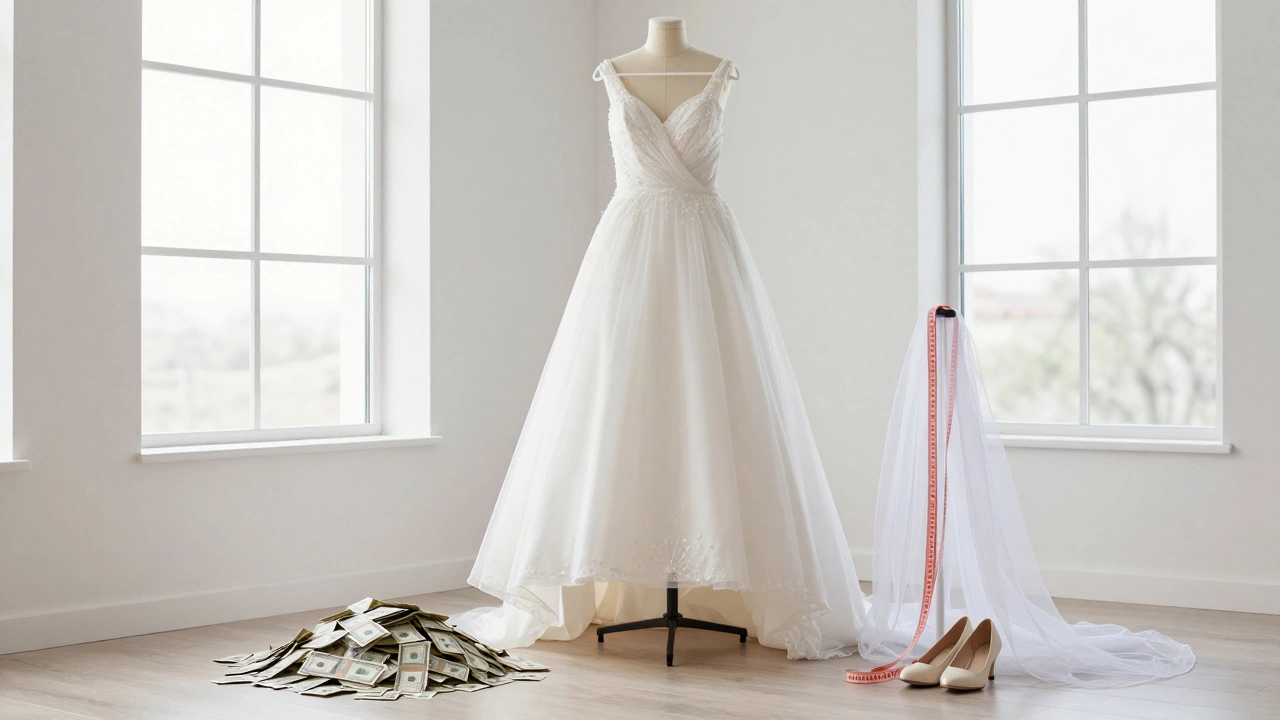
Here is the trap most brides fall into: the dress price is rarely the final price. When you see a $3,000 gown, you must add at least 10% to 15% for alterations. In Auckland, New Zealand, where I live, a skilled seamstress charges between $150 and $300 just for hemming a complex skirt. Add in bustle installation ($100-$200), taking in the waist ($150+), and adjusting straps, and you are easily adding $500 to $800 to the base price.
Then there are accessories. A veil for a $3,000 dress should match its quality. A cheap netting veil will look out of place against expensive silk. Expect to spend another $200 to $600 on a cathedral or elbow-length veil. Shoes, a bra, and perhaps a shrug or jacket for cooler evening temperatures can push the total "outfit" cost closer to $4,000.
If your total budget for attire is strict, a $3,000 dress might leave you with nothing left for the groom's suit or the bridesmaids' dresses. Always calculate the *total* ensemble cost before saying yes to the gown.
When ,000 Is a Smart Investment
There are specific scenarios where spending $3,000 is not only justified but recommended. First, consider the longevity of the garment. If you plan to keep the dress as a heirloom, pass it down to a daughter, or sell it later, a high-quality designer gown retains value better than a disposable fast-fashion piece. A well-maintained Pronovias or Vera Wang dress can sometimes resell for 40-60% of its original price on platforms like Stillwhite or Nearly Newlywed.
Second, think about the venue and photography. If you are getting married in a grand cathedral or a luxury resort, a flimsy dress will look underwhelming in photos next to marble columns and lush floral arrangements. High-end fabrics reflect light differently. Silk glows in natural sunlight; synthetic polyester can look flat or shiny in a bad way. For a destination wedding where you cannot return the dress if it doesn't fit perfectly, paying for a reputable designer ensures consistent sizing standards and quality control.
Third, customization matters. At the $3,000 level, many boutiques offer minor customizations-changing a neckline, swapping sleeves, or altering the train length. This level of personalization transforms a mass-produced item into something that feels uniquely yours. If you have a unique body shape that standard sizes don't accommodate, the structured boning and professional fitting process included with higher-end gowns provide a smoother silhouette.
Alternatives to Consider Before Committing
If $3,000 feels heavy on your wallet, you have options that deliver similar aesthetics for less. The secondhand market is booming. Brides are increasingly comfortable buying pre-owned dresses. You can find a gently worn designer gown for $1,500 that originally retailed for $3,500. Just ensure you check for stains, tears, or yellowing lace.
Another option is "off-the-rack" sales. Many boutiques hold end-of-season sales where they discount current inventory by 20-50%. You won't have months for ordering and shipping, but if your wedding is within six months, you can grab a $3,000 dress for $1,800. The trade-off is limited selection and immediate payment.
You might also look at non-traditional retailers. High-end department stores or contemporary fashion brands often release white dresses that rival bridal designers in style but lack the "bridal markup." A cocktail dress from a luxury fashion house might cost $1,200 and look stunning, though it may lack the structural support needed for a full-day event.
How to Negotiate and Save
Bridal shopping is not always fixed-price. While high-end designers rarely budge on the gown itself, you can negotiate on services. Ask the boutique if they include cleaning and pressing in the purchase price. Some do, others charge extra. If they charge extra, ask them to waive it.
Bundle purchases. If you buy your veil, shoes, and jewelry at the same boutique, ask for a package discount. Loyalty programs exist in bridal retail too. Additionally, timing is everything. Visiting boutiques in January or July, when new collections launch, often yields better deals as they clear out older stock.
Finally, be honest about your budget. Tell the consultant, "My maximum for the dress is $2,500." A good consultant will show you beautiful options within that range rather than wasting time on $5,000 gowns. They want to make a sale, and a happy bride who fits the budget is better than a hesitant one who walks away.
Final Thoughts on Value
Is $3,000 a lot? For some, it is a week's salary. For others, it is a small fraction of a $50,000 wedding budget. The key is proportionality. If you are spending $10,000 on flowers and $20,000 on catering, skimping on the dress to save $500 might result in a garment that photographs poorly or feels uncomfortable. Conversely, if you are having an intimate backyard elopement, a $3,000 dress might feel excessive compared to a $800 bohemian gown.
Ultimately, the best dress is the one that makes you feel confident and beautiful while keeping your financial stress low. If trying on a $3,000 gown brings tears of joy and you can afford the alterations without panic, then it is worth every penny. If it causes anxiety, walk away. There are thousands of stunning dresses under $2,000 waiting for you.
What is the average cost of a wedding dress in 2026?
In 2026, the average wedding dress costs between $1,900 and $2,500 in the United States. Prices vary significantly by region, designer, and fabric quality. In countries like New Zealand or Australia, averages may be slightly lower due to different market dynamics, often ranging from $1,200 to $2,000 AUD/NZD.
Are designer wedding dresses worth the extra cost?
Designer dresses often use superior fabrics like pure silk and feature hand-sewn details that increase durability and comfort. They also tend to retain resale value better. If you prioritize long-term keepsake quality and specific brand aesthetics, they are worth it. If you view the dress as a single-use item, mid-tier options offer better value.
How much should I budget for alterations?
You should budget 10% to 15% of the dress price for alterations. For a $3,000 dress, expect to spend $300 to $600. Complex changes like restructuring a bodice or adding a bustle can cost more. Simple hemming and taking in the sides are less expensive.
Can I find a $3,000 wedding dress for less?
Yes. Check secondhand markets like Stillwhite, PreOwnedWeddingDresses, or local Facebook groups. You can often find designer gowns for 40-60% off retail. Additionally, look for end-of-season sales at bridal boutiques, which occur in January and July.
What fabrics justify a higher price tag?
Natural fibers like silk mikado, silk crepe, and French Chantilly lace command higher prices due to their cost and handling difficulty. Silk breathes better and photographs with a soft luster. Synthetic alternatives like polyester satin or nylon lace are cheaper but may feel heavier and less breathable.