Groom’s Suit Fit & Style Optimizer
Your Details
Your Personalized Recommendations
Best Color Choice
Loading...
Pattern Strategy
Loading...
Shirt & Tie Tip
Loading...
Select your details and click "Get My Fit Guide" to see your personalized recommendations.
You spend months picking the venue, the flowers, and the cake. Then you put on your wedding suit is the primary outfit worn by the groom and groomsmen during the ceremony and reception, look in the mirror, and feel like something is wrong. You don’t look sharp. You look bulky. Worse, you feel self-conscious about every inch of fabric clinging to your stomach or shoulders.
This happens more often than you think. Most off-the-rack suits are cut for a generic body shape that rarely matches real human proportions. If you want to look confident, lean, and polished on your big day, you need to stop fighting the fabric and start using it to your advantage. It isn’t about hiding; it’s about balancing.
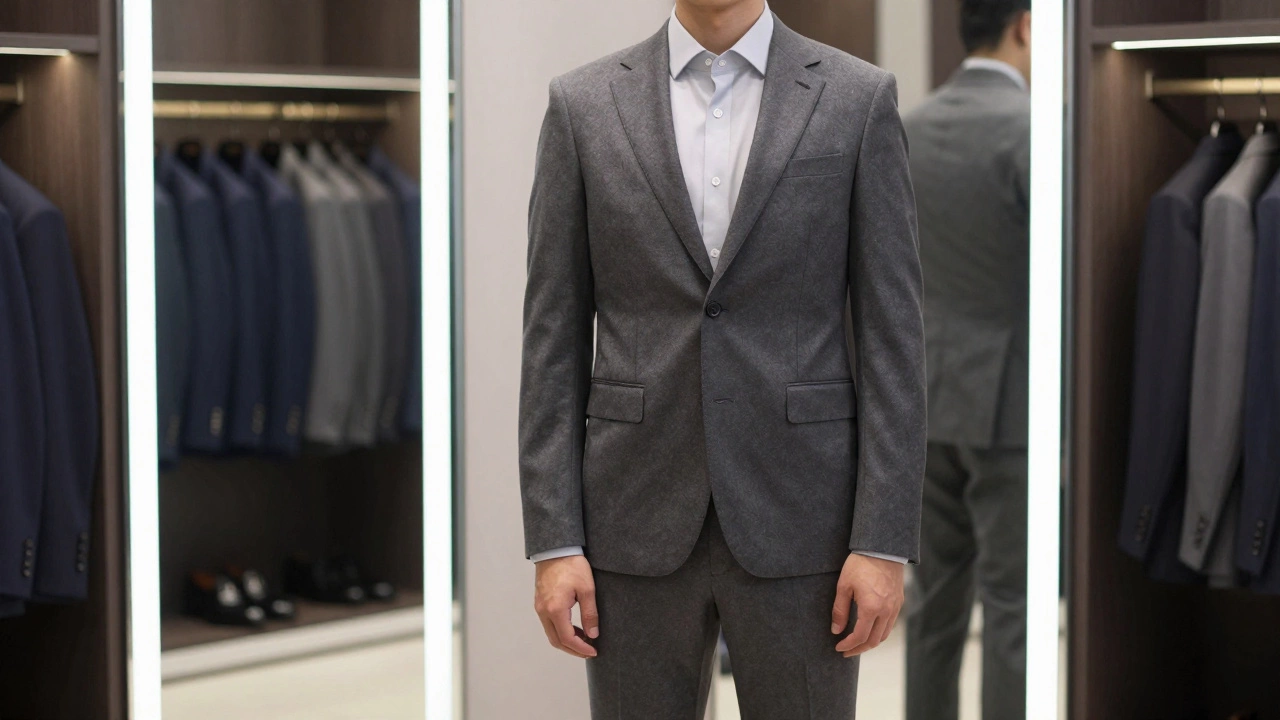
The Golden Rule: Fit Over Brand
Here is the hard truth: a $500 suit that fits perfectly will always look better than a $5,000 designer suit that hangs loosely. When people judge whether you look "fat" in a suit, they aren’t looking at your actual weight. They are looking at how the jacket interacts with your silhouette.
A bad fit creates shadows, wrinkles, and excess fabric that adds visual volume. A good fit creates clean lines that guide the eye vertically, making you appear taller and slimmer. Before you buy anything, understand this hierarchy:
- Shoulders: Must lie flat without padding extending beyond your natural shoulder line.
- Jacket Length: Should cover your buttocks completely but not extend past your hand when arms are down.
- Trousers: Should break slightly at the shoe, never bunching up around the ankles.
If these three elements are wrong, no amount of color trickery will save you. Start here.
Color Psychology: Darker Is Slimmer
Light colors reflect light and expand visual space. Dark colors absorb light and recede. This is basic physics, but it applies directly to fashion. If you have a heavier midsection or broader frame, stick to dark, solid colors.
| Color | Visual Effect | Best For |
|---|---|---|
| Charcoal Grey | Slimming, Professional | All body types, especially heavier frames |
| Navy Blue | Contrasting, Flattering | Fair skin tones, balanced builds |
| Black | Strict, Formal | Evening weddings, very formal events |
| Light Grey/Beige | Expanding, Casual | Lean builds, summer outdoor weddings |
Charcoal grey is the safest bet for most grooms. It offers enough contrast to separate you from the background without being as harsh as black. Avoid loud patterns. Large checks or wide stripes draw attention to width. If you must wear a pattern, choose a subtle pinstripe or herringbone, which creates vertical lines that elongate the torso.
Pattern Play: Vertical Lines Are Your Friend
If you decide to step away from solids, remember one rule: horizontal lines make you wider; vertical lines make you taller. Pinstripes are classic for a reason. Thin, closely spaced pinstripes create an optical illusion that narrows the torso.
However, be careful with scale. If the stripes are too wide, they can backfire and emphasize bulk. Aim for stripes that are less than half an inch wide. Similarly, avoid large plaids or windowpanes if you are trying to minimize visual weight. These patterns add texture and complexity, which adds perceived mass to your frame.
Shirt and Tie Strategy: Create a V-Shape
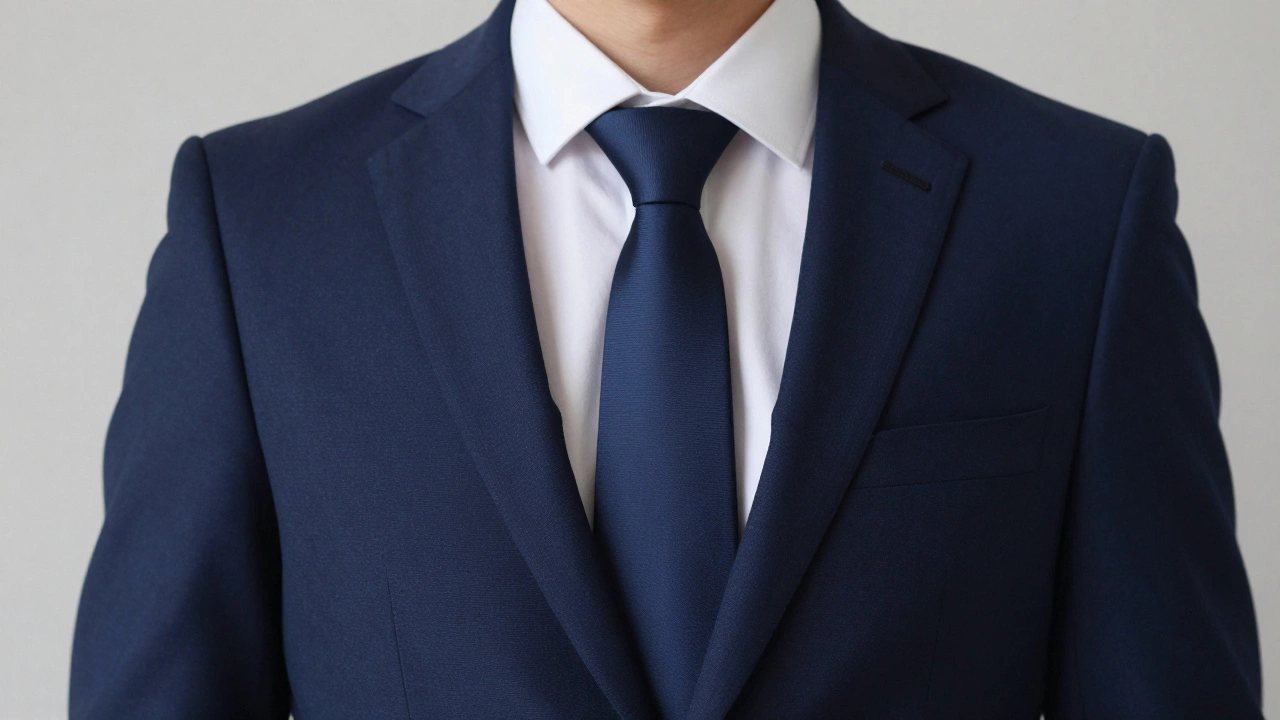
Your suit jacket does all the heavy lifting, but your shirt and tie do the fine-tuning. The goal is to create a deep V-shape from your neck down to your waist. This draws the eye downward and breaks up the blockiness of the chest area.
Choose a shirt collar that stands away from your neck (spread or point collars) rather than button-downs that hug tight. Button-down collars can make the neck look shorter and thicker, adding bulk to the upper body. Leave the top button open if appropriate for the formality level, or wear a tie that complements the spread.
For ties, avoid wide, bow-shaped knots. A slim, neat knot keeps the focus centered and narrow. Stick to silk ties with small, subtle patterns. Large polka dots or bold geometric shapes distract from the vertical flow you are trying to create.
Tailoring: The Secret Weapon
No off-the-rack suit will fit you perfectly. Even if you find a size that works for your shoulders, the waist and sleeves will likely need adjustment. This is where you spend your money. Budget at least $100-$150 for alterations after buying your suit.
Key areas to tailor:
- Waist Suppression: A tailor can take in the sides of the jacket to create a tapered waist. This prevents the "boxy" look that adds inches to your midsection.
- Sleeve Length: Sleeves should end just above the wrist bone, showing about half an inch of shirt cuff. Long sleeves make arms look shorter and stouter.
- Trouser Waist: Ensure the trousers sit comfortably at your natural waist, not lower on the hips. High-rise trousers elongate the legs and reduce belly bulge.
- Hemline: Trousers should have a slight break at the shoe. No pooling fabric at the ankles.
Find a local tailor with experience in menswear. Show them photos of the fit you want. Be specific: "I want the jacket to skim my body, not cling to it."
Posture and Confidence: The Final Touch
You can have the best-fitted suit in the world, but if you slouch, you will look sloppy. Good posture instantly improves your silhouette. Stand tall, pull your shoulders back, and keep your chin parallel to the ground. This opens up the chest and makes the jacket hang correctly.
Practice standing in front of a full-length mirror before the wedding. Notice how your weight shifts. Keep it balanced. Nervousness makes us hunch; awareness makes us stand straight. Breathe deeply. Relax your jaw. Confidence looks better than any brand label.
Common Mistakes to Avoid
Here are the quick fixes that ruin a great look:
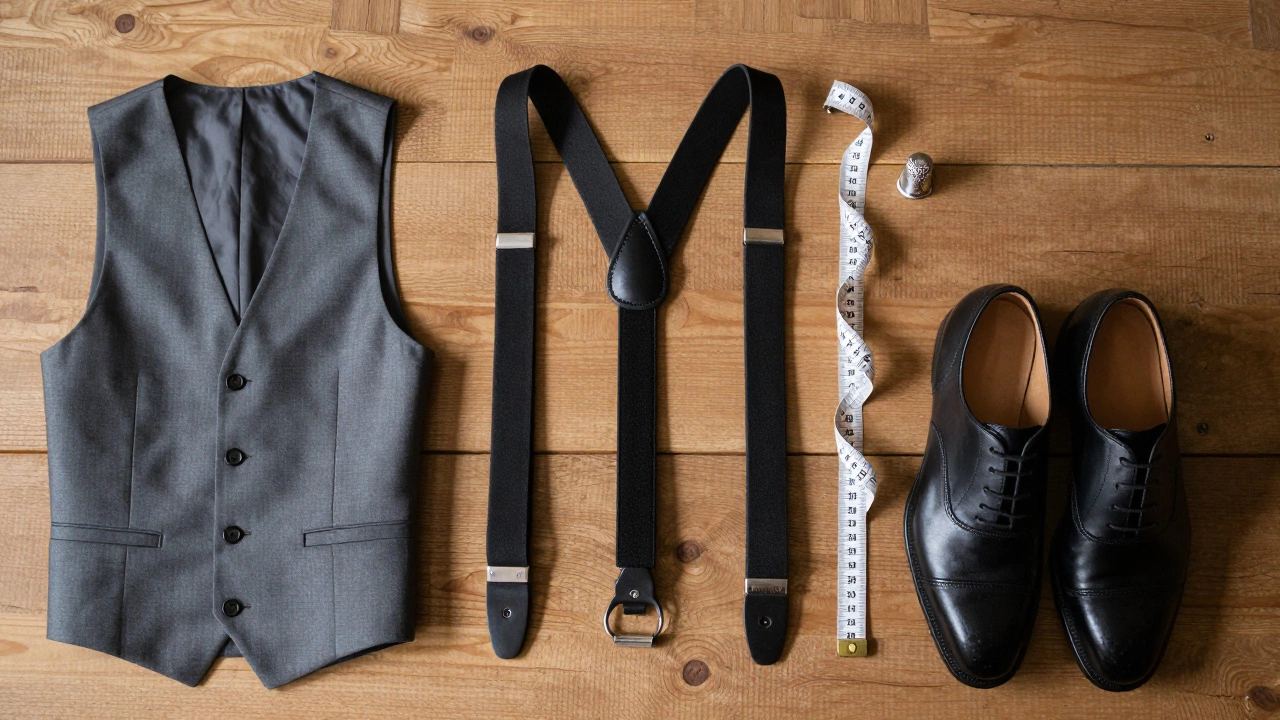
- Wearing a belt: Belts cinch the waist awkwardly and create a horizontal line across the stomach. Use suspenders instead. They hold your trousers up smoothly without adding bulk.
- Overstuffing pockets: Empty your jacket pockets. Phones, wallets, and keys create unsightly bulges that distort the jacket’s shape. Use a vest or inner pocket if needed.
- Ignoring the vest: A well-fitted vest covers the waistband of your trousers and smooths over the midsection. It also allows you to remove your jacket later while still looking polished.
- Wrong shoe style: Avoid chunky boots or overly casual sneakers. Opt for sleek oxfords or derbies in black or dark brown. Pointed toes elongate the leg; rounded toes shorten it.
Can I wear a white shirt if I’m overweight?
Yes, absolutely. White shirts provide high contrast against dark suits, which actually helps define your shape. The key is ensuring the shirt fits well around the chest and arms without pulling. Avoid stiff, thick fabrics that add bulk; opt for lightweight cotton or blends that drape smoothly.
Should I go for a double-breasted suit?
Double-breasted suits can work, but they add width due to the overlapping fabric. If you have a larger frame, a single-breasted suit with a standard two-button closure is safer. It creates a cleaner, more streamlined V-line. If you love double-breasted, ensure it is tailored tightly to avoid looking boxy.
How much should I spend on tailoring?
Expect to pay between $100 and $200 for essential alterations. This includes taking in the waist, shortening sleeves, and hemming trousers. Complex changes like restructuring shoulders cost significantly more and may not be worth it for a rental or mid-range suit. Always get a quote before committing.
What if I gain weight before the wedding?
Buy your suit early and schedule fittings closer to the date. Tailors can let out seams slightly if there is extra fabric allowance, but they cannot take in much once stitched. If you anticipate significant weight change, consider renting a suit that can be adjusted weekly or buying a suit with generous seam allowances.
Are suspenders really better than belts?
Yes, for formal wear. Suspenders keep your trousers at the natural waist, creating a longer leg line and preventing the "muffin top" effect caused by tight belts. They also distribute weight evenly, reducing discomfort during long ceremonies and receptions. Choose leather straps with metal clips for a sleek look.