Bridal Makeup Readiness Quiz
Take this quick 4-question quiz to determine if you're ready to do your own bridal makeup
Your Results
Ever stared at your reflection the morning of your wedding, wondering if you can actually pull off your own bridal makeup? You’re not alone. Thousands of brides each year choose to do their own makeup - not because they want to save money, but because they want to feel like themselves. And that’s valid. But here’s the truth: doing your own bridal makeup isn’t just about having steady hands and a good mirror. It’s about timing, prep, and knowing when to call it quits.
Why Brides Choose to Do Their Own Makeup
Many brides who opt for self-applied makeup do it because they’ve spent months testing products, perfecting their routine, and building confidence in their skills. Maybe you’ve worn the same foundation for three years and know exactly how it blends under daylight. Maybe your eyeliner flicks are so consistent, your best friend calls them your signature look. That kind of familiarity matters on your wedding day. It’s not about being cheap. It’s about control. You know how much blush you like. You know how your brows should arch. You know how your lips look when they’re just a little glossy, not shiny. A professional makeup artist might use a formula that looks stunning on Instagram but feels heavy on your skin. You might end up looking like someone else’s version of a bride - not yours.When It Works (And When It Doesn’t)
Doing your own makeup works best if you’ve been practicing for at least three months before the big day. That means testing your entire look under the same lighting you’ll have on your wedding morning. Natural daylight? Check. Your bathroom’s LED ring light? That’s not enough. Try it in the hallway with the overhead lamp on, or near a window at 10 a.m. - that’s what your ceremony will look like. You also need to account for time. Most brides underestimate how long makeup takes. Even if you’re fast, wedding mornings are chaotic. There’s hair, the dress, last-minute tears, a nervous mom asking if you’re sure you’re ready. If you’re doing your own makeup, you need at least 90 minutes. No less. And that’s if everything goes perfectly. Here’s the hard part: what happens if you smudge your mascara? Or your foundation cakes up halfway through the reception? You can’t just call your makeup artist to fix it. You’re on your own. That’s why most brides who do their own makeup keep a small touch-up kit ready - and know exactly what’s in it.The Bridal Makeup Checklist You Actually Need
Forget the 10-step Instagram routines. Your wedding day makeup should be simple, long-lasting, and forgiving. Here’s what works:- Primer - not optional. Use one that matches your skin type. Oily skin? Go for a mattifying primer. Dry skin? Hydrating gel primer. This is the foundation of your longevity.
- Long-wear foundation - look for "24-hour wear" or "transfer-resistant". Brands like Estée Lauder Double Wear, Fenty Pro Filt’r, or Maybelline Super Stay have proven results under real wedding conditions.
- Concealer - one shade lighter than your foundation for under eyes. Apply sparingly. Too much = cakey.
- Setting powder - translucent only. Apply with a fluffy brush, not a sponge. Focus on T-zone and under eyes.
- Waterproof mascara - no exceptions. Even if you don’t cry, humidity, tears, or sweat will make regular mascara run.
- Brow gel - set your brows with a clear or tinted gel. Powder brows fade fast.
- Long-wear lipstick - matte or satin finishes last longer. Blot, then reapply. Use a lip liner to prevent feathering.
- Setting spray - don’t skip this. Mist from at least 30cm away. Let it dry. Don’t touch your face for five minutes.
That’s it. Seven steps. No contouring, no glitter, no seven shades of eyeshadow. Keep it clean. Keep it real.
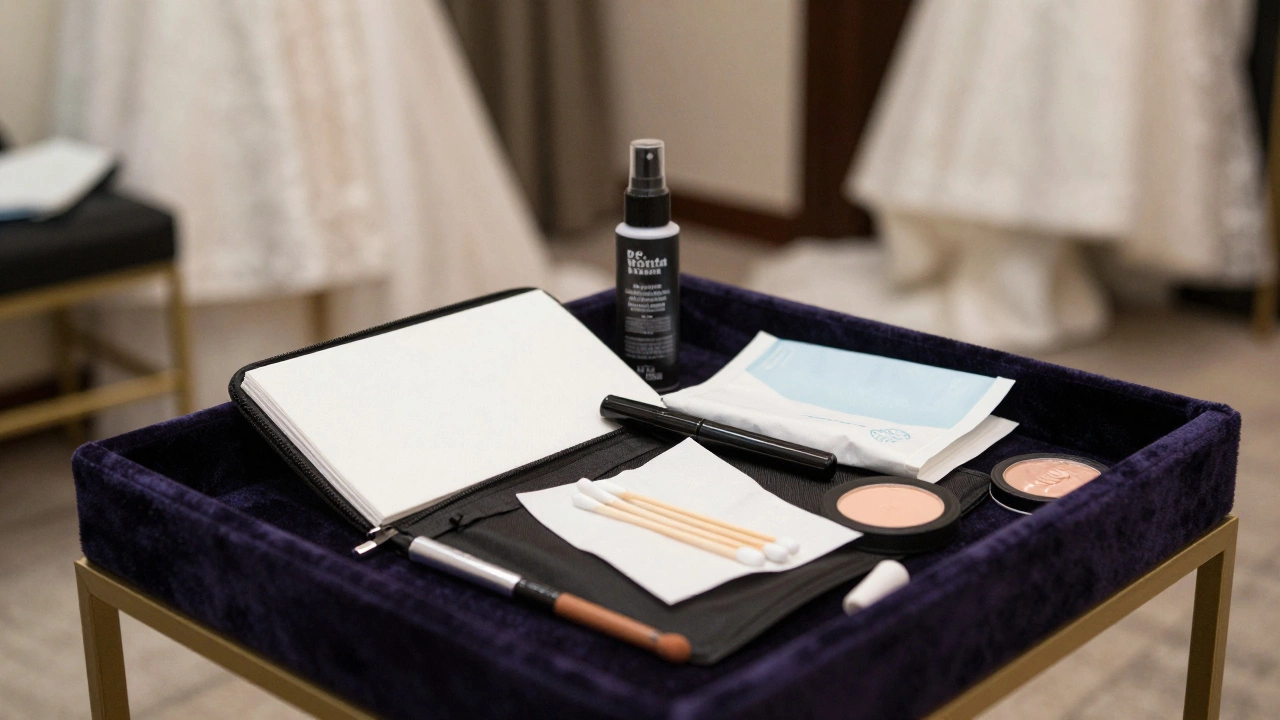
What to Pack in Your Touch-Up Kit
You’re not going to reapply your whole face. You’re going to fix what breaks. Here’s what to carry in a small clutch or makeup bag:- Blotting papers - better than powder for oily shine
- Mini setting spray - 50ml or less
- Lipstick and lip liner - same shade as your wedding look
- Q-tips and micellar water wipes - for quick smudge fixes
- Mini concealer - for any new dark circles or redness
- Small brush or sponge - for blending
- Double-sided tape - for strapless dresses or slipping veils
Leave the glitter, the palette, and the full-size brushes at home. You don’t need them. You need precision, not performance.
Practice Makes Permanent
If you’ve never worn full makeup before, don’t try it on your wedding day. Start now. Do a full look every weekend for the next 10 weeks. Film yourself applying it. Watch it back. Notice where you rush. Notice where your hand shakes. Notice how your skin reacts after six hours. Try it on your actual wedding day schedule. Wake up at the same time. Do your hair. Put on your robe. Then do your makeup. Time yourself. See how long it takes when you’re half-asleep and your partner is asking if you’ve seen their socks. You’ll learn what works. Maybe you need to do your eyes first, then your base. Maybe you need to set your concealer before your foundation. These are the tiny details that make the difference between "I look amazing" and "I look tired."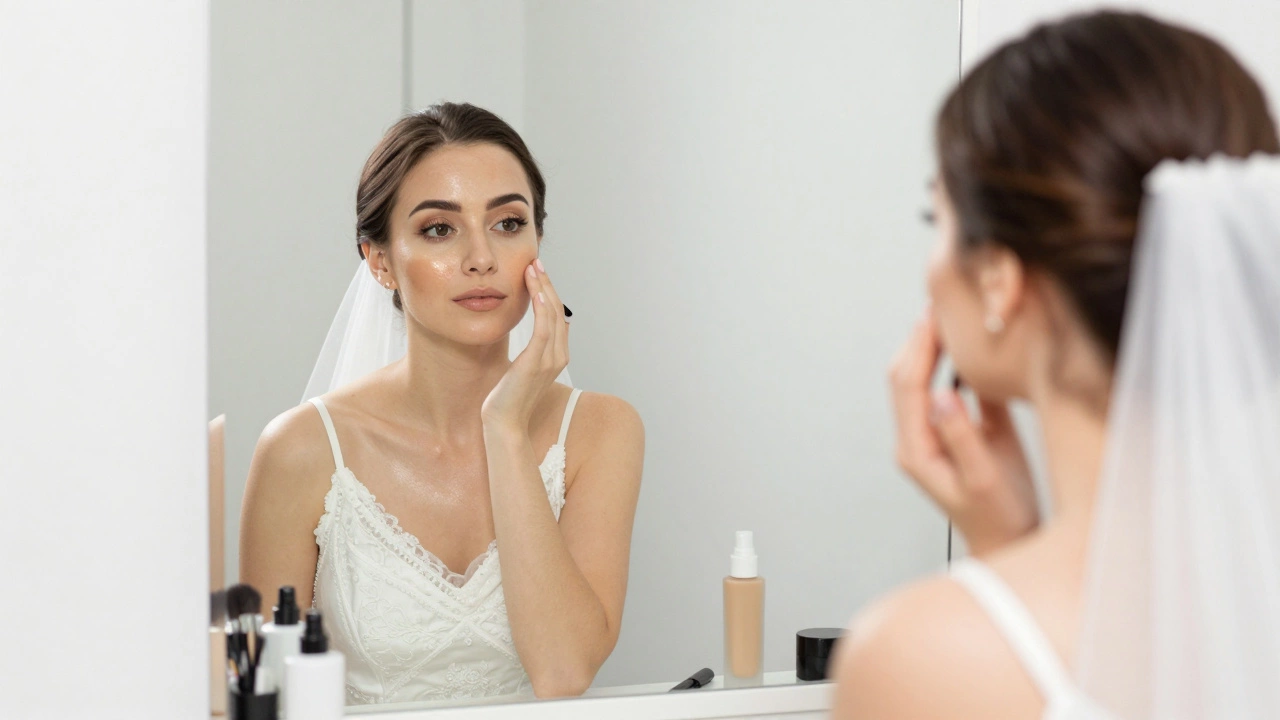
The Emotional Side of Bridal Makeup
There’s something powerful about applying your own makeup on your wedding day. It’s quiet. It’s personal. You’re not sitting in a chair while someone else shapes your face. You’re choosing your own glow. You’re deciding how much color you want to show the world. Some brides say it helps them feel grounded. Others say it’s the only moment they feel in control. And that’s okay. Your wedding day doesn’t need to look like a magazine cover. It needs to feel like you. But don’t romanticize it too much. If you’re stressed, tired, or overwhelmed - and you’ve never done full makeup before - it’s okay to hire someone. There’s no shame in that. The goal isn’t to do it yourself. The goal is to look and feel like the best version of you.Real Talk: What Happens When It Goes Wrong
I’ve seen brides who spent six months perfecting their makeup, only to cry during the ceremony and end up with raccoon eyes. I’ve seen brides who rushed and forgot setting spray, and their foundation slid off by 3 p.m. I’ve seen brides who didn’t test their lipstick under candlelight - and looked like they had a mouthful of red lipstick from 1985. These aren’t horror stories. They’re lessons. The truth is, even professionals make mistakes. The difference? They have backup products, a team, and experience. You don’t need to be perfect. You just need to be prepared.Final Decision: Should You Do It?
Ask yourself these questions:- Have I practiced my full look at least five times under real conditions?
- Do I know how to fix smudges, shine, and fading without a mirror?
- Do I have the time and calm space to do it without rushing?
- Am I okay with the possibility that I might not look "perfect" - but I’ll look like me?
If you answered yes to all four, go for it. You’ve earned it.
If you’re unsure? Hire a pro. Not because you can’t do it - but because your wedding day deserves peace of mind. A professional won’t just make you look good. They’ll help you breathe.
Either way - your makeup is just one part of your day. The rest? That’s all you.
Can I do my own bridal makeup if I’ve never worn full makeup before?
It’s not recommended. Bridal makeup requires skill, timing, and experience with long-wear products. If you’ve never worn foundation, mascara, or contouring before, trying it on your wedding day is risky. Start practicing at least three months ahead - test under real lighting, time yourself, and learn how your skin reacts. If you’re still unsure, hire a professional.
How long should I set aside for doing my own bridal makeup?
Plan for at least 90 minutes. This includes prep, application, setting, and touch-ups. Wedding mornings are busy - hair, dress, family photos, last-minute nerves. If you rush, your makeup will show it. Don’t try to do it in 45 minutes. Even pros take longer than that.
What’s the most common mistake brides make with self-applied makeup?
Skipping setting spray. Foundation and concealer can look flawless at first, but without a setting spray, they’ll melt, fade, or transfer within hours - especially under heat, tears, or dancing. Setting spray locks everything in place. It’s not optional. It’s the final step that turns good makeup into wedding-day makeup.
Should I use waterproof makeup for my wedding?
Yes - especially for mascara, eyeliner, and lipstick. Even if you don’t think you’ll cry, humidity, sweat, and emotion can cause regular makeup to run. Waterproof doesn’t mean unremovable - it means it won’t smear when you wipe your eyes or hug your mom. Choose products labeled "waterproof" or "smudge-proof" for critical areas.
Can I do my own makeup and still hire a hair stylist?
Absolutely. Many brides do exactly that. Hair and makeup are separate skills. You can trust someone else with your hair while you handle your face - or vice versa. Just make sure you coordinate timing. If your hair stylist arrives at 7 a.m., you need to start your makeup by 8 a.m. at the latest to finish before photos.
What’s the best way to test my bridal makeup before the wedding?
Do a full trial at least once, under the same lighting you’ll have on your wedding day. Wear your dress or a similar top. Do your hair. Take photos in natural light. Wait six hours. Then check how it looks. Does your foundation look flat? Does your eyeliner smudge? Does your lipstick fade unevenly? Use that test to adjust your products and technique. Repeat until you’re confident.