Groom Attire Suitability Checker
Not sure if you can wear your favorite navy suit? Answer these three questions to get instant advice.
Verdict:
Key Recommendations
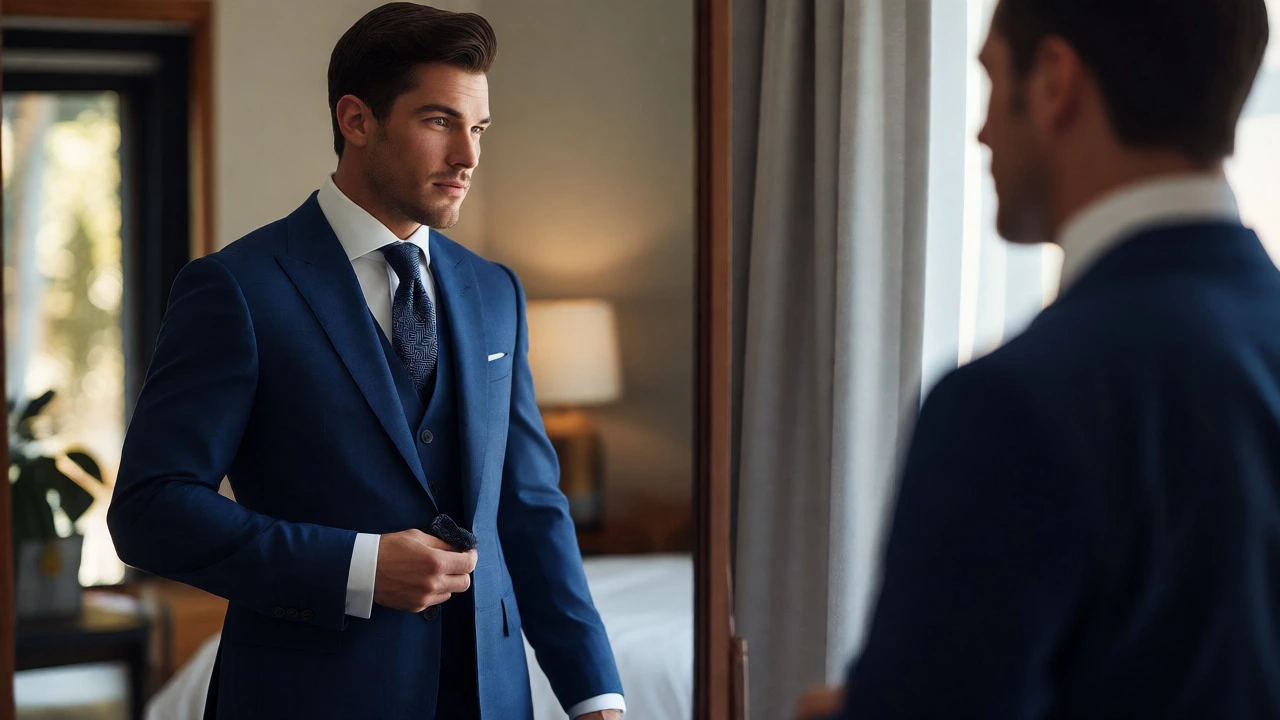
You’re standing in front of the mirror, holding your favorite navy two-piece from work. It fits perfectly. You look sharp. But then that nagging doubt creeps in: Can a groom wear a normal suit? Is it too casual? Will people think you didn’t try? Or worse, will you look like you just came straight from a board meeting instead of walking down the aisle?
Here is the short answer: Yes, absolutely. In fact, for many modern weddings, a well-fitted "normal" suit is not just acceptable-it’s often the smartest choice. The confusion comes from outdated rules that said grooms must wear tuxedos or morning coats regardless of the venue. Today, context is king. If you understand the few variables that matter-venue, time of day, and overall vibe-you can rock a standard suit without breaking a sweat.
The Short Answer: Context Over Tradition
Let’s clear up the biggest myth first. There is no universal law stating a groom must wear a tuxedo. A tuxedo is traditionally reserved for black-tie events, which are rare outside of high-end galas or very formal evening weddings. For the vast majority of ceremonies happening in gardens, churches, city halls, or backyards, a suit is the appropriate baseline.
When we say "normal suit," we usually mean a business suit-the kind you might wear to an interview or a client dinner. The key difference between looking like you’re going to work and looking like you’re getting married lies in three specific areas: fit, fabric, and accessories. If you nail those, nobody will question your choice. If you ignore them, even a $1,000 designer suit might look off.
When a Standard Suit Is Perfectly Appropriate
Not all weddings are created equal. Here is when pulling out your existing wardrobe staple is actually the best move:
- Daytime Ceremonies: Lighter colors and simpler cuts shine during the day. A gray or light blue suit feels fresh and seasonal at 2 PM in a park.
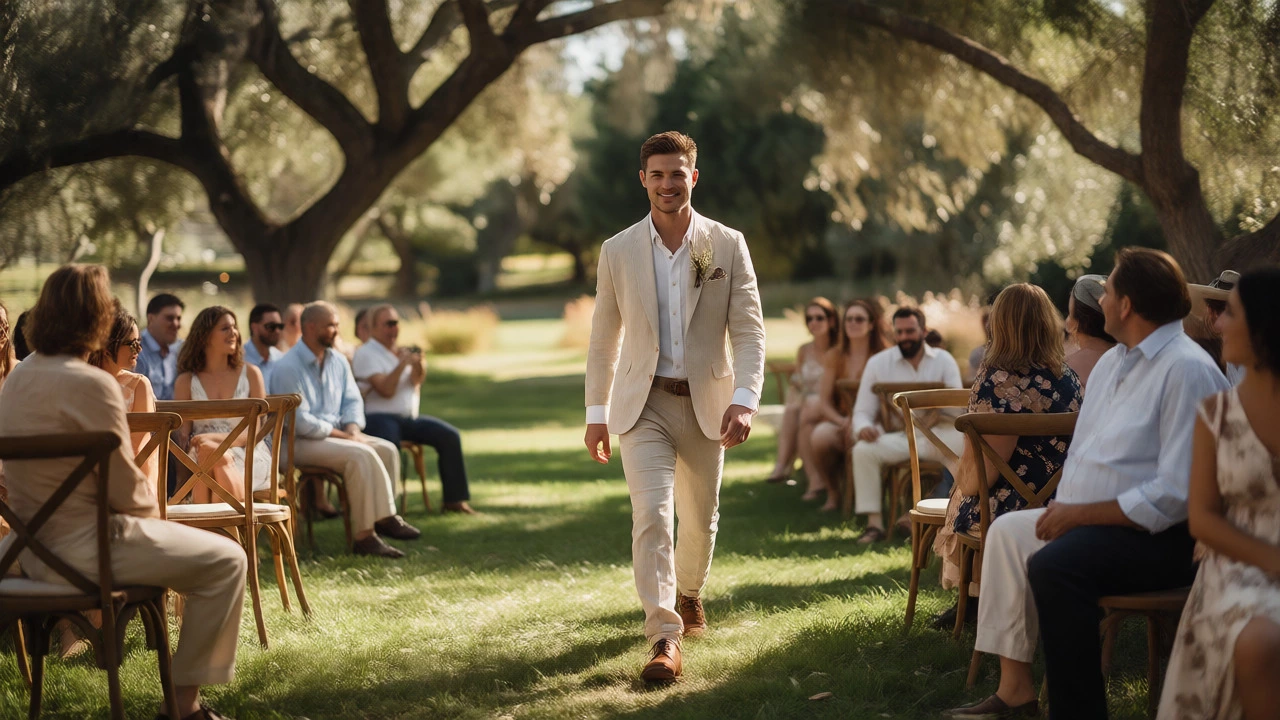
- Casual or Outdoor Venues: Beaches, barns, and rustic venues demand relaxed attire. A stiff tuxedo looks absurd on sand or grass. A breathable cotton or linen blend suit fits right in.
- Intimate Elopements: If it’s just you, your partner, and an officiant, comfort is priority number one. Your favorite suit allows you to focus on the moment, not on adjusting a cummerbund.
- Budget-Conscious Weddings: Renting a tuxedo costs money. Buying a versatile suit you can wear again for job interviews or other weddings saves cash without sacrificing style.
Consider the case of Mark, who got married last June in a Brooklyn loft. He wore a charcoal wool suit he already owned. By swapping his usual tie for a textured knit silk tie and adding a pocket square, he looked intentional, not accidental. His guests noticed the effort, not the price tag.
How to Elevate a "Normal" Suit for Wedding Day
If you decide to go with a standard suit, you need to signal that this is a special occasion. You do this through details. Think of it as styling, not just wearing.
Fit Is Non-Negotiable
A loose suit screams "borrowed." A tight suit screams "uncomfortable." Wedding photos will highlight every awkward fold. Take your suit to a tailor before the big day. Have them take in the waist slightly, shorten the sleeves so exactly half an inch of shirt cuff shows, and ensure the jacket length covers your seat. This small investment (usually $50-$100) makes a $300 suit look like $800.
Fabric Matters More Than Color
Most office suits are made of synthetic blends that shine under flash photography and trap heat. Look for natural fibers. Wool is ideal because it drapes well and resists wrinkles. Linen is great for summer but wrinkles easily-embrace the texture. Cotton twill is a solid middle ground for spring and fall. Avoid shiny polyester if possible; it photographs poorly and looks cheap up close.
Accessories Do the Heavy Lifting
This is where you separate yourself from the office crowd. Swap your standard necktie for something more festive. A bow tie instantly adds formality. A patterned silk tie adds personality. Add a pocket square-always match it loosely, never exactly, to your tie. Consider suspenders instead of a belt; they keep your silhouette clean and add a vintage touch. Finally, polish your shoes. Scuffed oxfords ruin the whole look.
When You Should Probably Upgrade
While a normal suit works most of the time, there are scenarios where sticking to tradition-or upgrading-is safer. Ignoring these cues can make you look underdressed compared to your guests.
| Dress Code | Suitable for Normal Suit? | Recommended Alternative |
|---|---|---|
| Black Tie | No | Tuxedo (Dinner Jacket) |
| Formal / Black Tie Optional | Maybe (Dark & Sharp) | Tuxedo or Dark Suit with Bow Tie |
| Semi-Formal / Cocktail | Yes | Well-Fitted Suit |
| Business Formal | Yes | Classic Suit |
| Casual / Garden Party | Yes | Lightweight Suit or Blazer + Chinos |
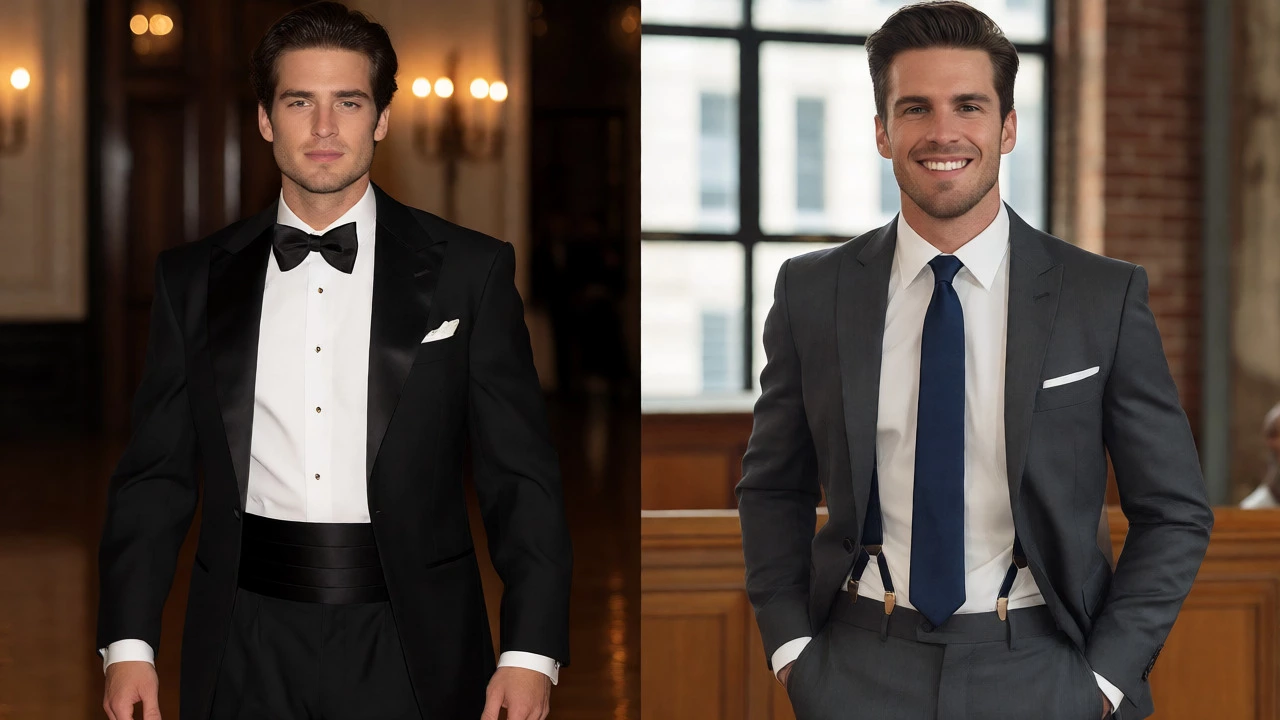
If the invitation explicitly says "Black Tie," showing up in a regular suit is a faux pas. You risk looking like you misunderstood the assignment. Similarly, if your partner is wearing a highly elaborate ball gown, a simple business suit might feel visually unbalanced. In these cases, renting a tuxedo is worth the cost for the sake of harmony in photos and social perception.
Color Choices That Work for Grooms
Just because it’s a "normal" suit doesn’t mean it has to be boring. However, stick to colors that photograph well and complement typical bridal palettes.
- Navy Blue: The safest bet. It’s less harsh than black, works for any skin tone, and transitions seamlessly from day to night.
- Charcoal Gray: Sophisticated and neutral. Great for fall and winter weddings. Pairs well with almost any tie color.
- Medium Gray: Ideal for daytime events. Feels lighter and more approachable than dark shades.
- Tan or Beige: Perfect for beach or garden weddings. Keep the rest of the outfit crisp (white shirt, brown leather shoes) to avoid looking like you’re going golfing.
Avoid bright patterns unless you have a specific theme. Loud plaids or neon colors distract from the ceremony and clash with floral arrangements. Remember, you want to stand out subtly, not overshadow the bride or the decor.
Common Mistakes to Avoid
Even with good intentions, guys often trip up on small details. Here’s what to watch out for:
- Wearing a Belt with Suspenders: Pick one. Never both.
- Mismatched Leathers: Your shoes, belt, and watch strap should generally match in tone (black with black, brown with brown).
- Ignoring the Shirt: A wrinkled or yellowed white shirt ruins a perfect suit. Buy a fresh, crisp white dress shirt with a spread collar to accommodate a wider knot or bow tie.
- Over-Accessorizing: If you’re wearing a bold tie, skip the pocket square or keep it very subtle. Less is more.
Another frequent error is assuming "casual" means "sloppy." Even at a backyard barbecue wedding, you should still wear closed-toe dress shoes and ironed pants. Sneakers only work if the entire event is explicitly labeled as such-and even then, choose clean, minimalist leather sneakers, not running shoes.
Final Verdict: Confidence Wins
At the end of the day, the most important accessory is confidence. If you feel uncomfortable in a tuxedo, you’ll fidget and look stiff. If you feel powerful and comfortable in your well-fitted navy suit, that energy translates into your photos and your demeanor. Talk to your partner. Check the venue’s expectations. Then, commit to the look. A groom in a sharp, tailored suit who owns his style will always beat a groom in a rented tuxedo who hates every second of wearing it.
Is it okay to wear a grey suit to a wedding?
Yes, grey is one of the most versatile colors for groom attire. Charcoal grey works for formal evening events, while medium or light grey is perfect for daytime and outdoor ceremonies. Just ensure the shade contrasts enough with your partner's dress and the background scenery.
Do I need a tuxedo if my wedding is in the evening?
Not necessarily. Evening weddings are traditionally more formal, but a dark suit (navy or black) is perfectly acceptable unless the invitation specifies "Black Tie." If you choose a suit for an evening event, elevate it with a black bow tie, polished black shoes, and a crisp white shirt to maintain a formal aesthetic.
Can I wear a suit I already own?
Absolutely. As long as it fits well and is in good condition, reusing a suit is practical and sustainable. To make it wedding-appropriate, consider minor alterations for better fit, update your accessories (tie, pocket square, shoes), and ensure the fabric is suitable for the season and venue.
What is the difference between a suit and a tuxedo?
The main differences are the lapel material and buttons. Tuxedos have satin or grosgrain facing on the lapels and matching satin stripes on the trousers. They also feature covered buttons. Suits have lapels made of the same fabric as the jacket and plastic or horn buttons. Tuxedos are strictly for formal evening wear, while suits are versatile for day and semi-formal evening events.
Should the groom match the groomsmen's suits?
You don't have to match exactly, but you should coordinate. A common strategy is for the groom to wear a distinct element, such as a different color tie, a vest, or a slightly different shade of suit, to differentiate himself from the groomsmen. This creates visual hierarchy in photos without requiring everyone to wear identical outfits.