
Wedding Photography Payment Calculator
Enter Details
Enter your package details to see a projected payment timeline.
You’ve found the perfect wedding photographer whose style matches your vision exactly. You’re excited, ready to sign, and then you see the invoice: a non-refundable deposit due immediately. Your stomach drops. Is this normal? Or are they trying to pull a fast one?
The short answer is yes. It is completely standard-and often necessary-to pay a portion of your wedding photographer’s fee before the big day. In fact, most professional photographers will not even hold your date without it. But understanding exactly how much you should pay, when, and what happens if things go wrong is crucial for protecting your wallet and your peace of mind.
Why Photographers Require Upfront Payment
It might feel like a risk to hand over money months in advance, but from the photographer’s perspective, it’s about business stability. Unlike a retail store where you buy a product off the shelf, hiring a wedding photographer is booking a specific service on a specific date.
When you book a photographer, they turn away other potential clients for that Saturday in June. That time is now exclusively yours. If you were to cancel last minute without having paid anything, the photographer would lose that income entirely. The upfront payment, usually called a retainer or deposit, secures their availability. It acts as a guarantee that you are serious about the booking and committed to the contract.
Think of it like booking a flight or a hotel room. You rarely get to show up at the airport and pay only if you decide you want to fly. The same logic applies to high-demand creative professionals. Without these deposits, photographers would have to keep dates open indefinitely, which makes running a sustainable business nearly impossible.
Standard Payment Structures in 2026
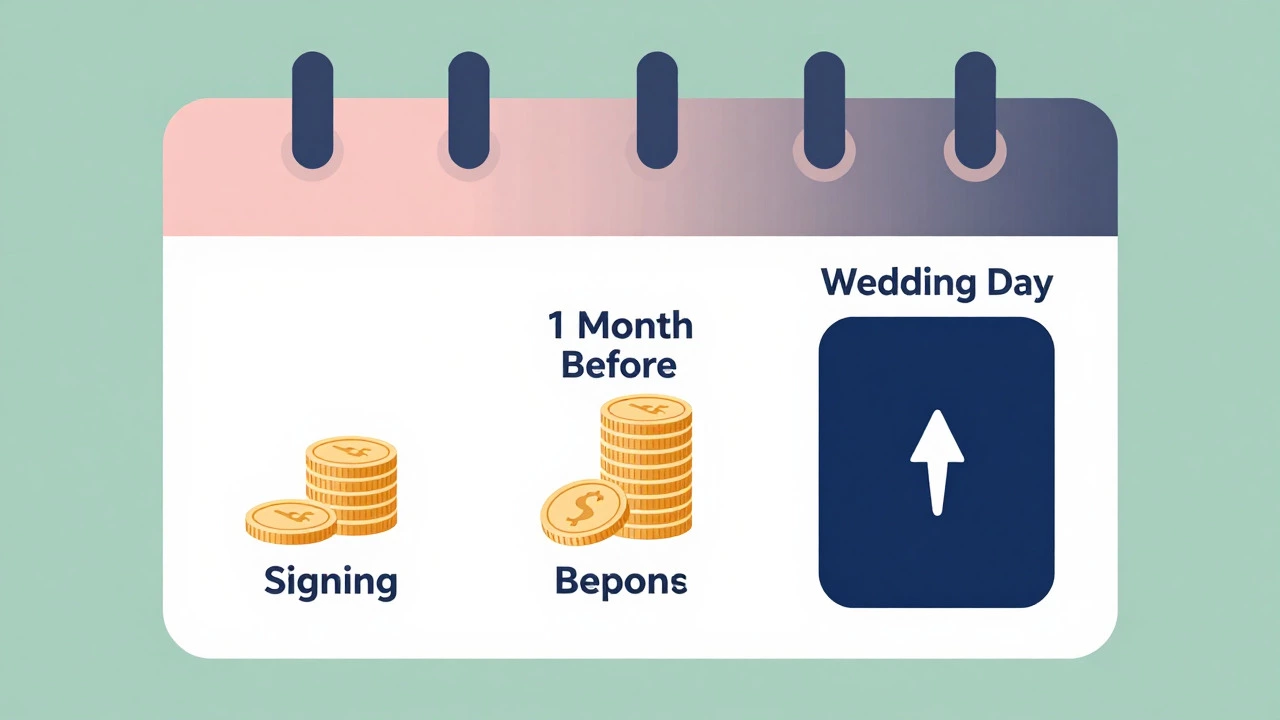
While practices can vary slightly by region and individual photographer, there is a widely accepted industry standard for how payments are split. Understanding this structure helps you budget accurately and avoid surprises.
| Milestone | Percentage Due | Timing |
|---|---|---|
| Retainer / Deposit | 30% - 50% | Upon signing contract |
| Second Installment | 25% - 40% | 1-2 months before wedding |
| Final Balance | Remaining balance | Day of wedding or 1 week prior |
The initial retainer is typically between 30% and 50% of the total package cost. This amount goes directly toward your final bill; it is not an extra fee. For example, if your package costs $5,000, a 50% retainer would be $2,500. You still owe the remaining $2,500 later.
Many photographers prefer to have the full balance paid either on the morning of the wedding or a week before. This ensures there are no awkward money talks during your reception. Some couples opt to pay the final balance via cash or check on the day, while others use credit cards for security and record-keeping.
Refundable vs. Non-Refundable Deposits
This is where many couples get tripped up. Not all deposits are created equal. You need to read your contract carefully to understand the terms of your upfront payment.
Non-refundable retainers are the industry norm. This means if you cancel the wedding for any reason-whether it’s a change of heart, family issues, or even a global pandemic-the photographer keeps the deposit. Why? Because they blocked out that date and lost other business opportunities. The deposit compensates them for that lost revenue.
Refundable deposits are rare but do exist. These might be offered by newer photographers building their portfolio or those with more flexible schedules. However, expect stricter cancellation windows. For instance, you might get a full refund if you cancel six months out, but only a partial refund if you cancel two months out.
If you are worried about losing your deposit, look into wedding insurance. While it won’t cover a simple change of mind, it often covers cancellations due to unforeseen events like severe weather, venue closures, or illness. Check with your photographer first; some require proof of insurance before issuing a refundable deposit.
What Happens If You Don’t Pay On Time?
Life gets busy. Weddings are stressful. It’s easy to forget that a payment is due next month. However, missing a payment deadline can have serious consequences.
Most contracts include a clause stating that if the second installment or final balance is not paid by the agreed-upon date, the photographer is under no obligation to provide services on the wedding day. Yes, it sounds harsh, but it protects them from working for free. If you miss the deadline, call your photographer immediately. Explain the situation. Most professionals are human and willing to work with you if you communicate early. They might offer a brief grace period or set up a payment plan for the remainder.
Silence, however, is the enemy. Assuming they’ll just wait for you to catch up is a risky gamble. Always treat payment deadlines as firm commitments.
Red Flags in Payment Requests
While paying upfront is normal, some payment requests signal trouble. Keep an eye out for these warning signs:
- Requesting 100% upfront: Unless you are dealing with a very small, casual shoot, requiring the full amount before the contract is signed is unusual. It gives you little leverage if they fail to deliver.
- Cash-only demands: While cash is fine for the final tip or balance, demanding large sums in untraceable cash for the retainer can be a red flag for tax evasion or lack of professionalism. Credit card or bank transfer provides a paper trail.
- No written contract: Never pay a deposit without a signed agreement. The contract should detail exactly what is included, the payment schedule, and cancellation policies.
- Vague pricing: If the quote doesn’t break down costs clearly, ask for clarification. Hidden fees for travel, overtime, or prints can add up quickly.

Tips for Negotiating Payment Terms
You aren’t always stuck with the photographer’s default terms. If cash flow is tight, you can negotiate. Here’s how to approach it professionally:
Ask for a customized payment plan. Instead of the standard three payments, propose four or five smaller installments spread over the engagement period. Many photographers are happy to accommodate this if it means securing the booking.
Offer to pay the final balance early. If you have the funds, offering to pay the remaining balance a month before the wedding instead of on the day can show good faith and sometimes earn you a small discount or added value, like an extra hour of coverage or a complimentary album.
Clarify overtime rates beforehand. Overtime charges can surprise you on the invoice. Agree on the hourly rate for extra time in the contract so you know exactly what you’re paying for if the party runs long.
Conclusion: Protecting Your Investment
Paying your wedding photographer before the wedding is not just normal; it’s essential for securing their services. By understanding the standard payment structures, reading your contract thoroughly, and communicating openly, you can ensure a smooth financial transaction. Remember, the goal is to build a partnership with your photographer, not just hire a vendor. Clear expectations about money lead to better relationships and, ultimately, better photos.
Is the wedding photographer deposit refundable?
In most cases, the deposit (or retainer) is non-refundable. This is because the photographer has reserved that date exclusively for you, turning away other potential clients. The deposit compensates them for the lost opportunity if you cancel. However, some photographers may offer partial refunds if you cancel well in advance, allowing them to rebook the date. Always check your specific contract terms.
How much should I tip my wedding photographer?
Tipping is not mandatory but is appreciated if you are satisfied with the service. A common guideline is 10-15% of the total photography fee, or a flat amount of $100-$200 per photographer. If the photographer owns the business, tipping is less expected but still welcome. If they hired assistants, consider tipping them separately ($50-$100 each).
Can I pay my wedding photographer in installments?
Yes, many photographers offer installment plans. Typically, you pay a deposit to secure the date, followed by one or more payments leading up to the wedding, with the final balance due on or before the wedding day. If the standard plan doesn't fit your budget, ask if they can create a custom payment schedule.
What happens if the photographer cancels?
If the photographer cancels, your contract should specify the remedy. Usually, this involves a full refund of all payments made. Reputable photographers often have backup plans or associate networks to step in if they become ill or unable to attend. Ensure your contract includes a clause addressing photographer cancellation.
Do I need to pay for wedding photography before seeing the full gallery?
Yes, typically the majority of the payment is due before the wedding day or shortly after. You usually receive a sneak peek or teaser images within a few weeks, but the full gallery delivery often happens 4-12 weeks later. Payment is tied to the service provision (the day of shooting), not the final product delivery, though contracts should guarantee delivery timelines.