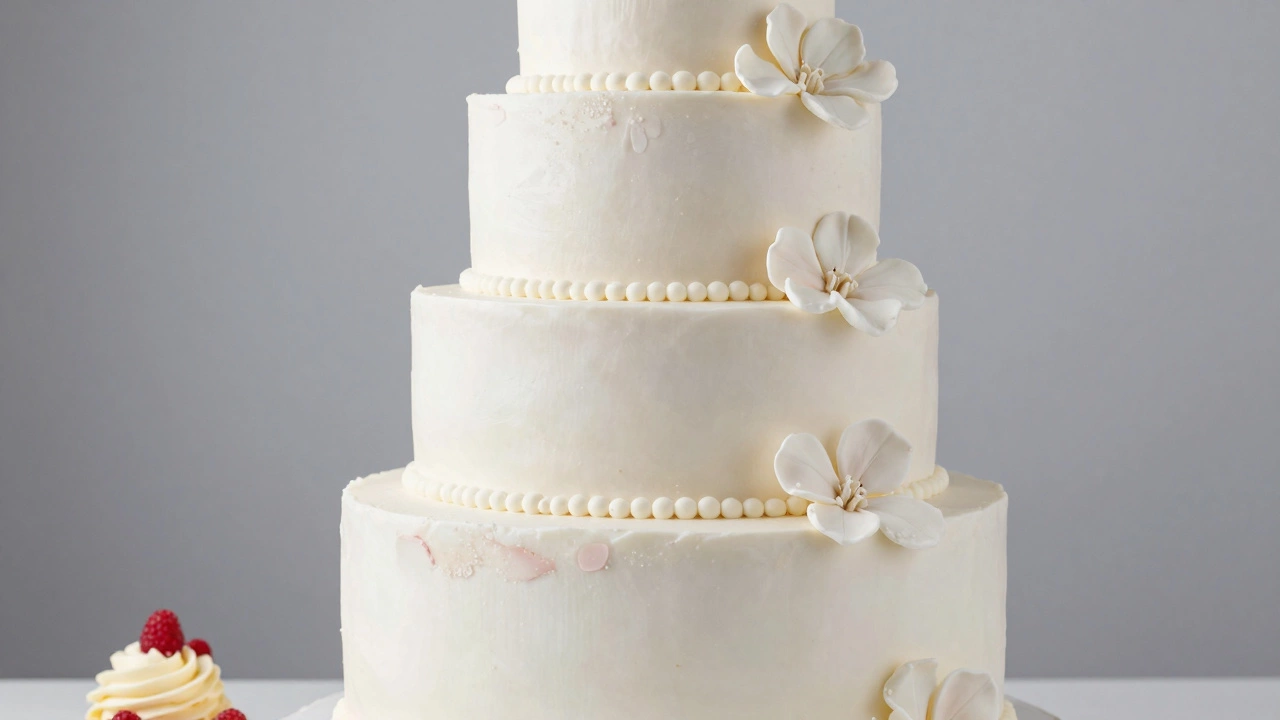
Wedding Cake Freshness & Safety Calculator
Step 1: Select Storage Method
Room Temp
Cool, dry place away from sun
Refrigerator
Standard fridge (approx 4°C)
Freezer
Deep freeze (-18°C or lower)
Step 2: Check Ingredients
Estimated Freshness Duration
Please select a storage method above to see results.
You just finished cutting the most beautiful tiered masterpiece of your career, or perhaps you’re the bride who wants to save that top tier for your first anniversary. The question on everyone’s mind is simple but critical: how long will this cake actually stay good to eat? It’s not just about safety; it’s about texture and flavor. A dry, stale slice ruins the memory of a perfect celebration.
The answer isn’t a single number. It depends entirely on what’s inside the sponge and frosting. A dense chocolate cake with buttercream lasts much longer than a light angel food cake with whipped cream filling. As bakers and couples navigate this, understanding the science of moisture retention and bacterial growth is key to keeping that dessert edible and enjoyable.
Quick Summary: How Long Does Wedding Cake Last?
- Room Temperature: 1-2 days for cakes with buttercream or ganache (no perishable fillings).
- Refrigerator: 5-7 days for cakes with fruit fillings, custards, or cream cheese frosting.
- Freezer: Up to 6-12 months if wrapped correctly in plastic and foil.
- Served at Event: Best eaten within 4 hours of being cut and displayed.
The Role of Ingredients in Shelf Life
To know how long your cake stays fresh, you have to look at its components. Not all cakes are created equal when it comes to preservation. The central entity here is the wedding cake, which consists of sponge layers, fillings, and outer coatings like fondant or buttercream. Each layer has a different rate of staling and spoilage.
Butter-based frostings, such as American buttercream or Swiss meringue buttercream, are relatively stable. They contain little water, which means bacteria struggle to grow rapidly at room temperature. These cakes can safely sit out for a day or two. On the other hand, fillings made from fresh fruit, lemon curd, pastry cream, or cream cheese introduce high moisture and acidity levels that invite microbial activity. If your cake has a raspberry jam center, it needs refrigeration after the first few hours.
Fondant acts as a seal. Unlike buttercream, which breathes slightly, fondant creates an airtight barrier around the sponge. This helps retain moisture inside the cake, slowing down the staling process. However, if the fondant cracks or tears, air gets in, and the cake dries out faster. Understanding these material properties helps you decide whether to leave the cake on the counter or put it in the fridge immediately.
Storage Guidelines by Environment
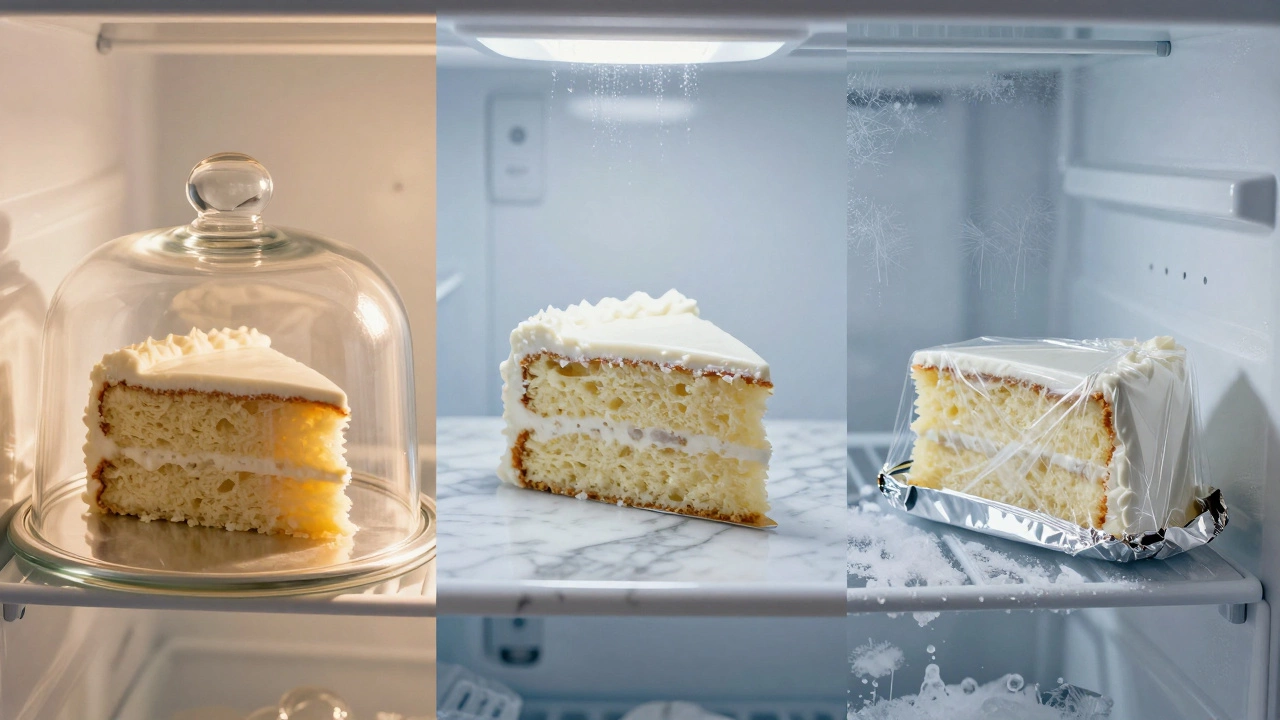
Where you store the cake dictates its lifespan. Here is a breakdown of the three main storage environments and what they do to your dessert.
| Storage Method | Duration | Best For | Risks |
|---|---|---|---|
| Room Temperature | 1-2 Days | Buttercream/Ganache, No Fruit Fillings | Drying out, insect attraction |
| Refrigerator | 5-7 Days | Cream Cheese, Custard, Fresh Fruit Fillings | Absorbing fridge odors, hardening frosting |
| Freezer | 6-12 Months | Long-term saving (e.g., top tier) | Ice crystals, texture changes if thawed poorly |
If you choose room temperature storage, keep the cake away from direct sunlight and heat sources. Heat melts buttercream and causes fondant to sweat, leading to a messy appearance and potential mold growth. Use a cake dome or a large inverted bowl to cover it. This protects against dust and pests while allowing some airflow.
Refrigeration is necessary for perishable ingredients. However, fridges are dry environments. When you pull a cold cake out, condensation forms on the surface. This can make fondant sticky or cause buttercream to weep. To mitigate this, let the cake come to room temperature before serving. Never serve ice-cold cake unless you prefer that texture.
Handling Leftovers After the Reception
Most weddings result in leftover cake. Guests might take slices home, or the couple might want to save portions. How you handle these leftovers determines their quality.
For immediate consumption within 24 hours, place slices in an airtight container. If you don’t have containers, wrap each slice tightly in plastic wrap. Ensure no air pockets remain. Air is the enemy of freshness; it oxidizes fats and evaporates moisture. If the cake has been sitting out during the reception, check for signs of contamination. If anyone coughed near it or touched it with bare hands, consider discarding it rather than risking foodborne illness.
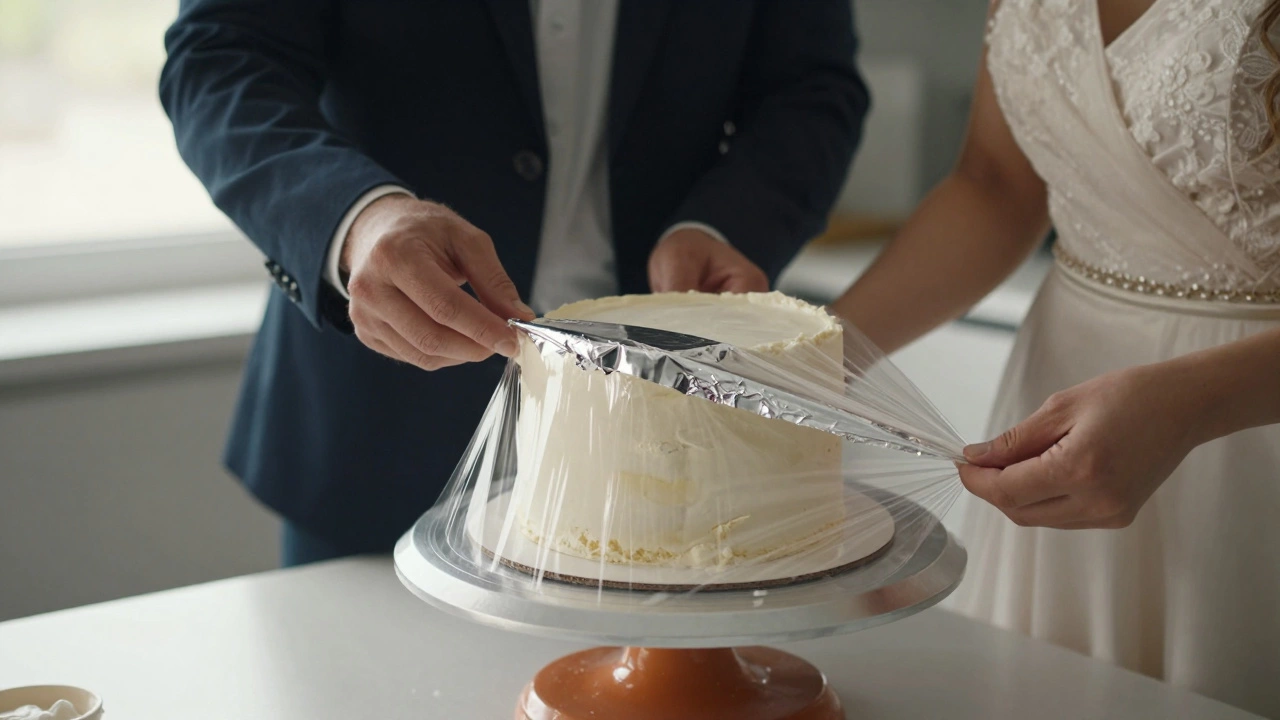
For longer storage, freezing is superior to refrigerating. Refrigeration slows bacterial growth but doesn’t stop enzymatic reactions that degrade flavor. Freezing pauses almost all degradation processes. To freeze individual slices, flash-freeze them on a baking sheet for one hour until solid. Then, wrap them individually in plastic wrap, followed by a layer of aluminum foil. Label each package with the date. This double-wrapping prevents freezer burn, which occurs when air reaches the food surface, causing dehydration and oxidation.
Preserving the Top Tier for Anniversaries
Saving the top tier of the wedding cake for the first anniversary is a tradition that persists despite practical challenges. Many couples ask if this is worth it. From a baker’s perspective, yes, but only if done correctly. A professionally frozen tier can taste nearly identical to the day of the wedding.
The process requires precision. First, ensure the cake is completely cool before wrapping. Warmth trapped inside creates steam, which turns to ice crystals. These crystals damage the cell structure of the sponge, making it mushy upon thawing. Wrap the tier in multiple layers of heavy-duty plastic wrap. Follow this with a layer of aluminum foil. Place the wrapped tier in a rigid container to protect it from physical damage in the freezer. Store it in the coldest part of the freezer, usually the back, where temperature fluctuations are minimal.
When the anniversary arrives, thaw the cake slowly. Move it from the freezer to the refrigerator for 24 hours, then to the counter for another 12 hours. Do not use a microwave or oven to speed up the process. Rapid heating causes uneven thawing and separates the fats in the frosting. Once thawed, the cake should be served within two days. Note that decorations made from fresh flowers or perishable elements must be removed before freezing.
Signs Your Cake Has Gone Bad
Even with proper storage, cakes eventually spoil. Knowing when to throw it away is crucial for health. Visual and olfactory cues are your best indicators.
- Mold: Look for fuzzy spots in green, white, or black. Mold can penetrate deeper than visible surfaces. If you see mold, discard the entire cake, not just the affected slice.
- Off Odors: A sour or rancid smell indicates fat oxidation or bacterial growth. Buttercream can turn rancid if stored too long at room temperature.
- Texture Changes: If the cake feels slimy or excessively sticky, it’s likely contaminated. Dryness is a quality issue, not necessarily a safety one, but sliminess is a red flag.
- Discoloration: Darkening of the sponge or frosting beyond normal aging suggests chemical changes or spoilage.
When in doubt, throw it out. Food poisoning from spoiled dairy or egg products in cake fillings can be severe. It’s not worth the risk for a piece of cake.
Tips for Bakers and Couples
For bakers, communicate clearly with clients about storage expectations. Provide written instructions with the cake delivery. Include details on whether the cake contains perishable fillings and how long it can safely remain at room temperature. This manages client expectations and reduces liability.
For couples, plan ahead. If you want to save the top tier, ask your baker to prepare it specifically for freezing. Some bakers use denser sponges and less moist fillings for the top tier to enhance longevity. Consider buying a small separate cake for the anniversary instead of relying on the saved tier. Modern freezers are better than ever, but six months of storage still affects texture slightly. A fresh cake guarantees perfection.
If you’re hosting a destination wedding, factor in climate. In hot, humid regions, cakes deteriorate faster. Use stabilizers in buttercream and avoid fresh fruit fillings. Keep the cake in an air-conditioned room until serving. Transport it in a cooled vehicle, but not directly on ice, which can cause condensation.
Conclusion
Understanding how long a wedding cake stays fresh involves balancing ingredient stability, storage conditions, and time. Room temperature works for short-term display, refrigeration extends life for perishable varieties, and freezing preserves memories for years. By following these guidelines, you ensure that every slice, whether eaten on the wedding day or the anniversary, remains safe and delicious.
Can I leave my wedding cake out overnight?
Yes, if it’s covered with buttercream or ganache and contains no perishable fillings like custard or fresh fruit. Cover it with a cake dome to protect from dust and pests. Consume within 24 hours for best quality.
Does fondant help keep a cake fresh?
Yes, fondant acts as a moisture barrier, preventing the cake from drying out. However, it doesn’t prevent spoilage of internal fillings. Always check expiration times based on ingredients, not just the coating.
How do I freeze wedding cake slices properly?
Wrap each slice tightly in plastic wrap, removing all air pockets. Add a second layer of aluminum foil. Place in an airtight container. Thaw slowly in the refrigerator before serving to maintain texture.
Is it safe to eat cake that has been in the fridge for a week?
It depends on the fillings. Buttercream cakes may last up to a week, but those with cream cheese or fruit fillings should be consumed within 3-5 days. Check for mold or off smells before eating.
Why does my cake taste weird after thawing?
Improper thawing can cause texture changes and flavor loss. Thaw slowly in the fridge, then at room temperature. Avoid microwaves. Also, ensure the cake was wrapped tightly to prevent freezer burn and odor absorption.